
You leave the house, look in the mirror, and notice your hair isn’t responding the same way anymore: it feels rough, tangles more easily, loses its shine, and seems harder to style. For many women over 65, this isn’t just uncomfortable; it can also affect their confidence first thing in the morning. And when no shampoo seems to help, it’s normal to try everything, even home remedies that promise too much. The good news is that there is a gentler, more realistic, and safer way to improve its appearance, and I’ll tell you about the rosemary mistake many people make without realizing it.
Why hair changes after age 65
As we age, hair can become thinner, drier, or more brittle. It can also lose some of its density, making the part appear wider or causing hairstyles to lose their volume. This doesn’t necessarily mean there’s a serious problem, but it does indicate that the hair needs a different kind of care.
The American Academy of Dermatology notes that hormonal changes during menopause can contribute to hair thinning. The Mayo Clinic also explains that progressive thinning is common with age and is usually more noticeable in women. Knowing this, it’s important to distinguish between two things that are often confused: dry hair and hair loss or thinning.
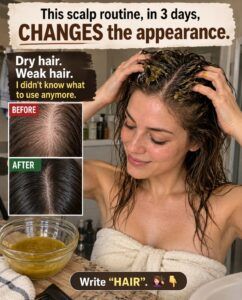
And here’s the important point: dry hair can improve considerably with gentle habits, while significant or sudden hair loss warrants medical attention. Not everything can be solved with more products. Sometimes, in fact, excessive oils or heavy treatments worsen the feeling of heaviness without addressing the underlying cause.
Rosemary for hair: what we do and don’t know
Rosemary has become very popular on social media and in natural hair care routines. But it’s one thing for it to be a traditional ingredient and quite another for there to be solid evidence to support all the claims made about it.
A study published in 2015 compared rosemary oil with 2% minoxidil in people with androgenetic alopecia. The results showed no significant differences after three months, and changes were more clearly observed after six months. In other words, there is no strong evidence that new hair grows faster from using rosemary.

The most useful aspect of rosemary is not promising miracles, but integrating it prudently as a complement to a gentle routine.
So, what can it actually help with in practice? Less frizz, less dryness, better manageability, and a more pleasant experience if the product doesn’t cause irritation. That’s already valuable, especially when hair feels more delicate with age.
What can improve in a few days if you change your routine?
It’s important to have realistic expectations. You’re not going to change your hair growth cycle in three days, but you can notice an improvement in its appearance if you stop damaging it. That difference, even if it seems small, is often very noticeable when you look in the mirror.

These are some changes you might notice:
- Fewer tangles when combing your hair.
- Tips less rough to the touch.
- Less visible frizz.
- Less breakage when brushing.
- An overall feeling of softer hair.
The key is not to expect impossible results. Improving texture and reducing damage is usually more realistic and useful than chasing quick fixes.
Gentle 3-day routine to regain a better appearance
This routine isn’t about making hair grow instantly. Its goal is to see if hair responds better to less friction, less heat, and more hydration. And yes, the difference is often noticeable.

Day 1: Cleanse without aggression
Use a mild shampoo and focus on the scalp, not on rubbing it through the lengths of your hair. The American Academy of Dermatology recommends applying shampoo primarily to the roots to remove oil and buildup without over-drying the ends.
Next, apply conditioner from the mid-lengths to the ends. This helps reduce friction and makes detangling easier. If your hair gets very tangled, detangle it gently, starting at the ends and working your way up. No pulling or jerking.
Day 2: Give the heat a break
Avoid flat irons, very hot hair dryers, and curling irons. Frequent heat weakens the hair fiber and can make hair look duller and more brittle. If you need to dry your hair, use a moderate temperature and keep your distance.
If you want to try rosemary, today might be a good day to see how your scalp reacts to a gentle rinse. But only if you’ve already confirmed it doesn’t irritate you. Skin tolerance is more important than the ingredient’s popularity.
Day 3: Observe real changes
Don’t guess. Pay close attention to three specific things: whether it tangles less, whether the ends feel less rough, and whether there’s less frizz or breakage when you style it. That observation is worth more than trying ten remedies at once.
If you notice an improvement, you’re on the right track. If not, the problem probably requires a different approach, such as checking your shampoo type, moisturizing level, or even consulting a dermatologist.
How to prepare a simple rosemary mouth rinse
If you prefer using the plant itself instead of a concentrated essential oil, a homemade infusion can be a more sensible option as a cosmetic rinse. It’s not a miracle cure, but it can be a gentle way to see if you like it.
Basic preparation:
- Wash 3 or 4 sprigs of fresh rosemary.
- Heat approximately 500 ml of water.
- When it boils, remove the water from the heat.
- Add the rosemary, cover the container and let it sit for 20 to 30 minutes.
- Strain the mixture and wait for it to cool completely.
- Apply a small amount to clean, damp hair.
- Store the leftovers in the refrigerator and prepare small portions.
Since it contains no preservatives, discard it if it changes in smell, color, or appearance. And if burning, redness, or intense itching occurs, discontinue use immediately.
Infusion, rosemary oil and conditioner: they do not do the same thing
Many people lump everything together, but that’s not the case. Each option has a different purpose, and understanding that prevents disappointment and misuse.
| Option | Reasonable use | What to expect |
|---|---|---|
| Leaf infusion | Light cosmetic rinse | A gentle experience, with no guarantee of growth |
| Rosemary essential oil | Concentrated product that requires extreme caution. | The evidence is limited and the changes studied take months. |
| Conditioner | Reduce dryness, friction and tangles | Softer and less breakage |
| Less heat | Avoid further damage | Better appearance over time |
The truth is, conditioner is often more important than it seems. Dermatologists recommend using it after washing because it helps coat the hair, makes detangling easier, and reduces breakage. It may sound simple, but often that’s where the improvement you’ve been overlooking lies.
The rosemary mistake that can irritate the scalp
Here’s the mistake we promised to avoid at the beginning: using pure rosemary essential oil, in large quantities, and directly on the scalp, believing that “more” means “better.” It doesn’t work that way. Essential oils are concentrated and can easily cause irritation.
The Cleveland Clinic warns that excessive use of rosemary oil can cause burning, redness, inflammation, or itching. Therefore, it’s always best to test it on a small area first and never apply it undiluted. There’s also no need to massage vigorously. Rubbing until irritation doesn’t improve the scalp.
Especially avoid the following:
- Apply pure essential oil in large quantities.
- Scratching the scalp with the nails.
- Sleeping with hairstyles that are too tight.
- Pass the iron over the same section several times.
- Brush wet hair aggressively.
- Change home remedies every two days without allowing time for routine.
When rosemary is no longer enough
There are times when continuing to try home remedies only delays something more important: figuring out what’s really going on. If the hair loss is sudden, if bald patches appear, if the parting widens progressively, or if there is pain, scabs, or inflammation, it’s advisable to consult a dermatologist.
Mayo Clinic recommends medical evaluation when hair loss is sudden or localized. This doesn’t mean you should panic immediately, but it does mean you should act sensibly. Taking photos periodically, in the same lighting and from the same angle, can help you notice real changes without obsessing over every single strand.
Practical steps you can start today
If you want to make a difference starting today, begin with a simple routine. You don’t need a collection of products. You need consistency and gentleness.
Do this in order:
- Use a mild shampoo and wash mainly your scalp.
- Apply conditioner from mid-lengths to ends after each wash.
- Reduce the heat to the minimum necessary.
- Untangle with a wide-tooth comb or with your fingers, without pulling.
- If you try rosemary, do it first on a small area to see if it irritates.
- Evaluate your hair after several days, not after a few hours.
This approach works best because it targets what damages hair’s appearance the most: dryness, friction, and heat. Rosemary can be a complement, but it shouldn’t replace the basics.
Conclusion
After 65, hair typically needs less harsh treatment and more consistent care. A gentle rosemary infusion can be part of a beauty routine if your skin tolerates it, but it’s not a quick fix for restoring density or a miracle cure. What helps most is usually the simplest approach: gentle washing, conditioner, less heat, and delicate styling.
If you notice progressive hair loss, bald patches, or changes in your scalp, the wisest course of action is to seek a professional evaluation. Sometimes, the best progress doesn’t come from a new remedy, but from understanding what your hair truly needs.
Frequently Asked Questions
Does rosemary make hair grow in three days?
No. There is no clinical evidence to show visible growth in three days. In fact, the most cited study on rosemary oil assessed significant changes several months later, not immediately.
Can I use rosemary leaves every day?
It’s not necessary. Start with infrequent use and observe your scalp’s reaction. If burning, irritation, flaking, or persistent itching occurs, discontinue use.
What’s more important: the rosemary or the conditioner?
If your main problem is dryness, frizz, and breakage, conditioner and a gentle routine offer more practical support. Rosemary can be an optional addition, not the focus of your entire care routine.
Medical disclaimer: This content is for informational purposes only and is not a substitute for evaluation or personalized advice from a healthcare or dermatology professional.


