
When creatinine levels rise or kidney filtration rate drops, it’s easy to cling to any quick fix that promises immediate relief. The problem is that this urgency can lead to believing in remedies that sound good but don’t actually change the real kidney damage. And yes, that’s frustrating, because nobody wants to hear that there’s no quick fix. The good news is that there are science-backed strategies to protect kidney function and slow the progression of the disease… and I’ll show you which ones are truly the most effective at the end.
Chia seeds are healthy, but they don’t “repair” the kidneys.
Chia seeds provide fiber, unsaturated fats, and some minerals, so they can be part of a balanced diet. But that’s very different from saying they reverse chronic kidney disease or restore glomerular filtration rate in 24 hours. The available evidence does not support that claim .
Chronic kidney disease occurs when the kidneys are damaged or lose their ability to filter blood for more than three months. In adults, two of the most common causes are diabetes and high blood pressure. Therefore, the medical approach is not to seek an instant “cleanse,” but rather to identify the cause and protect kidney function in the long term.
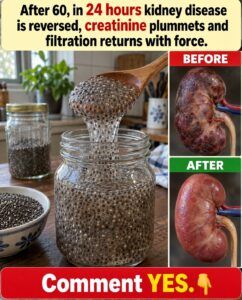
Chia seeds can be a useful food. They are not a treatment for regenerating damaged kidneys.
Why a high creatinine level doesn’t always mean the same thing
Creatinine is a waste product that the body eliminates through the kidneys. When it rises, it may suggest that kidney filtration isn’t working properly, but this shouldn’t be interpreted in isolation. Hydration, diet, certain medications, and acute illnesses can also temporarily affect creatinine levels.
According to the NIDDK, the estimated glomerular filtration rate, or eGFR, is one of the main markers for assessing kidney function. Another key indicator is the urine albumin-to-creatinine ratio, known as the UACR, because it can detect kidney damage even before symptoms appear.

This means something important: a sudden drop in creatinine levels doesn’t prove that the kidney has “healed .” It may reflect temporary changes, not true regeneration of kidney tissue.
What the evidence does support is taking care of kidney filtration
The most useful part of this conversation isn’t the viral promise, but what actually helps. And here the science is clear: controlling blood pressure is one of the most effective measures to slow the progression of kidney disease. The NIDDK highlights it as a core intervention.
Glucose control is also important in people with diabetes. Furthermore, in appropriate patients, medications such as ACE inhibitors or angiotensin receptor blockers can reduce albuminuria and help protect the kidneys.

In practical terms, kidney care usually includes:
- Regular blood pressure monitoring.
- Monitoring of eGFR and UACR.
- Correct use of the prescribed medications.
- Glucose control if diabetes is present.
- Dietary adjustments with professional support.
- Physical activity appropriate to the state of health.
But that’s not all… there’s also a detail that many people overlook: the kidney plan is not the same for everyone.
There is no universal renal diet.
A person with advanced kidney disease may need to monitor sodium, potassium, phosphorus, protein, or fluids, while another might have different restrictions. It all depends on the stage of the disease, tests, medications, and other conditions such as diabetes or heart failure.

Therefore, recommending large amounts of chia seeds simply because they are called “kidney food” online can be a mistake. In some cases, a moderate portion may fit well into the diet; in others, the plan should be individualized to avoid unnecessary excesses of minerals or fiber.
Renal specialists and dietitians often personalize diets because more quantity doesn’t necessarily mean more protection . In fact, in kidney disease, overdoing it with “superfoods” can complicate the situation rather than improve it.
Two analyses say more than any “detox”
When kidney health is a concern, two tests often provide more information than any homemade drink or concoction. The first is the eGFR, which estimates how much blood the kidneys filter. The second is the UACR, which measures albumin in the urine and can indicate early kidney damage.
A UACR above 30 mg/g is considered abnormal. And the most useful thing is not a single result, but rather observing the trend over time. The NIDDK specifically recommends monitoring eGFR and albuminuria to determine if the disease is stable, improving, or progressing.
| Viral promise | What the evidence says |
|---|---|
| Chia seeds repair the kidneys in 24 hours | Not proven |
| Low creatinine means healing | Not necessarily |
| Controlling blood pressure and glucose protects the kidneys | Yeah |
| Monitoring eGFR and UACR helps in decision-making | Yeah |
The truth is that the kidneys don’t function like a household filter that you clean with a drink. They are complex organs that regulate fluids, minerals, blood pressure, and waste elimination.
What to do if you’re worried about your creatinine or kidney filtration rate
If you already have high creatinine, low eGFR, or albuminuria, the smartest thing to do is to act systematically. Here’s a simple plan you can start today, always under medical supervision.
Step 1: Confirm which marker has been altered
Don’t rely solely on creatinine. Also request or check eGFR and UACR. These two measurements help to better understand the actual state of the kidneys.
Step 2: Check for reversible causes
Tell your doctor if you’ve had dehydration, an infection, recently used anti-inflammatory drugs or supplements, changed your diet, or started any new medications. Sometimes the reading changes due to something that can be corrected.
Step 3: Monitor blood pressure and glucose
If you have high blood pressure or diabetes, following your treatment plan precisely can make a big difference. Research shows that these two factors significantly influence kidney disease progression.
Step 4: Adapt your diet with professional support
Don’t copy a diet from the internet. A kidney plan should take into account your stage of disease, your lab results, and any other health conditions. A registered dietitian with experience in kidney health can help you avoid excesses or deficiencies.
Step 5: Do not stop taking medication on your own
Some medications protect the kidneys, but they must be used correctly. Stopping or changing them without medical advice can worsen blood pressure, glucose, or albuminuria control.
When to be more careful after 60
Many people with early-stage kidney disease don’t experience any symptoms. This can cause the problem to go undetected, especially in older adults or those living with diabetes, high blood pressure, or cardiovascular disease.
If you are over 60, or have a family history of kidney failure, it’s worth monitoring your kidney function more closely. Detecting the problem early allows for action to be taken before the damage progresses.
And here’s the most important part: finding the right cause allows you to choose the right treatment . A problem caused by dehydration is not the same as one caused by diabetes, urinary obstruction, or a medication that has affected kidney function.
So, does chia work or not?
It serves as food, not a cure. It can provide useful nutrients as part of a balanced diet, but there is no evidence that it reverses chronic kidney disease, miraculously lowers creatinine, or restores filtration within 24 hours.
If you see a chia seed mixture marketed as a “kidney solution,” it’s wise to be skeptical. What truly protects the kidneys is a combination of measures: controlled blood pressure, well-managed glucose, appropriate medications, monitoring of eGFR and UACR, and a personalized diet.
The real goal is not to promise a miracle tomorrow, but to preserve as much kidney function as possible for many years.
Conclusion
Chia seeds can be part of a healthy diet, but they won’t reverse kidney disease in 24 hours or replace medical treatment. If you’re concerned about your creatinine or kidney filtration rate, focus on what works: checking your eGFR and UACR, managing your blood pressure and blood sugar, adjusting your diet, and following the plan prescribed by your healthcare team. This is the safest and most effective way to protect your kidneys in the long run.
Frequently Asked Questions
Does chia lower creatinine?
There is no evidence that chia seeds specifically reduce creatinine or repair kidney function in a short time. Creatinine levels should be interpreted in conjunction with eGFR, UACR, and the clinical context.
Can a low eGFR be improved?
In some cases, it can improve or fluctuate if a reversible cause, such as dehydration or medication, is corrected. However, chronic kidney disease usually requires long-term monitoring and treatment.
What should I check if I have high creatinine?
It’s a good idea to talk to your doctor about eGFR, UACR, blood pressure, diabetes, medications, and possible causes of the change. These variables usually provide a much more useful picture than creatinine alone.
Medical disclaimer: This content is for informational purposes only and is not a substitute for professional medical advice. Do not change any medications, supplements, or your renal diet without consulting your doctor or a registered dietitian.


