
Moringa and sugar: what many believe, but science has yet to confirm
Moringa has become famous as if it were a natural solution capable of lowering blood sugar in record time. The problem is that a viral story doesn’t always reflect what happens in real life, especially when it comes to diabetes. For many people, seeing a high number on the glucose meter generates urgency, hope, and also confusion. And that’s where promises that seem too good to be true appear. The important thing is this: yes, there are studies on moringa, but the evidence still doesn’t show that it works faster than medication or that it replaces medical treatment. And there’s a key detail that almost no one mentions…
What does the evidence really say about moringa?
Moringa, especially Moringa oleifera , contains fiber and plant compounds that have sparked scientific interest. This has led to a review of its potential effects on glucose, blood pressure, and other metabolic markers. However, a recent systematic review compiled clinical studies and found modest results, with significant discrepancies between them. In other words, there is some interesting evidence, but it is not yet sufficient to reliably claim that moringa controls diabetes.
The truth is that the science on this topic is still preliminary. Some studies show small improvements; others find no significant difference compared to a placebo. That means we can’t take a single viral post and turn it into a general rule for everyone.
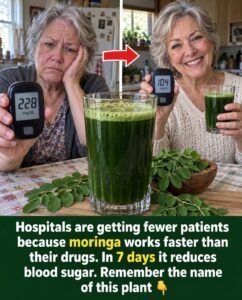
Why a “before and after” photo proves nothing
A picture showing a glucose reading of 228 mg/dL and another of 104 mg/dL can be very striking. But a picture doesn’t tell the whole story. We don’t know what the person ate, what medications they took, how much time passed between measurements, or if there was any exercise, stress, or illness involved. And that changes everything.
Glucose levels can rise or fall for many normal, everyday reasons:
- time elapsed since the meal;
- amount of carbohydrates consumed;
- recent physical activity;
- use of insulin or other medications;
- stress, infection, or poor sleep;
- time of day.
Therefore, an isolated change does not prove that moringa was the cause. To know if something truly works, well-conducted clinical trials with comparable groups and adequate follow-up are needed.

Studies that did find benefits
However, it’s not all bad news. Here’s the interesting part: some studies have observed promising signs. For example, a small trial in people with prediabetes found positive changes in fasting glucose and hemoglobin A1C after several weeks, not just seven days. Other reviews have also suggested that moringa may have metabolic potential.
But there’s an important detail: those studies were small, used different preparations, and didn’t always have the same methodological quality. This makes it difficult to compare results and draw firm conclusions. The evidence exists, but it’s still not enough to call moringa “better” than a medication.
What other trials found: mixed results
Other clinical studies showed no significant improvements in fasting glucose or A1C after several weeks of moringa use. This does not necessarily mean the plant has no effect, but rather that any effect could be small, variable, or dependent on the preparation, dosage, and individual.

In medical research, when results contradict each other, the wisest course of action is not to exaggerate. And that’s exactly what’s happening here: moringa shows promise, but it hasn’t been proven as a replacement for diabetes treatments.
The big difference between a plant and a medicine
This point is key. Diabetes medications have standardized dosages, quality control, and large studies that evaluate their safety and efficacy. Moringa, on the other hand, can come in many different forms:
- fresh leaves;
- dry leaves;
- dust;
- capsules;
- extracts;
- infusions or homemade preparations.
This makes it extremely difficult to know how much of the active ingredient a person is actually receiving. A homemade drink is not equivalent to a capsule tested in a laboratory. And that matters, because in healthcare, consistency is not a minor detail: it’s the foundation of safety.

Is it better to lower blood sugar “faster”?
Not necessarily. Lower blood sugar doesn’t always mean better, especially in older adults or people who already use insulin or other medications that can cause hypoglycemia. Blood sugar that is too low can also be dangerous.
The CDC considers a blood glucose level below 70 mg/dL to be low. It can cause tremors, sweating, dizziness, weakness, confusion, and, in severe cases, a medical emergency. Therefore, the goal is not simply to lower blood glucose levels. The real goal is to maintain glucose within a safe and stable range.
It’s not about pursuing the lowest possible number, but the safest one for each person.
What ranges are typically used as a reference?
According to the NIDDK, many people with diabetes generally consider the following:
| Moment | Typical reference range |
| Before eating | 80 to 130 mg/dL |
| Two hours after starting a meal | Less than 180 mg/dL |
But these goals aren’t the same for everyone. In people over 65, or in those with other illnesses, a risk of hypoglycemia, or long-standing diabetes, the doctor may adjust these targets. That’s normal and, in fact, advisable.
What you can do if you are interested in moringa
If someone wants to try moringa as a food, it’s wisest to discuss it with their healthcare professional, especially if they are taking insulin, sulfonylureas, or other diabetes medications. It’s not advisable to stop or reduce anything on your own.
Keeping a simple record also helps a lot. Follow these steps:
- Record your glucose reading with the date and time.
- Write down what you ate before the measurement.
- Record whether you exercised that day.
- Note down what medications you took and at what time.
- Review several readings, not just one good or one bad one.
This record allows you to see real trends, not just isolated moments. And that’s much more useful for making informed decisions.
Habits with the most evidence for controlling diabetes
While moringa is still being studied, there are measures with much stronger evidence for managing glucose levels and reducing complications. These are the ones that truly support long-term treatment:
- take the medications exactly as prescribed;
- measure glucose as frequently as recommended;
- distribute carbohydrates better throughout the day;
- do physical activity appropriate to your age and mobility;
- Check A1C, blood pressure and cholesterol regularly.
But that’s not all. It’s also important to take care of your eyes, kidneys, nerves, feet, and heart. Diabetes isn’t managed with just a pretty number on a glucometer; it’s managed by considering your whole body.
So, can moringa replace medication?
Based on current evidence, no. Moringa may remain an interesting plant for research and, in some cases, a valuable addition to a varied diet. However, it has not been shown to be a reliable substitute for insulin, metformin, or other prescribed treatments for diabetes.
Furthermore, stopping medication to “try” a plant can cause blood sugar levels to rise again. And if the person continues their treatment and adds moringa, they should also monitor their blood sugar for any excessive drop. Safety always comes first.
Conclusion
Moringa deserves scientific attention, but it’s not a miracle cure. Some studies show promising signs, others find no clear benefits, and the quality of the evidence is still limited. Therefore, it hasn’t been proven that a glass of moringa will lower blood sugar from 228 to 104 mg/dL in seven days, nor that it works faster than medication, nor that it will prevent hospitalizations.
If you live with diabetes, the goal isn’t to find the fastest cure, but the safest and most stable plan for your specific situation. And if you wish to use moringa, do so as a supplement, not a replacement, and always under professional supervision.
Frequently Asked Questions
Does moringa cure type 2 diabetes?
No. There may be studies with favorable results in certain markers, but current evidence does not show that it cures diabetes or replaces medical treatment.
Can I take moringa if I use diabetes medication?
It’s best to consult your doctor or nutritionist before doing so. Do not stop or reduce your treatment on your own, as this could cause your blood sugar levels to become uncontrolled or lead to hypoglycemia.
Is a glucose level of 104 mg/dL better than 228 mg/dL?
In many contexts, yes, but it depends on when the measurement is taken and the individual goal. What’s important is the overall trend and the safe range your healthcare team has established for you.
Medical notice
This content is for informational purposes only and does not replace evaluation or treatment by a healthcare professional. If you have diabetes, do not change or stop taking your medication without medical advice. If your blood glucose level falls below 70 mg/dL or you experience severe symptoms such as confusion, fainting, or seizures, seek emergency medical attention.


