
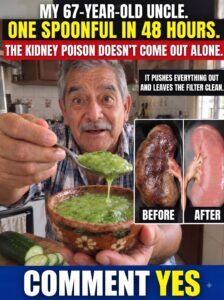
When someone tells you that “one spoonful” removed the “poison from your kidney” in 48 hours, it’s normal to feel hopeful. The problem is that these kinds of promises sound very convincing precisely when you’re tired, worried, or looking for a quick fix. And that’s where many people end up following advice that has no real basis. The most frustrating thing is that, while wasting time with shortcuts, you neglect what actually protects your kidney health. Stick around, because at the end I’m going to show you a simple way to distinguish a useful recommendation from a trap disguised as a miracle.
Why do these videos go so viral?
Because they tap into a very human emotion: the fear that “something is wrong” without you realizing it. Furthermore, they use strong words like “poison,” “filter,” or “clean” to make you feel that the problem is urgent and that the solution is just around the corner. But that doesn’t mean it’s true. In fact, many publications of this type mix personal experiences with medical claims without explanation, context, or verifiable evidence.
Yes, emotion sells. But health needs more than emotion: it needs reliable information.
What the kidneys actually do
The kidneys filter the blood, help balance fluids and minerals, and eliminate waste through urine. They are silent and highly efficient organs. The important thing to remember is this: they don’t need to be “cleansed” with drinks, spoons, or magic mixtures to function. What they do need is for us to take care of them with consistent habits.
When a person experiences urinary discomfort, persistent fatigue, bloating, or changes in urine, it’s not advisable to assume their urinary tract is clogged. It’s best to seek medical evaluation, as these symptoms can have many different causes.
The trap behind the phrase “cleanse the kidneys”
This is the most important point: the body already has its own detoxification mechanisms. Therefore, saying that a recipe “removes toxins from the kidneys” sounds shocking, but it explains nothing. What toxins? How was it measured? In what study? With which people?

In many cases, the phrase “cleanses the kidneys” is used commercially to sell a product or generate clicks. And while a natural beverage may be part of a healthy diet, that doesn’t make it a treatment or a solution for a kidney problem.
The reality is simple: if something promises quick, spectacular results without explanation, it deserves to be viewed with suspicion.
Warning signs in health publications
Before sharing or following advice, check if any of these points appear:

- It promises results in hours or a few days without explaining how.
- Use words like “poison”, “miracle” or “total cure”.
- Tell a personal story as if it were scientific evidence.
- It pressures you to comment, buy, or act “before they take it down.”
- It does not mention studies, sources, or health professionals.
If you see several of these signs together, the wisest course of action is to stop. Not because everything is false, but because the information is incomplete or designed to persuade, not to educate.
What the evidence does support kidney health
The good news is that there are habits that help protect your kidneys. They aren’t dramatic, but they are real. Several clinical guidelines and public health reviews agree that prevention is based on everyday actions, not quick “cleanses.” These include:
- Drink enough water, according to your needs and medical recommendations.
- Control blood pressure.
- Keep your glucose levels within appropriate ranges if you live with diabetes.
- Reduce excess salt in your diet.
- Avoid excessive use of painkillers without supervision.
- Get checked if you have a family history or risk factors.
Furthermore, observational studies and nephrology guidelines indicate that a balanced diet, regular physical activity, and timely medical follow-up can make a significant difference in long-term kidney health.

And what about “natural” drinks?
This topic requires nuance. Some infusions or foods can be part of a healthy diet, but that doesn’t mean they “detoxify” the kidneys. The problem arises when they are attributed with effects that haven’t been proven or when they replace treatments prescribed by a professional.
For example, a beverage with plant-based ingredients can be pleasant and even nutritious, but if it contains too much sugar, excessive natural diuretics, or components that interact with medications, the benefits are diminished. Therefore, “natural” does not always equal “safe” or “effective.”
Quick comparison: viral promise vs. reliable approach
| Viral promise | Reliable approach |
|---|---|
| “Cleanse your kidneys in 48 hours” | Sustained habits and medical review |
| “Removes toxins” without explaining which ones. | Control of actual risk factors |
| Isolated story as evidence | Evidence and professional guidance |
| Urgency and pressure to share | Calm and informed decisions |
What to do if you are worried about your kidney health
Here’s a practical, step-by-step guide that you can apply starting today:
1. Review your hydration habits. It’s not about drinking water uncontrollably, but about staying well hydrated throughout the day, especially if it’s hot or you’re physically active.
2. Reduce excess salt. Many ultra-processed foods contain more sodium than you might think. Reading labels helps a lot.
3. Do not self-medicate. Some medications, taken frequently or without guidance, can affect the kidneys.
4. Monitor your blood pressure and glucose levels if you are at risk. High blood pressure and diabetes are two of the factors most strongly associated with long-term kidney damage.
5. Request a checkup if you notice persistent changes. Bloating, foamy urine, pain, fatigue, or changes in the amount of urine warrant professional attention.
6. Be wary of instant solutions. If a product promises to fix everything with a single spoonful, it’s probably oversimplifying.
How to read these types of publications without falling for scams
This is the trick that can save you the most trouble: before believing, mentally ask yourself three questions. Who says so? How do they know? Where is the evidence?
If the content doesn’t answer those questions clearly, it doesn’t mean you should panic. It just means it’s not a good basis for health decisions. Reliable information doesn’t need to exaggerate to be helpful.
And here’s a key idea: when a message plays on fear, your best defense is calmness. Calmness allows you to read, compare, and decide more thoughtfully.
Conclusion
Kidneys don’t need miracles; they need constant care. Posts promising to cleanse the “filter” in 48 hours often appeal to emotional appeal rather than evidence. In contrast, real prevention is built on proper hydration, a balanced diet, blood pressure and glucose monitoring, and timely checkups. If something sounds too good to be true, it probably is.
The best protection is not a miracle spoonful: it’s reliable information and sustainable habits.
Frequently Asked Questions
Is there a drink that “cleanses” the kidneys?
There is no drink that will clean your kidneys like a clogged filter. Some drinks can be part of a healthy diet, but they don’t replace the body’s normal functions or medical treatment.
How do I know if my kidneys are okay?
The only reliable way is through a medical evaluation and, if necessary, tests such as blood or urine analyses. Symptoms alone are not always enough to determine the diagnosis.
When should I see a doctor?
If you have swelling, persistent changes in urine, pain, unusual tiredness, high blood pressure, diabetes, or a family history of kidney disease, it is advisable to seek professional evaluation.
Disclaimer: This content is for informational purposes only and is not a substitute for evaluation, diagnosis, or treatment by a healthcare professional.


