
When your eyes feel heavy, look dull, and even reading on your phone starts to tire you, it’s easy to fall for flashy promises. The problem is that many of these ideas sound quick, but they aren’t always safe or realistic. And that’s even more frustrating, because you want relief, not more confusion. The good news is that there are simple habits that support eye health without going to extremes, and at the end, I’m going to show you the detail that almost no one explains.
First: don’t be swayed by promises that are too quick to make.
Social media is full of messages promising results in just a few days with a single spoonful, a secret mixture, or a “miracle” trick. It sounds tempting, especially when there’s discomfort or concern about your eyesight. But eye health doesn’t work with magic shortcuts.
The reality is calmer, though less viral: eyes respond better to consistent care, good hydration, visual rest, and a varied diet. That’s what makes a difference over time.
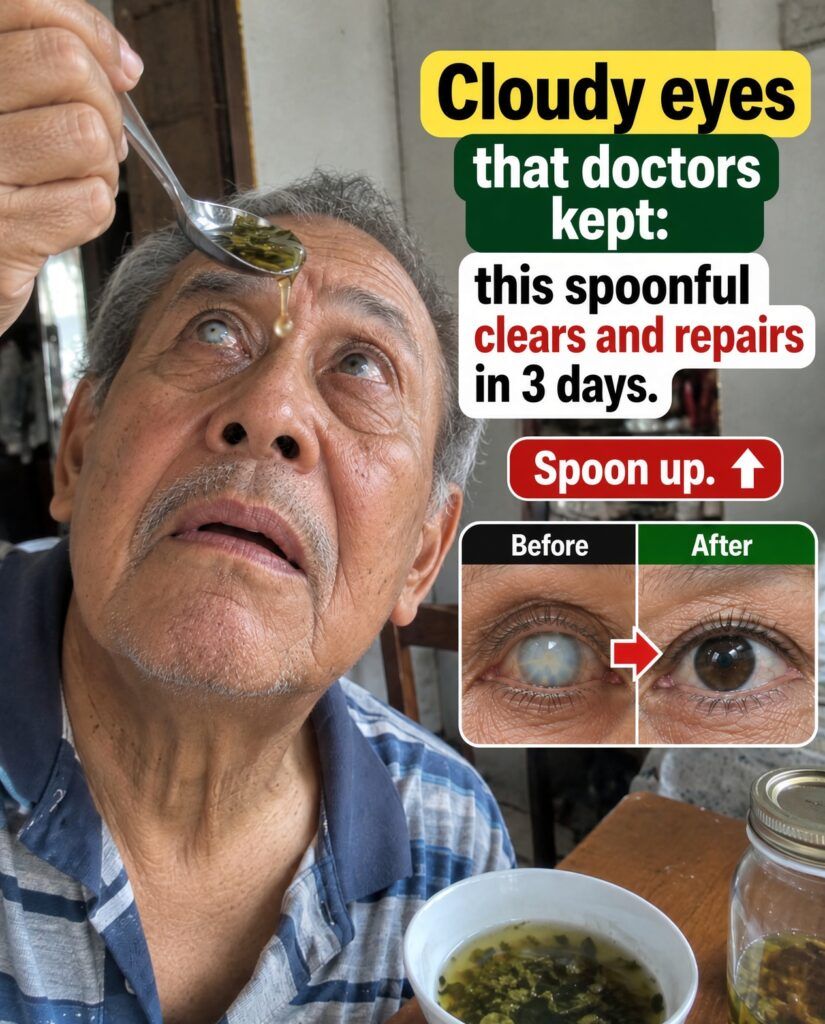
If something promises to “clear” or “repair” your eyesight in 3 days, it’s best to stop and think twice before believing it.
Why do eyes appear dull or cloudy?
There are many everyday reasons why your eyes might look or feel “strange.” Sometimes it’s tiredness, dryness, lack of sleep, or prolonged screen time. Other times, the cause may be a condition that requires medical evaluation.
Among the most common factors are:

- Dry eye due to screens, air conditioning or lack of hydration.
- Eye strain after reading or looking at devices for a long time.
- Allergies that irritate the surface of the eye.
- Use of outdated lenses.
- Normal changes with age.
And here’s the important part: if your vision changes suddenly, if there’s pain, flashes of light, new spots, or vision loss, don’t just wait for it to “go away.” That requires professional evaluation.
What specialists do support: habits that protect eyesight
Research on eye health shows that lifestyle has a much greater influence than it seems. We’re not talking about exaggerated promises, but rather simple actions that help keep your eyes comfortable and functioning properly.
For example, organizations such as the American Academy of Ophthalmology and studies on visual health agree that resting your eyes, using sun protection, and maintaining a balanced diet are useful measures for daily care.

In addition, some nutrients found in brightly colored foods, leafy greens, fish, and nuts are associated with better overall eye health. But be aware: that doesn’t mean a single food will “fix” your eyesight on its own.
The habits that help the most in everyday life
- Take visual breaks every 20 minutes if you use screens.
- Blink frequently to avoid dryness.
- Drink enough water throughout the day.
- Get enough sleep to promote eye recovery.
- Use glasses with the correct prescription if you already need them.
- Protect your eyes from the sun with appropriate sunglasses.
But that’s not all…
The truth about homemade mixes and “secret” spoonfuls
Many publications present a spoonful, an infusion, or a homemade preparation as if it were a universal solution. The problem is that, without knowing exactly what it contains, it cannot be assumed to be safe for everyone.

Some natural ingredients can irritate the stomach, interact with medications, or simply offer no real benefit to the eyes. And if applied near the eyes without guidance, the risk increases. The eye area is delicate, and any unsuitable substance can cause significant discomfort.
Not everything natural is harmless, and not everything viral is useful.
Quick comparison: viral promise vs. real care
| Viral promise | Royal Care |
|---|---|
| Results in 3 days | Gradual improvements with consistent habits |
| One mix for everything | Comprehensive approach: rest, hydration, nutrition, and medical check-up |
| “Secret” solution | Known, safe and sustainable tips |
| Without a clear explanation | Evidence-based information and prevention |
What to do if your eyes feel tired or dull
If your discomfort is mild and appears after screen time, reading, or staying up late, you can start with simple measures today. They don’t require unusual products or mysterious recipes.
Practical plan in 5 steps
1. Rest your eyes periodically. Look into the distance for 20 seconds every 20 minutes.
2. Drink water regularly, not just when you’re thirsty.
3. Reduce screen brightness and avoid using your phone in total darkness.
4. Get enough sleep, because tiredness is very noticeable in the eyes.
5. If you wear glasses, check that your prescription is still correct.
And if you also notice dryness, the environment may be a factor. Dry air, direct fan use, or prolonged air conditioning often worsen the feeling of discomfort.
When should you seek medical advice?
There are signs that shouldn’t be ignored. Although many eye discomforts are minor, some require timely attention to avoid complications.
Seek evaluation if you have:
- Sudden change in vision.
- Eye pain.
- Intense redness that does not improve.
- Flashes of light or many new “flies”.
- Sensation of shadow or partial loss of the visual field.
- Persistent discomfort for several days.
The key here is simple: if the symptom is not mild or does not improve, do not normalize it .
What really matters for long-term eye care
Eye health doesn’t depend on a single spoonful, but on a routine. This includes a balanced diet, rest, management of general health conditions like diabetes or high blood pressure, and regular checkups with an eye care professional.
In fact, public health studies show that detecting visual changes early helps to intervene before the problem progresses. That’s why prevention is more valuable than pursuing quick fixes.
Furthermore, a varied diet with vegetables, fruits, quality protein, and healthy fats supports many bodily functions, including eye health. It’s not about eating “perfectly,” but about consistently eating better.
Conclusion
Promises of quick results often grab your attention, but your eyesight deserves better than a viral trick. The most effective approach is to care for your eyes with simple habits, watch for warning signs, and consult a professional if something doesn’t feel right.
If you take away one takeaway from this article, let it be this: eye health is built day by day, not through a miracle cure . And that’s precisely the difference between a nice promise and care that’s truly worthwhile.
Frequently Asked Questions
Can a single mixture quickly improve eyesight?
There is no solid evidence that a single mixture or spoonful can quickly and generally improve vision for everyone. Eye health depends on many factors.
What helps tired eyes the most?
Resting your eyes, sleeping well, staying hydrated, adjusting your screen time, and checking your eyeglass prescription usually help more than any improvised solution.
When should I see a specialist?
If the visual change is sudden, there is pain, severe redness, flashes of light, or loss of vision, it is best to seek professional attention as soon as possible.
Disclaimer: This article is for informational purposes only and is not a substitute for evaluation, diagnosis, or treatment by a healthcare professional.


