
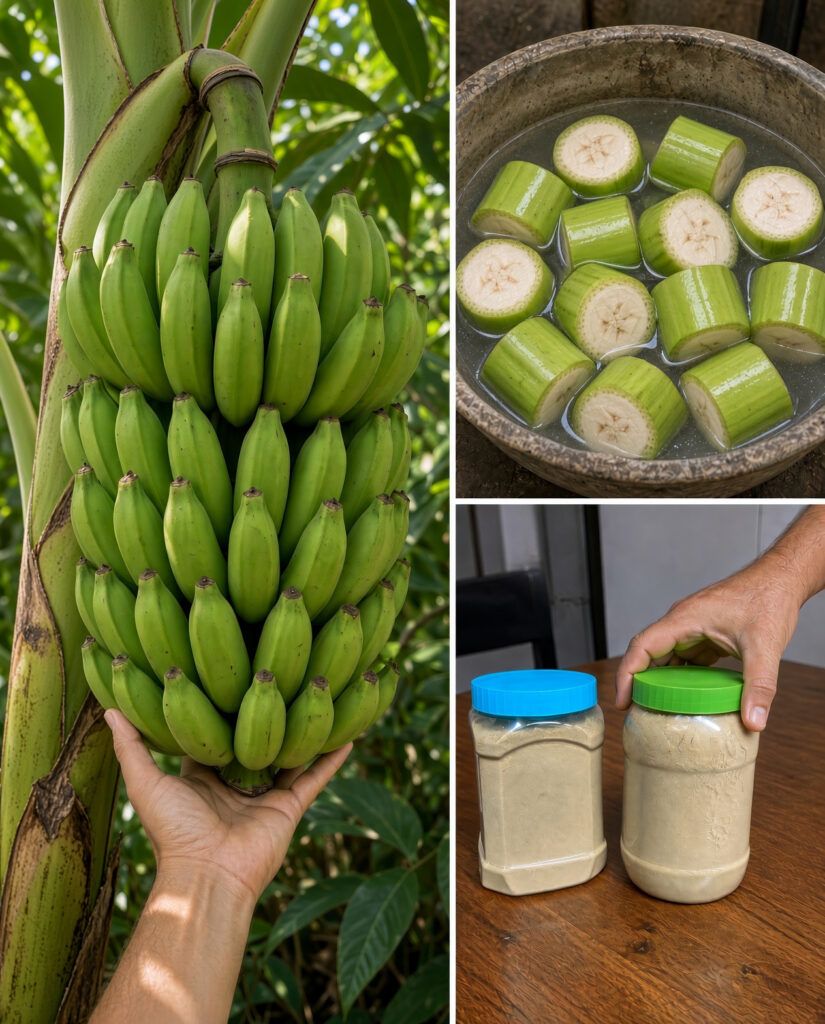
Unripe plantain is a familiar staple food in many parts of the world. But beyond being boiled, roasted, fried, or added to soups and stews, this green fruit has attracted attention for its unique nutritional profile and traditional uses.
Some people prepare unripe plantain as flour, tea, cooked food, or dried powder because they believe it may help with problems such as stomach ulcers, high blood sugar, high cholesterol, and sexual performance.
But how much of this is actually supported by research?
Can unripe plantain really support these areas of health? And is it safe for everyone?
Let’s take a closer look at what the evidence suggests.
What Makes Unripe Plantain Different?
One of the most interesting features of unripe plantain is its high starch content, including resistant starch.
Unlike rapidly digested starches, resistant starch is not completely broken down in the small intestine. Some reaches the colon, where gut bacteria can ferment it.
Research on unripe banana flour suggests that its starch has relatively high resistance to enzymatic digestion and may have potential applications for digestive and metabolic health.
Unripe plantain also contains dietary fiber, potassium, and various plant compounds.
These characteristics help explain why researchers continue to investigate its potential health effects.
1. Unripe Plantain May Support Stomach and Digestive Health
One of the most interesting traditional uses of unripe plantain is for stomach health.
Research has identified leucocyanidin, a flavonoid found in unripe plantain, as one compound associated with gastroprotective activity.
In animal studies, dried unripe plantain and isolated leucocyanidin helped protect the stomach lining against experimentally induced damage. Researchers suggested that the effect may involve increased protection of the gastric mucosa.
Other experimental research has also reported anti-ulcer activity from unripe plantain preparations.
However, there is an important distinction:
Evidence from animal studies does not mean that eating unripe plantain can cure ulcers in humans.
Stomach ulcers can have different causes, including Helicobacter pylori infection and certain medications. If an ulcer is caused by H. pylori, appropriate medical treatment is important.
Therefore, unripe plantain is better viewed as a nutritious food that may support digestive health—not as a replacement for ulcer medication.
2. It May Help Support Healthy Blood Sugar Levels
Unripe plantain is particularly interesting from a blood-sugar perspective because of its resistant starch and fiber.
Resistant starch is digested more slowly than ordinary starch. This can affect how quickly carbohydrates are broken down and absorbed.
A 2026 systematic review examining unripe banana flour found that available human studies were associated with potentially modest improvements in some metabolic markers, including fasting glucose and insulin resistance. However, the studies were relatively small and short, and researchers noted substantial variation between studies.
Laboratory research has also investigated plant compounds that may influence carbohydrate-digesting enzymes such as alpha-amylase and alpha-glucosidase.
But this does not mean unripe plantain works like diabetes medication.
If you have diabetes or take medication that lowers blood sugar, adding large amounts of plantain flour, powder, or other concentrated preparations should be discussed with your healthcare professional.
3. It May Support Cholesterol and Heart Health
Another reason unripe plantain attracts attention is its combination of starch and fiber.
Dietary fiber can contribute to a heart-healthy eating pattern, particularly when it replaces less nutritious refined foods.
Research specifically examining unripe banana flour has reported potential improvements in some metabolic outcomes, including lipid-related measures, although the evidence is still developing and the studies have used different amounts and preparations.
This is important because nutrition rarely works through one food alone.
Eating unripe plantain as part of an overall diet rich in vegetables, fruits, whole grains, healthy protein sources, and minimally processed foods is more meaningful for cardiovascular health than relying on one ingredient.
The American Heart Association’s 2026 dietary guidance emphasizes overall dietary patterns rather than individual “miracle” foods.
4. Could Unripe Plantain Support Sexual Health?
This is one of the most interesting claims surrounding plantain—but it also requires the most caution.
Researchers have investigated compounds in unripe plantain peel for their potential effects on enzymes involved in erectile function.
In laboratory experiments, extracts from unripe plantain peel inhibited phosphodiesterase-5 (PDE5) and several other enzymes associated with erectile function.
A later animal study also found that plantain peel extracts affected sexual behavior, nitric oxide levels, and hormone profiles in male rats with experimentally induced sexual dysfunction.
PDE5 is an important biological target in erectile dysfunction because prescription medications such as sildenafil act through this pathway.
However, this does not mean plantain peel works like Viagra.
The available evidence here comes primarily from laboratory and animal research. There is not enough high-quality human evidence to recommend plantain peel as a treatment for erectile dysfunction or infertility.
If erectile problems persist, it is worth speaking with a healthcare professional because erectile dysfunction can sometimes be associated with cardiovascular, metabolic, hormonal, or other health conditions.
5. Unripe Plantain Is a Nutrient-Rich Food
Even without making medicinal claims, unripe plantain can be a useful part of a balanced diet.
It provides:
Resistant starch
Dietary carbohydrates
Fiber
Potassium
Various plant compounds
Energy for everyday activities
Its nutritional composition also changes depending on ripeness and preparation.
For example, drying and processing unripe plantain into flour can produce a very different food from eating a freshly boiled plantain.
This is why the form, portion size, cooking method, and overall diet matter.
How Can You Eat Unripe Plantain?
There are many traditional ways to prepare green plantain.
1. Boiled Unripe Plantain
Wash and peel the plantain, cut it into pieces, and boil until tender.
You can serve it with vegetables, beans, fish, eggs, or a healthy sauce.
This is one of the simplest ways to include unripe plantain in a regular meal.
2. Unripe Plantain Flour
Green plantains can be dried and ground into flour.
The flour can then be incorporated into porridge, baked foods, or other recipes.
Because the nutritional composition can vary considerably between products, start with moderate portions rather than assuming that more is better.
3. Cooked and Cooled Plantain
Cooking and subsequently cooling starchy foods can change the structure of some starch and increase the amount of starch that resists digestion.
However, the effect varies depending on the food, cooking method, cooling conditions, and reheating process.
Therefore, cooled plantain should not be viewed as a guaranteed method for controlling blood sugar.
What About Fermented Unripe Plantain Water?
Some traditional preparations involve soaking or fermenting pieces of unripe plantain in water.
However, homemade fermentation can introduce food-safety concerns if the temperature, container, water quality, fermentation time, or hygiene is not properly controlled.
For that reason, a homemade fermented plantain drink should not automatically be considered safer or more effective than properly cooked plantain.
If you choose fermented foods, use a reliable food-safety method rather than relying on a fixed “2–3 day” recipe as a medical treatment.
Is Unripe Plantain Safe for Everyone?
For most healthy people, unripe plantain can be consumed as a normal food.
But there are some situations where extra caution is appropriate.
People with kidney disease
Plantain contains potassium. People with impaired kidney function may need to monitor potassium intake depending on their kidney function, blood potassium levels, medications, and individual dietary plan.
People taking diabetes medication
Because unripe plantain contains resistant starch and carbohydrates, people using glucose-lowering medication should consider their total carbohydrate intake and monitor their blood glucose as advised by their healthcare provider.
People with digestive sensitivity
Increasing resistant starch and fiber suddenly may cause bloating, gas, or other digestive discomfort in some people.
Starting with a moderate portion can be more comfortable.
So, Does Unripe Plantain Really Work?
The short answer is:
It shows promise, but the evidence is not strong enough to call unripe plantain a treatment for disease.
Research supports several interesting possibilities:
For stomach health: animal studies suggest gastroprotective effects, including effects associated with leucocyanidin.
For blood sugar: resistant starch and unripe banana flour have been investigated for their potential metabolic benefits, with early human evidence suggesting possible modest improvements in some markers.
For cholesterol: fiber-rich diets support cardiovascular health, while research specifically on unripe banana flour is still developing.
For sexual health: plantain peel has demonstrated interesting effects on PDE5 and other pathways in laboratory and animal studies, but human clinical evidence is still lacking.
So rather than thinking of unripe plantain as a “miracle remedy,” it makes more sense to think of it as a nutritious traditional food with several interesting research possibilities.
Final Thoughts
Unripe plantain is much more than a simple staple food.
Its resistant starch, fiber, potassium, and plant compounds have attracted scientific interest in areas ranging from digestive health and blood sugar regulation to cardiovascular and sexual health.
But promising laboratory or animal findings are only the beginning.
More well-designed human studies are needed to determine the appropriate amounts, preparations, long-term effects, and potential benefits for specific health conditions.
For now, enjoy unripe plantain as part of a varied, balanced diet—and don’t use it to replace prescribed treatment.
This article is for educational purposes only and is not intended to diagnose, treat, cure, or prevent any disease.


