
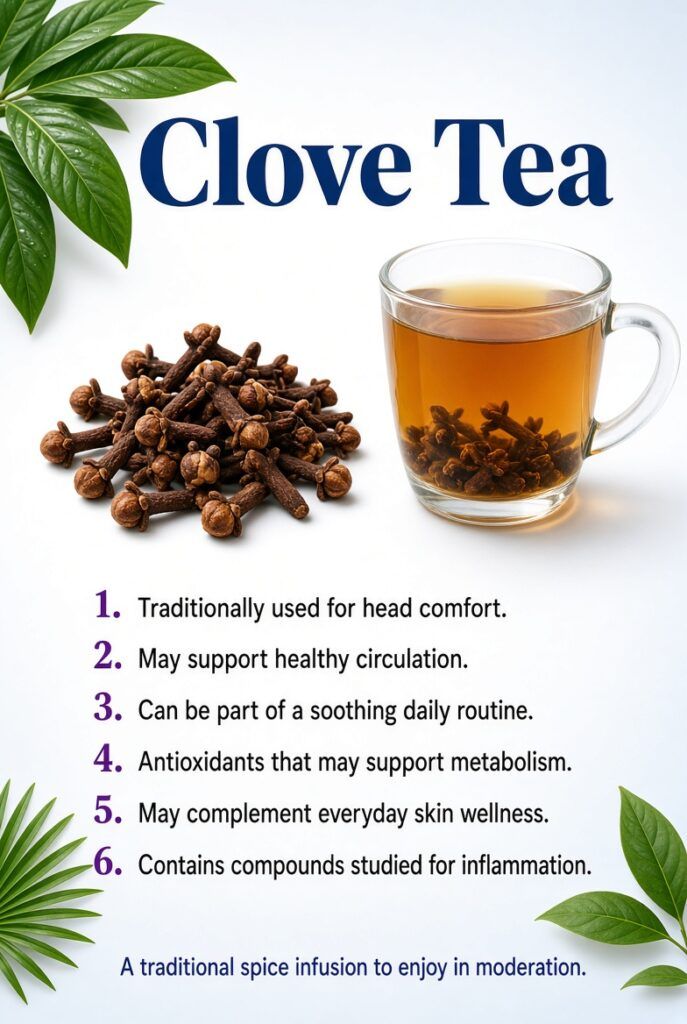
Clove (Syzygium aromaticum) is a small, aromatic spice found in many kitchens around the world. Despite its name, it historically comes from the Molucca Islands in what is now Indonesia. Steeped in hot water, it releases fragrant compounds and produces an intensely flavored drink known as clove tea.
Does this infusion really offer benefits? The honest answer requires balance. Cloves contain interesting compounds studied by science — mainly eugenol — but that does not mean the tea can treat or cure diseases.
What’s Inside a Clove
Much of clove’s characteristic aroma comes from eugenol, a compound in its essential oil. Cloves also provide various plant compounds with antioxidant activity, which is why they are studied in research related to oxidative processes, metabolism, and inflammation. But there is an important difference between studying a concentrated compound in a lab and drinking a cup of tea — the amount of these substances in a homemade infusion may be far smaller. Results from studies on extracts or essential oil should not be automatically attributed to the tea.
A Pleasant Drink After Meals
Traditionally, aromatic spices like clove are used after heavier meals. A warm infusion can be part of that moment, and some people report a sense of digestive comfort. This does not mean the tea treats gastritis, reflux, or other digestive diseases — frequent symptoms deserve professional evaluation.
Provides Antioxidant Compounds
Cloves are known for phenolic compounds, including eugenol. Antioxidants take part in protecting cells from oxidative stress. Still, no single food needs to be seen as an extraordinary solution. A diverse diet rich in fruits, vegetables, grains, and seeds remains far more important.
A Good Way to Replace Very Sugary Drinks
Because of its naturally intense aroma, clove tea can be enjoyed without sugar or with very little sweetener. For those who usually drink sodas or very sweet juices, an unsweetened infusion can be an interesting alternative within a balanced diet.
Part of a Relaxing Ritual
A hot drink at the end of the day can create a pleasant moment of slowing down. Clove combined with cinnamon, chamomile, or ginger makes a very aromatic infusion. The benefit, in this case, may be in the drink as much as in the habit of setting aside a few minutes to relax.
Simple Clove Tea Recipe
Ingredients: 4–5 whole cloves; 250 ml of water; 1 small lemon slice, optional; a small amount of honey, optional.
How to prepare:
- Heat the water until it starts to boil.
- Turn off the heat and add the cloves.
- Cover and wait about 5 to 10 minutes.
- Strain.
- Finish, if you like, with a small lemon slice or a little honey.
Should you toast the cloves first? Some traditional recipes recommend quickly heating the cloves in a dry pan before steeping. This can intensify the aroma, but it is not necessary to “activate” their properties.
Variations: add a small slice of fresh ginger for a drink especially pleasant on cold days (it is not, however, a treatment for colds or respiratory infections); or try clove with chamomile (about 5 minutes steeping) to soften the intensity, or with a small cinnamon stick for a naturally sweet aroma.
What about blood sugar or toothache? Research is investigating clove compounds in relation to glucose metabolism — but that does not mean a cup of tea can control diabetes or replace medications. People with diabetes should keep following their doctor’s guidance. Similarly, while eugenol has an important history in dentistry, clove tea is not a toothache treatment; persistent tooth pain needs dental evaluation. Note also that clove essential oil is not the same as the tea — the oil is extremely concentrated and can be harmful if ingested on your own.
How many cups per day? There is no scientifically established universal amount. For a healthy adult who tolerates the spice well, an occasional cup of a light infusion is a simple way to include it in a routine — there is no need to turn the tea into a “protocol.”
Who should be more careful? It is especially important to talk to a health professional before frequent or concentrated use if you: take blood-thinning medications; have a clotting disorder; are near a surgery; are pregnant or breastfeeding; have liver disease; take medications to control blood sugar; or have a clove allergy or sensitivity.
The Bottom Line
Clove tea may be worth trying, especially if you enjoy aromatic drinks. Cloves contain eugenol and other interesting plant compounds, and a light infusion can be part of a varied diet. The important thing is not to turn a traditional food into a cure promise. The tea doesn’t need to “detox” the body, kill bacteria, or control diabetes to have a place in your routine. Healthy habits don’t need to be miraculous to be useful. A balanced diet, adequate hydration, sleep, physical activity, and medical follow-up when needed remain far more important pillars of health than any tea on its own.
Note: This content is for educational purposes only and does not replace diagnosis, treatment, or guidance from a doctor, dentist, or nutritionist. Plants, spices, and supplements can also cause adverse effects or interact with medications.


