
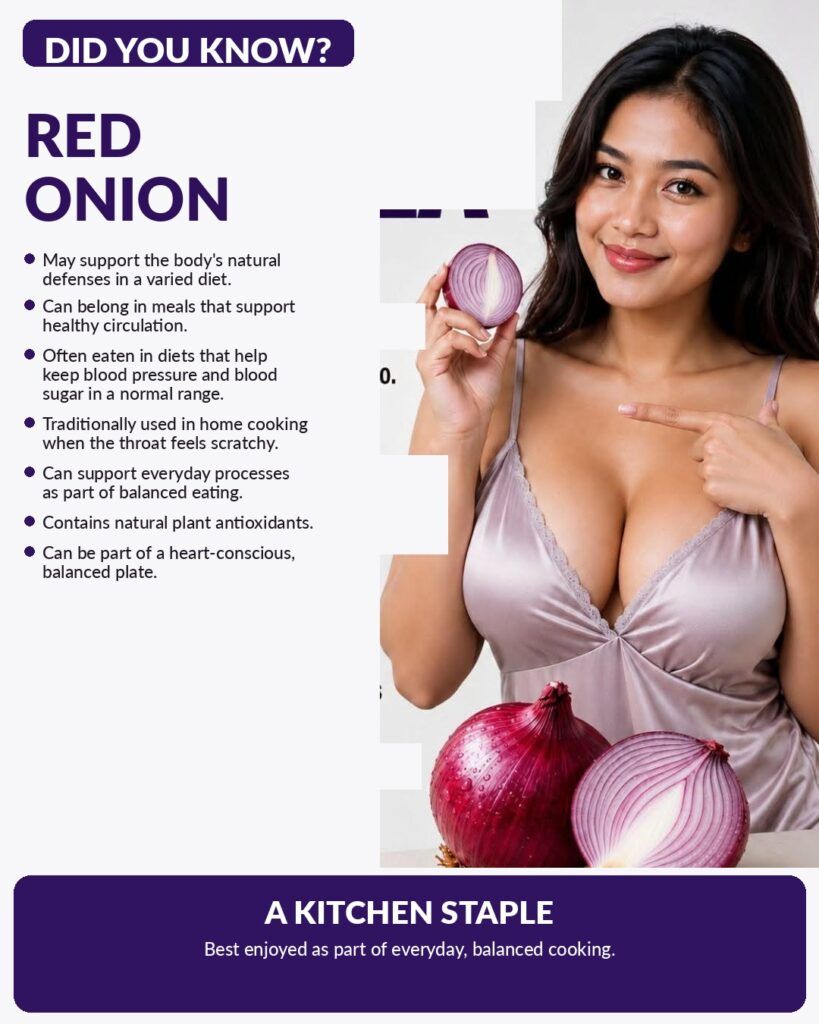
Red onion is much more than an ingredient used to add flavor and aroma to meals. Present in kitchens around the world, it also stands out for providing fiber, vitamin C, sulfur compounds, and antioxidants, including flavonoids like quercetin and anthocyanins that give it its purple color.
This doesn’t make onion a treatment or a miracle solution. But when eaten regularly as part of a balanced diet, it can contribute to the overall quality of your meals.
Supports the Body’s Natural Defenses — as Part of a Varied Diet
Onion provides vitamin C and different antioxidant plant compounds. These nutrients take part in important processes related to the normal functioning of the immune system. A varied diet rich in fruits, vegetables, and minimally processed foods helps supply the nutrients the body’s defenses need. Onion can be part of that eating strategy — but not a way to prevent or treat colds, flu, or other illnesses.
Part of a Heart-Conscious Plate
Among the compounds found in onion is quercetin, a flavonoid widely studied for its antioxidant activity, along with sulfur compounds responsible in part for its characteristic aroma. A diet that regularly includes vegetables can contribute to cardiovascular health. Onion is a simple way to add more plant variety to your daily plate. Keep in mind that no single food can “clean the arteries” or replace medical care for cardiovascular problems.
Interesting Source of Antioxidants
The distinctive purple coloring of red onion is related to anthocyanins, plant pigments also found in berries, purple grapes, and red cabbage. These substances take part in protecting cells from oxidative stress. Eating different colorful vegetables is a good way to increase the diversity of bioactive compounds in your diet.
Can Support a Healthy Gut — Mind Your Tolerance
A less-discussed benefit of onion is related to its fiber and fructans, carbohydrates that can serve as fuel for certain intestinal bacteria. On the other hand, people sensitive to FODMAPs or with some gastrointestinal disorders may experience gas, bloating, or abdominal discomfort after eating large amounts of onion. Individual tolerance should be respected.
Tradition Is Not the Same as Treatment
Onion recipes with honey or infusions appear across generations in different cultures, and many people enjoy these preparations when they have a cold. A warm drink can be comforting, especially when it helps with hydration. Still, there is no reason to consider onion a treatment that eliminates viruses or cures respiratory infections. Intense symptoms, shortness of breath, persistent fever, or worsening deserve medical evaluation.
No “Detox” Needed
We don’t need a specific food to perform an internal “cleanse” — the liver, kidneys, intestines, and lungs already continuously process and eliminate substances from the body. Onion provides nutrients that can be part of a diet favorable to these systems, but it doesn’t work as a detox product.
Simple Ways to Include Red Onion in Your Day
One of onion’s advantages is its versatility:
- Raw: in salads, vinaigrettes, sandwiches, and sides.
- Sautéed: with beans, rice, eggs, vegetables, or meats.
- Roasted: naturally sweeter, pairs well with other vegetables.
- In soups and stews: adds flavor without needing lots of salt.
- Pickled: can accompany salads and main dishes, watching the salt or sugar used.
Cooking modifies some of its compounds, but that doesn’t mean it loses all nutritional value. Alternating raw and cooked preparations is practical.
Any Cautions?
For most people, onion in culinary amounts is safe. Still, some may experience heartburn, reflux, gas, or bloating. It’s also not advisable to apply raw onion or its juice directly to the skin as a home treatment without proper guidance — contact can cause irritation, especially on sensitive skin. Those with health conditions requiring a specific diet should follow their doctor’s or nutritionist’s recommendations.
Conclusion: The Secret Is in the Overall Diet
Red onion deserves space in the kitchen not because it’s a “natural remedy,” but because it’s a tasty, versatile vegetable rich in different nutritional compounds. Its consumption can contribute to a diet that favors cardiovascular health, intestinal function, antioxidant intake, and general nutrition — as part of a balanced lifestyle, with no cure promises or instant results.
Educational content only — not a substitute for diagnosis, treatment, or follow-up by health professionals.


