
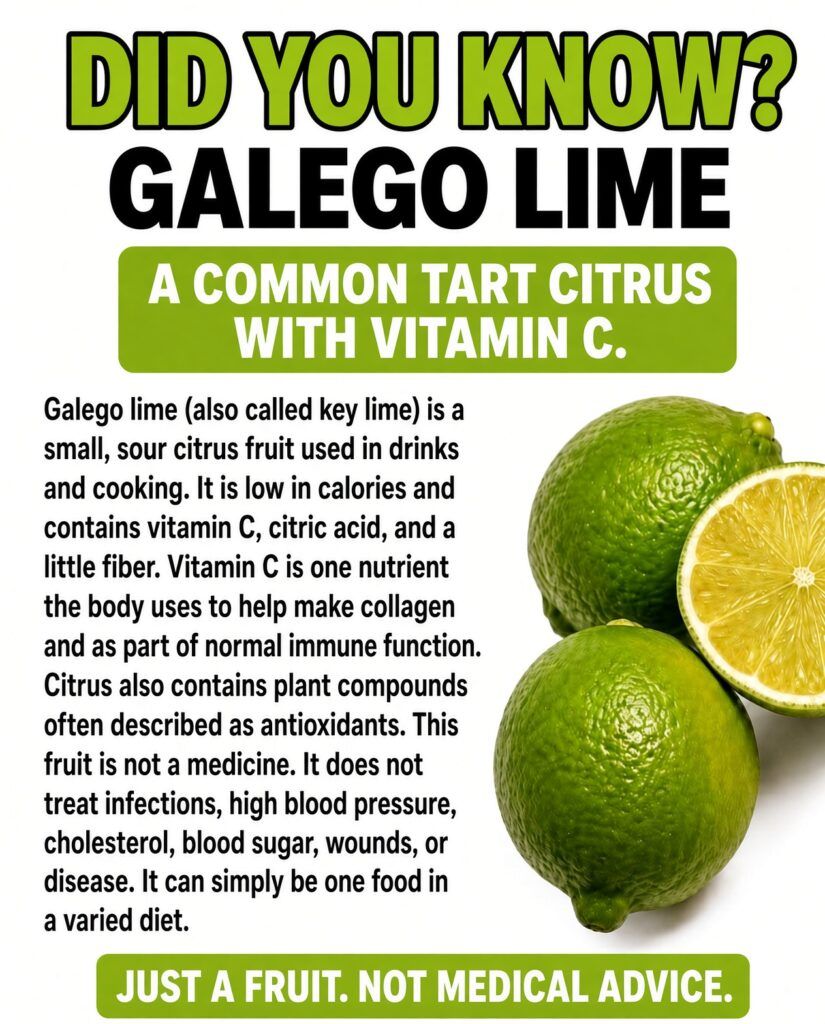
Known for its vibrant green color and sharp flavor, the galego lime (also called key lime) is much more than a seasoning ingredient. This small citrus fruit can be part of a varied, balanced diet, offering vitamin C, antioxidant compounds, and other nutrients.
It is also versatile: drinks, salads, dressings, fish, vegetables, and everyday recipes. But while the internet often presents lime as a solution for many health problems, it is important to separate known nutritional benefits from exaggerated promises.
1. A Good Source of Vitamin C
One of lime’s main nutrients is vitamin C. It supports normal immune function and contributes to collagen formation — a protein important for skin, blood vessels, cartilage, and other tissues. A few drops of lime in meals or drinks is a simple way to add variety to your vitamin C sources.
2. Contains Antioxidant Compounds
Beyond vitamin C, lime has flavonoids and other plant compounds with antioxidant properties, part of the natural mechanisms that help protect cells against oxidative stress. Lime can contribute to a balanced diet — but it should not be seen as a drink that “cleanses” the whole body.
3. May Help Iron Absorption
The vitamin C in lime can support the absorption of non-heme iron, found mainly in plant foods. Using lime with meals like bean salads, lentils, spinach, leafy greens, or chickpeas can be an interesting combination — especially within a varied vegetarian or vegan diet. Still, lime does not replace medical evaluation when iron deficiency or anemia exists.
4. Can Make Hydration More Pleasant
For some people, plain water feels dull. A few drops or a slice of lime can make it tastier and easier to drink enough fluids. Good hydration matters for kidney function, temperature regulation, digestion, muscles, and overall fluid balance. Water remains the main source of hydration — lime simply adds flavor.
5. Citrate and Kidney Health
Lime contains citrate, a compound related to the prevention of certain crystal types involved in kidney stone formation. For some people with a history of stones, adequate fluids and citrate can be part of a guided nutritional strategy. But there are different types of kidney stones with different causes. Anyone with a history of stones or kidney problems should talk to a health professional about the right habits and fluid amounts.
Does Lime Help You Lose Weight?
This is one of the most common questions. Lime does not burn body fat directly. However, unsweetened lime water can be an interesting swap for sodas or very sugary juices — reducing total calorie intake in that context. Drinking lime water on an empty stomach is not a special weight-loss formula. Weight control depends on diet, portions, physical activity, sleep, and consistent habits.
Does Lime Water “Detox”?
The idea that lime water “eliminates all toxins” is popular but should not be taken literally. The body already has natural systems — mainly the liver and kidneys — for processing and eliminating substances. There is no need for extreme “detox” diets: balanced eating, hydration, exercise, and quality sleep matter far more.
A Simple Lime Water Recipe
1 glass of water; juice of half a lime; ice, if desired; a few mint leaves, optional. Mix and enjoy — no sugar needed.
Other Ways to Use Lime
Its fresh flavor pairs well with salads, fish, roasted vegetables, homemade dressings, soups, beans, and lentils. A little lime can enhance food and add variety without heavy ready-made sauces.
Do You Need to Drink It on an Empty Stomach?
No. There is no rule that lime must be consumed fasting to offer its nutrients. Enjoy it at breakfast, with meals, after eating, or whenever you like. People with digestive sensitivity or reflux may notice more discomfort with very acidic foods at certain times — observe how your own body reacts.
Mind Your Teeth
Lime is naturally acidic, so frequent consumption deserves care: repeated exposure of teeth to acidic drinks can wear enamel. Simple precautions: dilute the juice in water, avoid holding the drink in your mouth, drink plain water afterward, and avoid brushing your teeth immediately after acidic drinks.
Lime and Reflux
Lime is healthy for many people, but not comfortable for everyone. In people with reflux or gastrointestinal sensitivity, acidic foods can intensify burning, sour taste, or stomach discomfort. Reducing or avoiding it may be the more comfortable choice.
Does Lime Give You More Energy?
Lime is not a stimulant like caffeine. Its refreshing flavor and aroma can feel pleasant, but it has no direct stimulating effect. If lime water helps you drink more water or replace sugary drinks, it can indirectly support more balanced habits. Frequent fatigue deserves attention: poor sleep, inadequate diet, stress, and various health conditions can be related. A professional evaluation matters when the problem persists.
Conclusion
Lime is a simple, versatile, nutritious fruit for a balanced diet: vitamin C, antioxidant compounds, support for iron absorption, tastier hydration, and citrate. Keep realistic expectations: lime is not a miracle solution, does not burn body fat directly, and does not replace the body’s natural processes. Use lime to flavor meals, vary your drinks, and add nutrients to your routine — always respecting your own body’s needs.
Educational content only. Not medical advice.


