
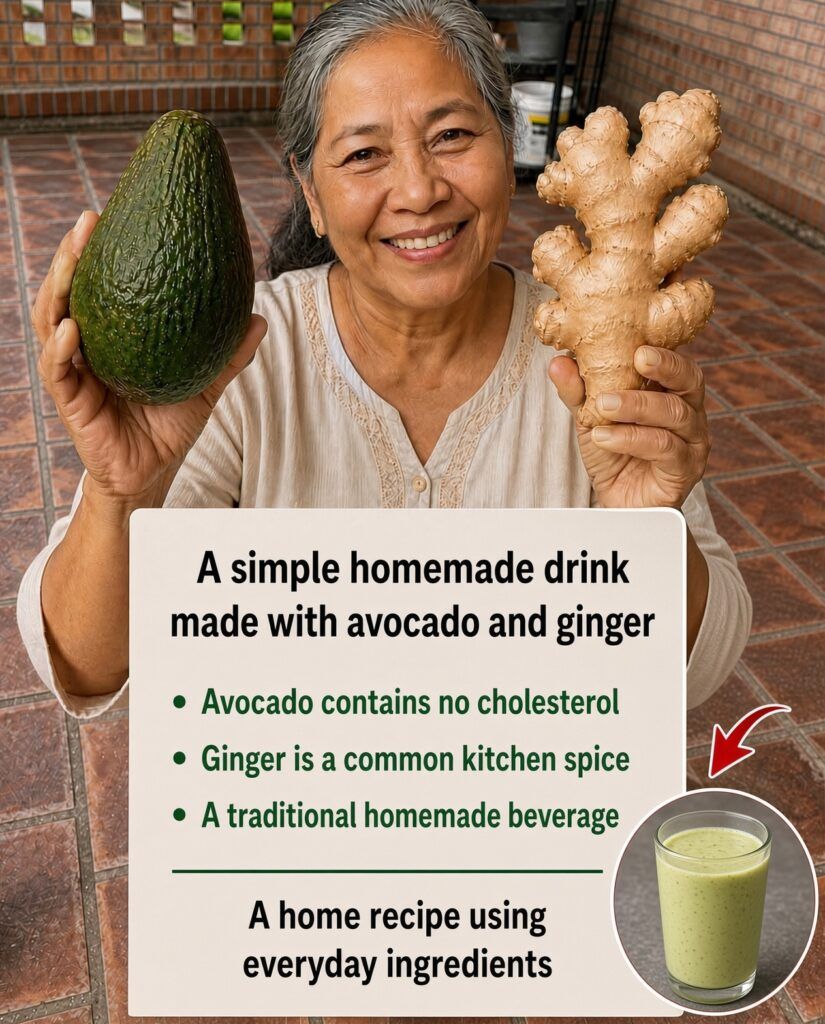
Feeling heavy, waking up low on energy, or noticing stiffer joints can turn small daily tasks into something tiring. In those moments, it is common to look for a simple recipe to fold into the routine. One combination drawing attention is a drink made with avocado and ginger.
Both ingredients offer interesting nutrients: avocado provides fiber, potassium, and mostly unsaturated fats, while ginger contains plant compounds like gingerols. That does not mean the drink “cleans the arteries,” eliminates inflammation, or normalizes cholesterol in a few days. But as part of a balanced diet, it can be a practical way to add nutritious foods to the day.
Why Combine Avocado and Ginger?
The interesting thing is not a supposed miracle effect, but the combination of two foods with very different nutritional profiles. Avocado adds creaminess, fiber, and unsaturated fats; ginger brings a lightly spicy flavor and bioactive compounds studied for their antioxidant properties.
Avocado: More Than a Fat Source
Avocado is energy-dense and nutrient-rich. Most of its fat is monounsaturated, including oleic acid. It also provides fiber and important micronutrients. Used in place of saturated-fat foods, avocado can be part of an eating strategy favorable to cardiovascular health. Key components: monounsaturated fats, dietary fiber, potassium, folate, vitamin E, carotenoids, and other antioxidant compounds. Fiber also increases satiety, which can help some people manage snacking between meals. Remember, though, that avocado has considerable calories — moderate portions are usually enough.
Ginger: A Small Root with Interesting Compounds
Ginger (Zingiber officinale) has a long history of culinary and traditional use. Its best-known compound is gingerol, responsible for much of the fresh root’s aroma and spiciness. Ginger compounds are studied mainly for antioxidant activity and modulation of inflammatory processes. Ginger is also traditionally used to support digestive comfort and ease nausea in certain situations. That is different from claiming it “cures inflammation.” Persistent inflammation can be linked to different diseases and needs proper investigation.
And Cholesterol? Can the Drink Really Help?
There is an important difference between supporting healthy eating and treating high cholesterol. Avocado is interesting mainly for its unsaturated fats and fiber. A diet that replaces some saturated fats with unsaturated fats tends to be more favorable to the lipid profile. But there is no reason to expect one glass to meaningfully lower cholesterol on its own. The result depends on overall diet, physical activity, body weight, genetics, smoking, alcohol, diabetes, and many other factors. People taking cholesterol medications must not stop them to try homemade recipes.
Can Avocado with Ginger Reduce Inflammation?
Better to speak of nutritional support than “deflating the body.” Ginger has bioactive compounds studied in relation to inflammatory pathways, while avocado provides vitamin E, carotenoids, and unsaturated fats — components of a nutritionally solid diet. Still, persistent pain, swollen joints, redness, fever, or intense stiffness should not be treated with homemade drinks alone.
What About Fatigue?
A glass of avocado with ginger does not work as an immediate stimulant. Still, avocado provides energy, fiber, fats, and minerals, making the drink relatively nutritious. Within an adequate dietary routine, it can contribute to daily nutrient intake. Frequent fatigue deserves attention: poor sleep, dehydration, stress, poor diet, and inactivity are common causes — but anemia, thyroid changes, diabetes, sleep apnea, and other conditions can also cause it. If fatigue persists or worsens, a professional evaluation matters more than another recipe.
Creamy Avocado-Ginger Drink Recipe
A simple version with few ingredients, no sugar needed. Ingredients: half a small ripe avocado; 1 piece (~1 cm) fresh ginger; 200–250 ml water; a few drops of lemon, optional. How to prepare: scoop out the avocado flesh; wash the ginger well and peel it, if desired; blend avocado, ginger, and water until smooth and creamy; add a few drops of lemon for a fresher flavor, if you like; drink right after preparing. If too thick, add a little more water. No need for sugar, condensed milk, or syrups — they add a lot of sugars and calories.
Best Time to Drink It?
There is no evidence it must be consumed fasting. It can be had at breakfast, as a snack, or with a meal, depending on individual needs. For some people, ginger on an empty stomach can cause heartburn or discomfort — then prefer it with or after a meal. A practical frequency for a healthy person: 2–4 times a week, varying with other fruits and foods. No need for large daily amounts. Variety across the week matters most.
What to Do Alongside the Drink for Cholesterol and Energy
No single recipe compensates for an unbalanced routine. These attitudes matter far more over time: (1) Walk regularly — 20–30 minutes, respecting your fitness level. (2) Eat more fiber — oats, beans, lentils, fruits, vegetables, seeds, whole grains. (3) Choose fats better — olive oil, avocado, nuts, and seeds can replace some saturated-fat sources. (4) Stay hydrated — even mild dehydration can contribute to feeling unwell. (5) Prioritize sleep — no drink regularly replaces seven or eight hours of adequate rest.
Can You Feel a Difference in Just 3 Days?
Someone may feel better quickly by improving diet, hydration, and sleep. But that does not mean cholesterol was normalized or chronic inflammation disappeared. Important cholesterol changes are assessed through blood tests, not just by feeling more energetic. So phrases like “lowers cholesterol in three days” or “eliminates all inflammation” should be viewed with caution. The real benefit lies in repeating good habits over weeks, months, and years.
Who Should Be More Careful?
Though avocado and ginger are common foods, some situations deserve attention: people on anticoagulants or antiplatelet drugs should talk to a health professional before consuming large amounts or concentrated ginger supplements; those with gastritis or reflux may notice more discomfort with excess ginger; avocado is rich in potassium — people with kidney disease or potassium restriction must consider the amount; people with diabetes should watch overall diet and follow their treatment.
FAQ
Can I drink it every day? For many healthy people, small portions can be part of the diet — but daily is not necessary. Varying fruits, vegetables, seeds, and other nutrient sources is usually better. Must it be fasting? No. Timing does not make the drink a more potent treatment. Does it replace cholesterol medication? No. If you were prescribed medication, do not stop it because of a natural recipe. Can I add honey? You can, but it is usually unnecessary. Avocado already gives a pleasant texture, and honey adds free sugars and calories. Can it replace a meal? Not necessarily on its own. A balanced meal needs proteins, carbs, fats, fiber, and micronutrients matched to individual needs.
Conclusion: A Simple Recipe, No Miracle Promises
An avocado with ginger drink can be a nutritious option to vary the menu. Avocado offers fiber, unsaturated fats, potassium, and antioxidants; ginger adds bioactive compounds and bold flavor. The main point is not to expect a transformation in three days. For cholesterol, energy, and cardiovascular health, it is worth far more to combine nutritious foods with physical activity, adequate sleep, hydration, lab monitoring, and medical treatment when needed. Natural recipes can complement a good routine. They don’t need to be presented as miracles to be interesting.
Educational content only. Not medical advice.


