
Thyme is a well-known herb in cooking and is often used to add flavor to meats, soups, vegetables, sauces, and various other dishes. Despite its small size and seemingly simple appearance, this spice has a rich composition of natural substances that appeal to those seeking a more varied diet and healthy habits.
Known scientifically as Thymus vulgaris , thyme has been used for a long time in different cultures. Traditionally, the plant appears in preparations related to respiratory comfort, digestion, and general well-being.
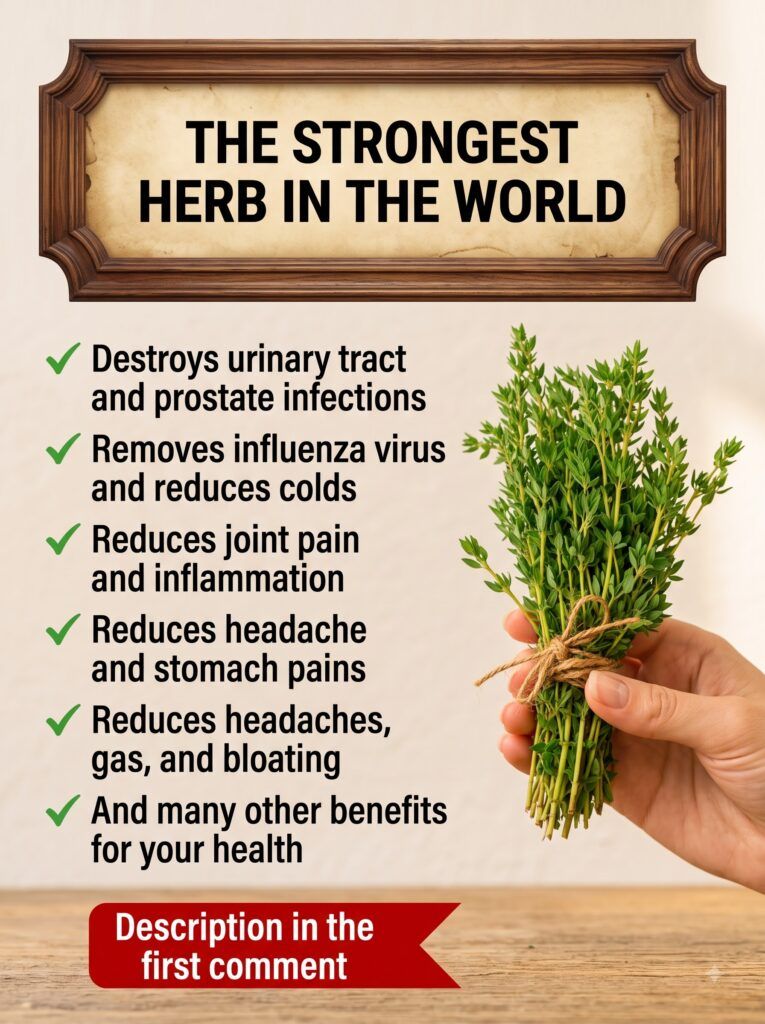
Currently, interest in this herb is also related to its natural compounds, including thymol, carvacrol, flavonoids, and various components present in its essential oils.
But there’s an important point to remember: a medicinal plant or herb should not be treated as a miracle cure. Thyme can be part of a healthy routine, but it doesn’t replace medical consultations, medications, or treatments indicated for each specific situation.
What is it about thyme that makes it so appealing?
Thyme is composed of various substances of plant origin.
Among the best-known components are:
- Timol
- Carvacrol
- Flavonoids
- Essential oils
- Other compounds with antioxidant action.
Thymol is one of the most characteristic components of the plant and is extensively studied. Carvacrol also attracts interest due to its properties observed in laboratory research.
These characteristics help explain why thyme has been used for so long in cooking and in traditional preparations.
However, it is important to understand the difference between a property observed in a laboratory and a proven benefit in the human body.
A substance may exhibit a certain behavior in an experimental study without this meaning that simply consuming the plant will produce the same result.
Therefore, thyme should be considered part of a balanced diet and not as a treatment for diseases.
What is thyme used for?
Thyme can be used in many ways.
In the kitchen, it functions as a seasoning and helps to provide aroma and flavor to food. This can be especially interesting for people who want to reduce excess salt without sacrificing tasty meals.
It is also possible to prepare an infusion using the plant’s leaves.
Traditionally, thyme tea is consumed mainly after meals or when suffering from a cold or sore throat.
Furthermore, the components present in the herb have been studied due to their antioxidant properties and the activity observed against certain microorganisms.
This does not mean that the plant is capable of curing diseases or eliminating infections. The benefit is much more related to its potential as a food and traditional ingredient within a balanced routine.
1. Thyme Can Provide Respiratory Comfort
One of the best-known traditional uses of thyme is related to the respiratory system.
The infusion prepared with the herb is often consumed by some people during periods of colds, mild coughs, or throat irritation.
Consuming a hot beverage can also contribute to hydration and provide a pleasant sensation in the throat area.
Among the situations in which thyme is traditionally used are:
- Mild cough
- Colds
- Throat irritation
- Sensation of accumulated mucus
- Mild respiratory discomfort
It is important, however, not to confuse comfort with treatment.
An occasional cough during a cold may be different from a cough that persists for weeks or is accompanied by other symptoms.
If you experience shortness of breath, chest pain, high fever, progressive worsening, or persistent symptoms, you should seek professional evaluation.
In these situations, relying solely on tea or any other home remedy can delay identifying the true cause of the problem.
2. Thyme can be beneficial for digestion.
Another well-known traditional use is drinking thyme tea after meals.
Some people turn to alcohol when they feel they have eaten a very heavy meal or are experiencing mild digestive discomfort.
Among the sensations reported are:
- Gases
- Stuffing
- Feeling of slow digestion
- Mild abdominal discomfort
An unsweetened infusion can also be an interesting alternative to replace very sugary drinks throughout the day.
This does not mean that thyme treats digestive problems. Occasional discomfort is different from frequent, intense, or persistent symptoms.
When a person experiences recurrent abdominal pain, significant changes in bowel function, vomiting, unexplained weight loss, or other concerning signs, it is best to investigate the cause.
Home remedies can be part of the routine, but they shouldn’t mask symptoms that need attention.
3. Thymol and other components have studied antimicrobial activity.
Thymol is probably the best-known compound in thyme when it comes to research involving microorganisms.
Some laboratory studies have observed activity of components present in the plant against certain microorganisms.
This information is interesting, but it needs to be interpreted correctly.
There is a big difference between observing a substance acting on a particular microorganism under controlled conditions and claiming that drinking thyme tea will eliminate an infection in the body.
These are completely different situations.
For this reason, thyme should not be used as a substitute for antibiotics, antifungals, or other prescribed medications.
When an infection is diagnosed, treatment should follow the guidance of the responsible professional.
4. Thyme is a source of antioxidant compounds.
The human body naturally produces molecules known as free radicals during various metabolic processes.
The antioxidants present in food help to participate in the body’s natural defenses against processes related to oxidation.
Thyme contains various plant compounds that are of interest precisely because of their antioxidant properties.
Among them are some flavonoids and components present in the plant’s essential oils.
This does not mean that you need to consume large quantities of thyme to obtain protection against disease.
A varied diet remains far more important.
Fruits, vegetables, legumes, beans, grains, seeds, nuts, and other plant-based sources offer different nutrients and bioactive compounds.
Therefore, thyme can contribute as part of this variety, especially when used as a seasoning.
5. Thyme and Heart Health
The components of thyme are also studied in relation to different metabolic and cardiovascular aspects.
However, the available information does not support the use of thyme as a treatment for high blood pressure, high cholesterol, or cardiovascular disease.
When the goal is to take care of your heart, general habits become much more important.
Among them are:
- Maintain a balanced diet.
- Practice physical activity regularly.
- Sleeping properly
- No smoking
- Monitor blood pressure
- Get tested when recommended.
- Follow medical treatments when necessary.
In this context, thyme can be a simple way to add flavor to meals.
Using herbs can also help some people reduce the amount of salt used in food preparation.
6. Can thyme be used in skincare?
The components present in thyme essential oil are studied for their antimicrobial properties, which has also sparked interest in potential applications related to the skin.
However, there is a very big difference between using the plant as a spice and applying concentrated essential oil to the body.
Essential oil is a highly concentrated preparation and can cause irritation or unpleasant reactions when used improperly.
Therefore, it is not recommended to apply pure essential oil directly to the face, wounds, or sensitive areas without proper guidance.
Persistent problems such as severe acne, blemishes, sores, itching, or inflammation should be evaluated by a dermatologist.
The use of a plant should not replace the investigation of persistent skin changes.
Can thyme also be part of oral care?
Thymol is used in some formulations intended for oral hygiene, and this is another reason why the compound is of interest.
Even so, that doesn’t mean that preparing thyme tea is enough to take care of your oral health.
Proper brushing, flossing, and regular dental checkups remain essential.
If you experience frequent bleeding gums, pain, swelling, persistent bad breath, or suspect an infection, you should see a dentist.
Thyme can be part of the diet, but it should not be considered a substitute for basic dental and oral care.
How to Prepare Thyme Tea at Home
Tea is one of the simplest ways to use the herb.
Ingredients
- 1 teaspoon of dried thyme leaves
- Approximately 200 to 250 ml of water
Preparation Method
- Heat the water until it is almost boiling.
- Place the thyme leaves in a cup.
- Pour the hot water over the herb.
- Cover the cup and let it sit for approximately 5 to 10 minutes.
- After this period, strain the drink.
- Wait a few moments and consume.
Those who prefer a more refreshing flavor can add a few drops of lemon.
If the goal is to consume the drink frequently, it’s best to avoid excessive sugar or honey.
One of the advantages of an unsweetened infusion is precisely that it can replace sweetened beverages which, when consumed in excess, increase the amount of sugar in the daily diet.
Is there a best time to drink thyme tea?
There is no mandatory time to consume the beverage.
Some people like to drink the infusion after meals, especially because of the herb’s traditional use related to digestion.
Others prefer to consume a hot drink at night or on cold days.
The most important thing is to observe how the body itself reacts.
It’s also not necessary to overdo the quantity just because a plant is considered natural.
More quantity does not necessarily mean more benefit.
You can also use thyme as a seasoning.
One of the simplest ways to enjoy thyme doesn’t even involve making tea.
This herb pairs well with a wide variety of foods.
It can be used in:
- Chicken
- Fish
- Potatoes
- Tomatoes
- Bean
- Roasted vegetables
- Soups
- Sauces
- Eggs
- Preparations with olive oil and lemon
In addition to making food more aromatic, the use of herbs and natural spices can help those trying to reduce excess salt in their meals.
This is a simple change that can be part of a larger strategy to improve the quality of food.
And what about inhalation with thyme?
Warm water vapor can temporarily provide a feeling of relief for some people who have a stuffy nose.
But you have to be very careful with so-called homemade inhalations.
Containers with very hot or boiling water can cause burns, especially when used haphazardly.
It is also not necessary to bring concentrated essential oil close to the nose.
To relieve nasal congestion, simple measures such as staying well hydrated and following appropriate guidelines for each situation are usually the safest options.
Thyme is natural, but that doesn’t mean it’s risk-free.
There is a fairly common idea that anything natural can be used without worry.
That’s not true.
When used normally as food and seasoning, thyme is usually well tolerated by many people.
The situation may be different when we talk about extracts, supplements, or essential oils.
These forms may contain much higher concentrations of the plant’s components.
Therefore, it is necessary to pay attention mainly in the following situations:
- Pregnancy
- Breast-feeding
- Allergy to plants of the Lamiaceae family.
- Continuous use of medication
- Chronic diseases
- Use of concentrated extracts
- Use of essential oils
- Preparations intended for children
In these circumstances, talking to a doctor, nutritionist, or pharmacist beforehand can help prevent problems.
One particularly important precaution is to avoid ingesting thyme essential oil on your own.
Essential oils should not be confused with the herb normally used as a seasoning.
What Thyme Doesn’t Do
On the internet, it’s common to find content promising results far greater than those that can be supported by the available information.
Some publications present thyme as being able to destroy infections, eliminate viruses, cure inflammations, or quickly resolve various illnesses.
Caution is needed when making this type of statement.
Thyme does indeed contain biologically interesting compounds, and research is investigating its properties.
However, this does not mean that drinking an infusion of the plant is enough to cure an illness.
For example, a urinary tract infection may require specific evaluation and treatment. Symptoms such as fever, lower back pain, blood in the urine, or persistent urinary problems need professional attention.
The same applies to respiratory problems.
A person experiencing shortness of breath, chest pain, persistent fever, or worsening symptoms should not rely solely on tea.
The role of a traditional beverage should be complementary, not a substitute for necessary medical care.
How to Use Thyme in Everyday Life
Thyme can be incorporated into your routine in a very simple way.
There’s no need to turn the herb into some kind of mandatory treatment.
One of the most practical ways to use it is as a seasoning while preparing meals.
It is also possible to occasionally prepare an infusion, provided that the person has no contraindications and tolerates the drink well.
The most important thing is to observe the set of habits as a whole.
A varied diet, adequate water intake, regular physical activity, quality sleep, and preventive health care play a much broader role than any single herb.
In this context, thyme can be just another interesting ingredient within a balanced routine.
Conclusion
Thyme is a small, aromatic, and very versatile herb, but its history and natural components make it quite interesting.
Among the substances found in the plant are thymol, carvacrol, and various flavonoids and components of essential oils.
These elements help explain why thyme is studied and why the plant continues to be used both in food and in traditional practices.
Thyme tea can be a pleasant option for some people, especially during times of mild discomfort, while using the herb as a seasoning is an even simpler way to incorporate it into meals.
It’s also important to maintain realistic expectations.
Thyme can complement a balanced diet, but it should not be treated as a cure for diseases, much less as a substitute for medication or medical consultations.
The best way to enjoy this small herb is to use it in moderation.
Whether in soup, vegetables, chicken, fish, eggs, or a cup of infusion, thyme can add aroma and variety to meals without needing to be transformed into a miracle cure.
Disclaimer: This content is for educational and informational purposes only. It does not replace diagnosis, monitoring, or treatment performed by a healthcare professional.


