
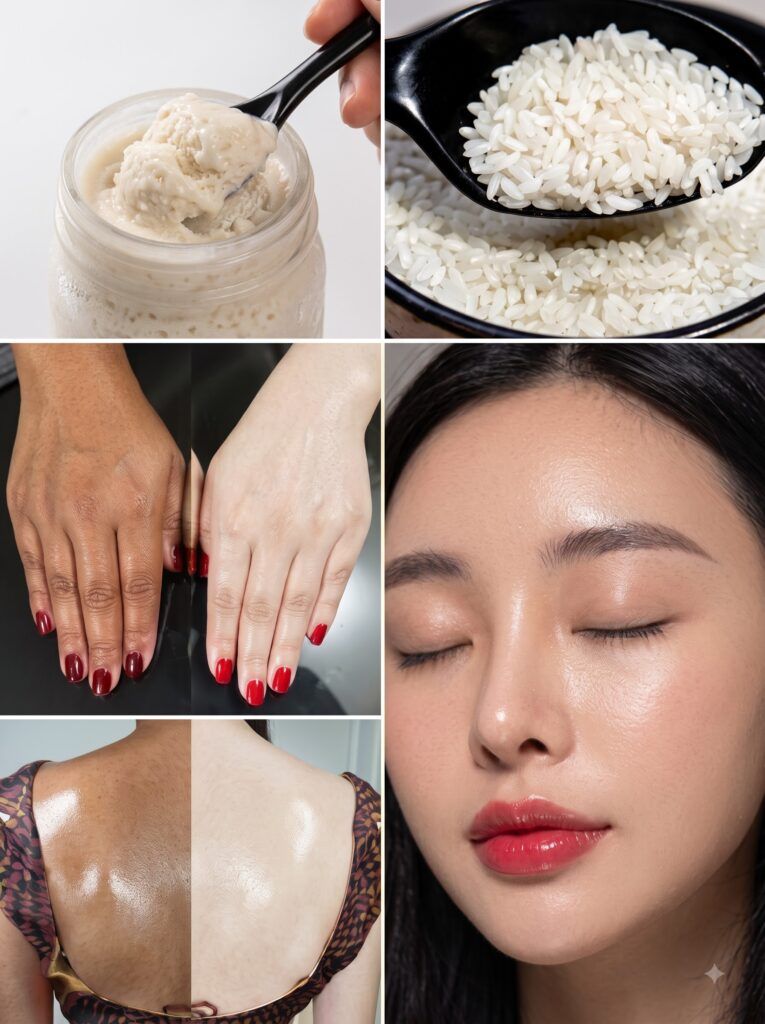
Today, rice water, rice bran, and rice-based skincare products have become popular around the world. Social media has also turned traditional rice beauty recipes into viral skincare trends, especially among people looking for a more natural way to improve the appearance of dull skin, uneven tone, and fine lines.
But can rice really make your skin “white,” erase wrinkles, and remove every dark spot?
Not exactly.
Rice-based skincare may help cleanse, soften, moisturize, and improve the appearance of dull skin, but no homemade rice formula can guarantee wrinkle-free or completely spotless skin. Skin aging, pigmentation, and texture are influenced by genetics, hormones, sun exposure, lifestyle, and many other factors.
Here are 10 Japanese-inspired rice beauty secrets worth knowing.
1. Rice Water as a Gentle Skin Rinse
One of the most popular rice beauty traditions is rice water—the milky-looking water left after rinsing or soaking rice.
Rice water is often used as a simple facial rinse because it feels gentle and refreshing on the skin.
To make a basic version at home, rinse uncooked rice thoroughly and soak a small amount in clean water for several minutes. Strain the water before use.
Always use a clean container and avoid storing homemade rice water for long periods, because water-based homemade skincare can become contaminated with microorganisms.
2. Rice Bran for Traditional Exfoliation
Rice bran is the outer layer of the rice grain and has a long history of use in traditional Japanese beauty practices.
It contains various compounds, including antioxidants and fatty acids.
Modern rice-bran skincare products are often formulated to help cleanse or condition the skin.
If using a rice-based exfoliating product, avoid aggressive scrubbing. Excessive physical exfoliation can damage the skin barrier and worsen irritation or redness.
3. Rice-Based Moisturizing Products
Rice-derived ingredients are now found in many commercial cleansers, lotions, creams, and masks.
These products can be formulated with additional moisturizing ingredients, making them more predictable and hygienic than homemade mixtures.
For dry or sensitive skin, look for products designed specifically for your skin type rather than assuming that every rice-based product will work the same way.
4. A Simple Rice and Water Face Mask
A popular DIY approach involves combining finely ground rice with water to create a soft paste.
The paste can be applied as a short facial mask and then rinsed gently.
However, avoid rubbing the mixture aggressively against your skin.
The goal should be a gentle skincare experience, not intense exfoliation.
If you have acne, eczema, rosacea, or sensitive skin, test any new DIY treatment on a small area first.
5. Rice and Aloe Vera for a Soothing Routine
Rice water can be combined with aloe vera gel in some homemade skincare routines.
Aloe vera is commonly used to provide a cooling, soothing sensation on the skin.
When combined with a rice-based routine, the goal is primarily hydration and comfort rather than dramatic skin transformation.
Choose plain aloe vera products without unnecessary fragrances or irritating ingredients if your skin is sensitive.
6. Rice Water and Green Tea
Green tea is another traditional Asian beauty ingredient frequently found in modern skincare products.
It contains plant compounds with antioxidant properties.
A simple rice-water and green-tea-inspired routine may feel refreshing, but it should not be considered a medical treatment for pigmentation or wrinkles.
For visible signs of aging, consistent sun protection generally matters much more than occasional homemade masks.
7. Rice and Honey for Dry Skin
Honey is a natural humectant, meaning it can help attract and retain moisture.
Some people combine a small amount of honey with rice-based ingredients to create a moisturizing face mask.
However, honey can cause irritation or allergic reactions in some individuals.
Avoid applying homemade masks to broken or irritated skin, and rinse thoroughly if burning or itching occurs.
8. Rice Bran Oil for Moisture
Rice bran oil is another ingredient associated with rice-based beauty traditions.
It contains fatty acids and antioxidant compounds and can be used in some facial and body-care products.
Oils can help reduce moisture loss from the skin, but they are not necessarily suitable for every skin type.
If you are prone to clogged pores or acne, introduce facial oils carefully and observe how your skin responds.
9. Rice-Based Cleansing
Gentle cleansing is one of the simplest ways to support healthy-looking skin.
Rather than using harsh scrubs, a mild rice-based cleanser can be incorporated into a normal skincare routine if it suits your skin.
The important part is not the word “rice.”
It is choosing a cleanser that removes dirt, excess oil, sunscreen, and makeup without leaving the skin excessively dry or irritated.
10. Rice + Daily Sun Protection
This may be the most important “beauty secret” of all.
If you are concerned about dark spots, uneven skin tone, fine lines, or premature skin aging, protecting your skin from ultraviolet radiation is essential.
A rice mask cannot compensate for repeated unprotected sun exposure.
Using a broad-spectrum sunscreen and limiting excessive sun exposure can help protect the skin from UV-related damage.
Does Rice Actually Whiten the Skin?
The word “whitening” can be misleading.
Healthy skin does not need to become several shades lighter. When people talk about brightening their skin, they may actually mean reducing the appearance of dullness, uneven pigmentation, or dark spots.
Rice-based skincare may make skin feel smoother or temporarily look fresher, but there is not enough evidence to claim that a homemade rice-water treatment permanently changes someone’s natural skin color.
A safer skincare goal is brighter, more even-looking, healthy skin rather than trying to dramatically lighten your natural complexion.
Can Rice Water Remove Dark Spots?
Dark spots can have many causes, including:
Sun exposure
Post-acne marks
Hormonal changes
Skin inflammation
Certain medications
Melasma
Natural aging
Rice water should not be considered a proven treatment for all forms of hyperpigmentation.
If pigmentation is persistent or worsening, a dermatologist can help identify the cause and recommend evidence-based options.
Ingredients such as vitamin C, niacinamide, retinoids, and certain exfoliating acids may be used in professional skincare routines depending on the individual’s needs and skin sensitivity.
Can Rice Make Wrinkles Disappear?
Unfortunately, no skincare ingredient can guarantee completely wrinkle-free skin.
Fine lines are a normal part of aging. Sun exposure, reduced collagen production, genetics, smoking, and other factors can contribute to their development.
Rice-derived ingredients may be included in moisturizing and antioxidant-focused products, but they should not be promoted as a guaranteed wrinkle remover.
For people concerned about premature skin aging, daily sunscreen and a consistent skincare routine are among the most useful places to start.
A Simple Japanese-Inspired Rice Beauty Routine
If you want to incorporate rice into your skincare routine, keep it simple.
Morning
Step 1: Gently cleanse your face.
Step 2: Apply a moisturizer suitable for your skin type.
Step 3: Finish with broad-spectrum sunscreen.
Evening
Step 1: Remove makeup and sunscreen.
Step 2: Cleanse gently.
Step 3: Apply a moisturizing or rice-based skincare product if desired.
Step 4: Finish with moisturizer.
You do not need ten different products to maintain healthy-looking skin.
Consistency is usually more important than complexity.
Important Safety Tips for Homemade Rice Skincare
Before trying a DIY beauty recipe, remember these precautions.
Patch test first
Apply a small amount to a limited area before using it across your face.
Don’t use spoiled rice water
Homemade rice water can become contaminated if stored improperly.
Make small quantities and use clean containers.
Avoid harsh scrubbing
Physical irritation can make redness and pigmentation worse.
Don’t combine too many active ingredients
Using multiple exfoliating ingredients at once can damage the skin barrier.
Stop if irritation occurs
Burning, swelling, severe redness, or persistent itching is a reason to discontinue the product.
Protect your skin from the sun
This is particularly important if your goal is to reduce the appearance of dark spots or uneven pigmentation.
Why Japanese-Inspired Skincare Focuses on Simplicity
One reason rice-based beauty routines remain popular is their simplicity.
Instead of relying on a complicated collection of products, traditional-inspired routines often emphasize:
Gentle cleansing
Hydration
Moisturization
Skin protection
Consistency
The rice ingredient may be interesting, but the broader skincare habits are often more important.
Healthy-looking skin is usually the result of regular care rather than one “secret” ingredient.
Frequently Asked Questions
Can I use rice water on my face every day?
Some people tolerate rice water well, but there is no requirement to use it daily. If you experience dryness, redness, itching, or irritation, stop using it.
How long can homemade rice water be stored?
Homemade rice water is perishable. Because contamination can occur, making a small fresh batch is safer than keeping it for extended periods.
Does rice water lighten skin permanently?
There is no reliable evidence that homemade rice water permanently changes natural skin color.
Can rice water remove wrinkles?
Rice water cannot guarantee wrinkle removal. Fine lines are influenced by the natural aging process and environmental factors such as UV exposure.
Is rice water suitable for sensitive skin?
It may be tolerated by some people, but sensitive skin can react to almost any new product. Always patch-test first.
Final Thoughts
The popularity of Japanese rice-based beauty routines comes from an appealing idea: simple ingredients and gentle skincare can help maintain soft, healthy-looking skin.
Rice water, rice bran, and rice-derived ingredients can certainly have a place in a modern skincare routine. However, claims that rice can completely erase wrinkles, remove every dark spot, or permanently whiten the skin go beyond what the evidence supports.
Instead, think of rice as one possible skincare ingredient—not a miracle cure.
For a brighter, smoother-looking complexion, combine gentle cleansing, adequate moisturization, healthy lifestyle habits, and consistent sun protection.
And if you have persistent pigmentation, significant acne, unusual skin changes, or rapidly worsening wrinkles, professional dermatological advice can help you find a treatment that matches your skin’s actual needs.
Disclaimer: This article is for educational purposes only and is not a substitute for professional dermatological advice. Always patch-test new skincare ingredients and discontinue use if irritation occurs.


