
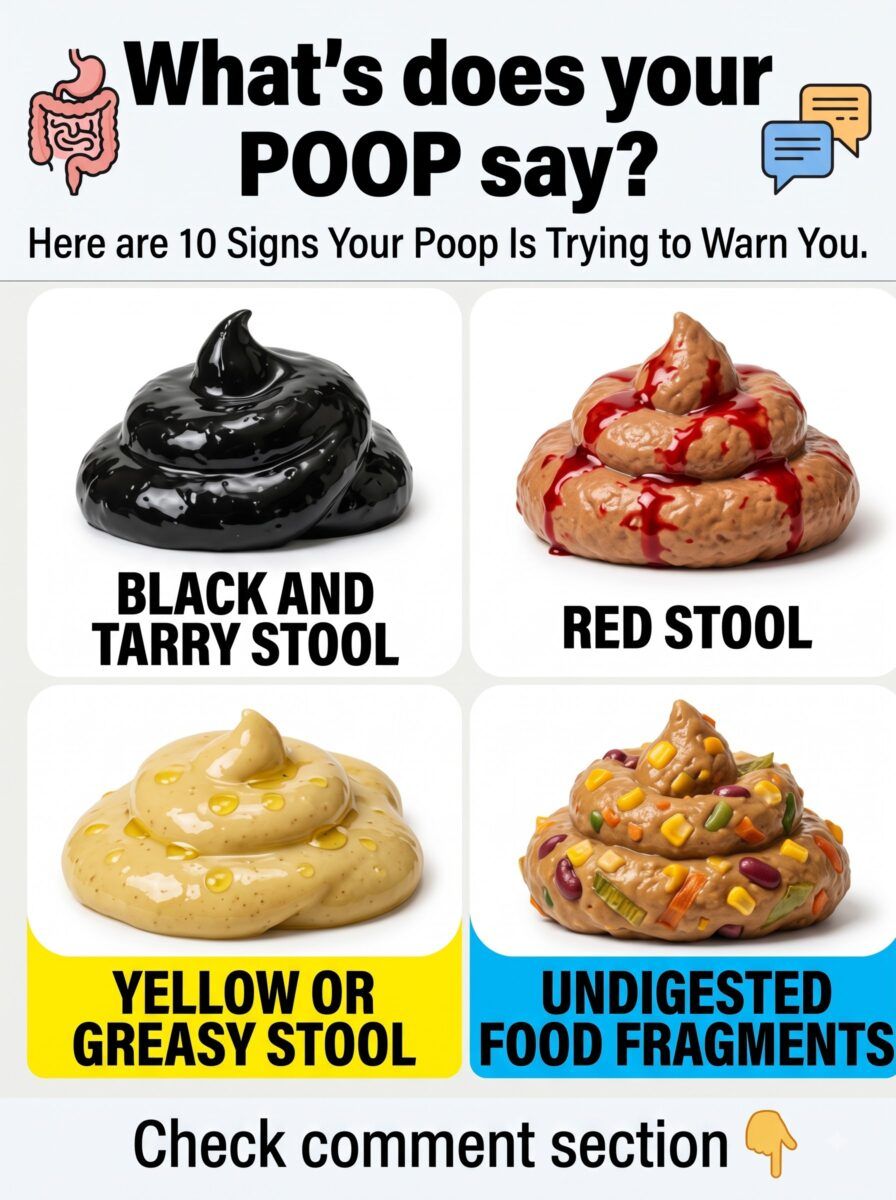
Changes in stool color, shape, consistency, frequency, and smell are sometimes completely normal. What you eat, how much water you drink, medications, stress, and changes in your daily routine can all affect your bowel movements.
However, some changes that persist or repeatedly occur may deserve attention.
So, what does your poop say about your health?
Here are 10 signs your poop may be trying to warn you—and what they can potentially mean.
Important: A change in stool does not automatically mean you have a disease. Many digestive symptoms have harmless explanations. Persistent, severe, or unexplained changes should be discussed with a healthcare professional.
1. Your Poop Is Black or Tarry
Black stool can sometimes happen because of foods, iron supplements, or certain medications.
However, black, tar-like stool can also be associated with bleeding higher in the digestive tract.
This type of stool may look unusually dark, sticky, or tarry and can sometimes have a particularly strong smell.
If you notice unexplained black or tarry stools—especially if you also experience dizziness, weakness, abdominal pain, or vomiting blood—seek medical attention promptly.
Do not assume that every dark bowel movement is caused by something you ate.
2. You Notice Bright Red Blood
Seeing bright red blood in the toilet or on toilet paper can understandably be alarming.
But rectal bleeding has many possible causes.
Common causes include hemorrhoids and anal fissures, especially when bleeding occurs after straining or passing a hard stool.
However, blood in the stool can also occur with infections, inflammatory bowel conditions, polyps, and other gastrointestinal problems.
If bleeding is persistent, recurrent, unexplained, or accompanied by changes in bowel habits, abdominal pain, fatigue, or unexplained weight loss, it is important to speak with a healthcare professional.
Blood in your stool should not automatically be dismissed as hemorrhoids.
3. Your Stool Is Very Pale or Clay-Colored
Healthy stool can naturally vary in color depending on your diet and other factors.
But consistently pale, gray, or clay-colored stool can sometimes indicate that not enough bile is reaching the digestive tract.
Bile contributes to the normal brown color of stool and is produced by the liver and stored in the gallbladder.
Changes affecting the liver, gallbladder, or bile ducts can sometimes cause unusually pale stools.
If pale or clay-colored stools continue for more than a short period—particularly if you also notice yellowing of the skin or eyes, dark urine, abdominal pain, fever, or nausea—contact a healthcare professional.
4. Your Poop Looks Greasy or Oily
Have you ever noticed that your stool looks unusually oily, greasy, or difficult to flush?
Occasional changes can happen after eating a particularly fatty meal.
However, repeatedly greasy or oily stools may indicate that your body is not properly digesting or absorbing dietary fat.
This can sometimes be associated with conditions affecting digestion, the pancreas, liver, gallbladder, or small intestine.
Other symptoms may include bloating, abdominal discomfort, excessive gas, or unexplained weight loss.
If greasy stools continue to occur, a medical evaluation can help determine the underlying cause.
5. Your Stool Is Very Hard and Difficult to Pass
Hard, dry stools are one of the most common signs of constipation.
You may notice that your stool consists of small, hard pieces or that you need to strain significantly during a bowel movement.
Several factors can contribute to constipation, including:
Not drinking enough fluids
Eating too little fiber
Lack of physical activity
Changes in routine
Certain medications
Ignoring the urge to use the bathroom
Adding fiber gradually, drinking adequate fluids, and staying physically active can help many people maintain regular bowel movements.
However, persistent constipation or constipation accompanied by bleeding, severe pain, vomiting, or unexplained weight loss should be evaluated by a healthcare professional.
6. Your Poop Is Loose or Watery for Several Days
Occasional diarrhea is common.
It can happen after an infection, contaminated food, certain medications, dietary changes, or other temporary digestive problems.
The main concern is when diarrhea becomes persistent or severe.
Frequent watery stools can cause dehydration and loss of important electrolytes.
Watch for symptoms such as:
Very dry mouth
Extreme thirst
Dizziness
Weakness
Reduced urination
Blood in the stool
Fever
Severe abdominal pain
If diarrhea is severe, lasts longer than expected, or is accompanied by blood, high fever, severe pain, or signs of dehydration, seek medical care.
7. Your Stool Has Become Noticeably Thinner
Sometimes stool can appear thinner than usual simply because of changes in bowel habits or constipation.
A single narrow bowel movement is generally not a reason to panic.
However, if you notice a persistent change in stool shape or thickness, especially when it is accompanied by other changes such as rectal bleeding, abdominal discomfort, unexplained weight loss, or a persistent change in bowel habits, talk with a healthcare professional.
The important factor is not one unusual bowel movement—it is a persistent change from your normal pattern.
8. Your Bowel Movements Suddenly Smell Much Stronger
Poop naturally has an unpleasant smell.
The odor is influenced by the food you eat, the bacteria living in your gut, and the way your digestive system processes food.
A temporary change in smell is usually not concerning.
For example, eating certain foods can noticeably change the odor of your stool.
But a dramatic and persistent change—particularly when accompanied by diarrhea, greasy stools, abdominal pain, bloating, fever, or weight loss—may deserve medical attention.
Your stool odor alone cannot diagnose a specific health condition.
It is more useful to consider it alongside other changes.
9. You Suddenly Start Going Much More or Much Less Often
There is no universal number of bowel movements that is considered normal for everyone.
Some healthy people go several times a day, while others may go only a few times a week.
What matters most is your usual pattern.
A sudden and persistent change in frequency may be worth paying attention to.
For example, you may suddenly experience:
Frequent bowel movements
Persistent constipation
Alternating diarrhea and constipation
A feeling that you need to use the bathroom repeatedly
A persistent feeling that your bowel has not completely emptied
Diet, stress, medications, infections, and lifestyle changes can all affect bowel frequency.
But unexplained changes that continue should be discussed with a healthcare professional.
10. Your Poop Changes Along With Other Unexplained Symptoms
Sometimes the most important clue isn’t the stool itself.
It is the combination of several symptoms.
For example, a persistent change in bowel habits together with:
Unexplained weight loss
Ongoing abdominal pain
Blood in the stool
Persistent fatigue
Iron-deficiency anemia
Recurrent diarrhea or constipation
Loss of appetite
Persistent bloating
may warrant further medical evaluation.
These symptoms do not automatically mean cancer or another serious disease. There are many possible explanations.
But when several unexplained symptoms occur together, it is better to have them assessed rather than trying to diagnose yourself from stool changes alone.
What Does Normal Poop Usually Look Like?
One useful way to understand your bowel health is to become familiar with what is normal for you.
The Bristol Stool Form Scale is commonly used by healthcare professionals to describe stool consistency.
It categorizes stool into seven general types.
Type 1: Separate hard lumps
Small, hard pieces that can be difficult to pass are commonly associated with constipation.
Type 2: Lumpy and sausage-shaped
This may also indicate constipation or slower movement through the digestive tract.
Type 3: Sausage-shaped with cracks
This can be within the range of a relatively normal stool.
Type 4: Smooth and soft
Often considered an ideal stool consistency because it is formed but easy to pass.
Type 5: Soft pieces
Soft pieces with clear edges can occur when food moves through the digestive system more quickly.
Type 6: Mushy stool
This is generally considered a form of diarrhea.
Type 7: Watery stool
This is also diarrhea and can increase the risk of dehydration when frequent or severe.
Remember that stool consistency can change from day to day.
One unusual bowel movement does not necessarily indicate a health problem.
How Food Can Change the Color of Your Poop
Before becoming alarmed by a change in stool color, think about what you have eaten recently.
Certain foods can temporarily change stool color.
For example:
Beets may make stool appear reddish.
Green vegetables may contribute to green stool.
Foods containing strong artificial colors can affect stool color.
Iron supplements can make stool darker.
Some medications can also change stool appearance.
This is why looking at the overall pattern and duration is more useful than focusing on one bowel movement.
If an unusual color persists without an obvious explanation, ask a healthcare professional about it.
What Can Your Poop Say About Your Diet?
Your bowel movements can sometimes reflect your eating habits.
A diet that contains adequate fiber from foods such as vegetables, fruits, beans, lentils, and whole grains can support healthy bowel function.
Fiber adds bulk to stool and can help promote regular bowel movements.
On the other hand, suddenly increasing fiber intake can temporarily cause more gas and bloating.
The key is to increase fiber gradually and drink enough fluids.
A balanced diet is generally more useful for digestive health than relying on a single “detox” food, drink, or supplement.
Why Hydration Matters for Your Stool
Water plays an important role in normal digestion.
When you are dehydrated, your stool may become harder and more difficult to pass.
Drinking enough fluids throughout the day can help support normal bowel function.
Your individual fluid needs depend on factors such as your body size, activity level, climate, diet, and health conditions.
If you have been told to restrict fluids because of a medical condition, follow your healthcare professional’s advice rather than increasing your fluid intake on your own.
Can Stress Affect Your Poop?
Yes.
The brain and digestive system communicate constantly through what is often called the gut-brain connection.
Stress and anxiety can affect bowel movements in some people.
During stressful periods, some people experience diarrhea, while others develop constipation or abdominal discomfort.
This does not mean that digestive symptoms caused by stress should simply be ignored.
Persistent symptoms still deserve attention, particularly when they are new or significantly different from your normal pattern.
When Should You Talk to a Doctor?
Most changes in poop are temporary and harmless.
However, you should consider speaking with a healthcare professional if you notice persistent or unexplained changes such as:
Repeated blood in the stool
Black, tar-like stool without an obvious explanation
Persistent pale or clay-colored stool
Ongoing diarrhea
Long-lasting constipation
A persistent change in stool shape
Unexplained weight loss
Ongoing abdominal pain
Persistent fatigue
Recurrent greasy or oily stools
Significant changes in your normal bowel pattern
Medical evaluation is particularly important when several of these symptoms occur together.
When Is It an Emergency?
Some digestive symptoms require urgent medical attention.
Seek prompt medical care if you experience heavy rectal bleeding, black tarry stools with weakness or dizziness, severe abdominal pain, fainting, persistent vomiting, or signs of significant dehydration.
Do not rely on internet articles or social media posts to diagnose serious symptoms.
10 Poop Changes Worth Paying Attention To
For a quick reminder, here are the 10 signs discussed in this article:
Black or tarry stool
Bright red blood in the stool
Pale or clay-colored stool
Greasy or oily stool
Very hard and difficult-to-pass stool
Persistent watery or loose stool
A persistent change in stool thickness
A dramatic and lasting change in stool odor
A sudden persistent change in bowel frequency
Stool changes combined with unexplained symptoms
The goal is not to become anxious about every change in your bathroom habits.
Instead, learn what is normal for your body and pay attention when something changes and stays changed.
Final Thoughts: Your Poop Can Provide Clues—But It Cannot Diagnose You
Your poop may not be the most pleasant subject, but it can provide useful information about digestion and bowel habits.
Color, consistency, shape, frequency, and other characteristics can change for many ordinary reasons, including diet, hydration, medications, stress, and temporary illness.
At the same time, persistent changes—especially blood in the stool, black tarry stools, unexplained weight loss, ongoing abdominal pain, or significant changes in bowel habits—should not be ignored.
Most importantly, don’t diagnose yourself based on stool appearance alone.
Your bowel movements are only one piece of the bigger picture. A healthcare professional can consider your symptoms, medical history, medications, diet, age, and other risk factors to determine whether further testing is needed.
So the next time you look before flushing, remember:
Your poop may be giving you clues—but understanding those clues requires context.
Medical Disclaimer
This article is provided for general educational purposes only. It is not intended to diagnose, treat, cure, or prevent any disease and should not replace professional medical advice.
If you have persistent, severe, unexplained, or worsening digestive symptoms, consult a qualified healthcare professional. If you experience heavy bleeding, fainting, severe abdominal pain, or other emergency symptoms, seek immediate medical attention.


