
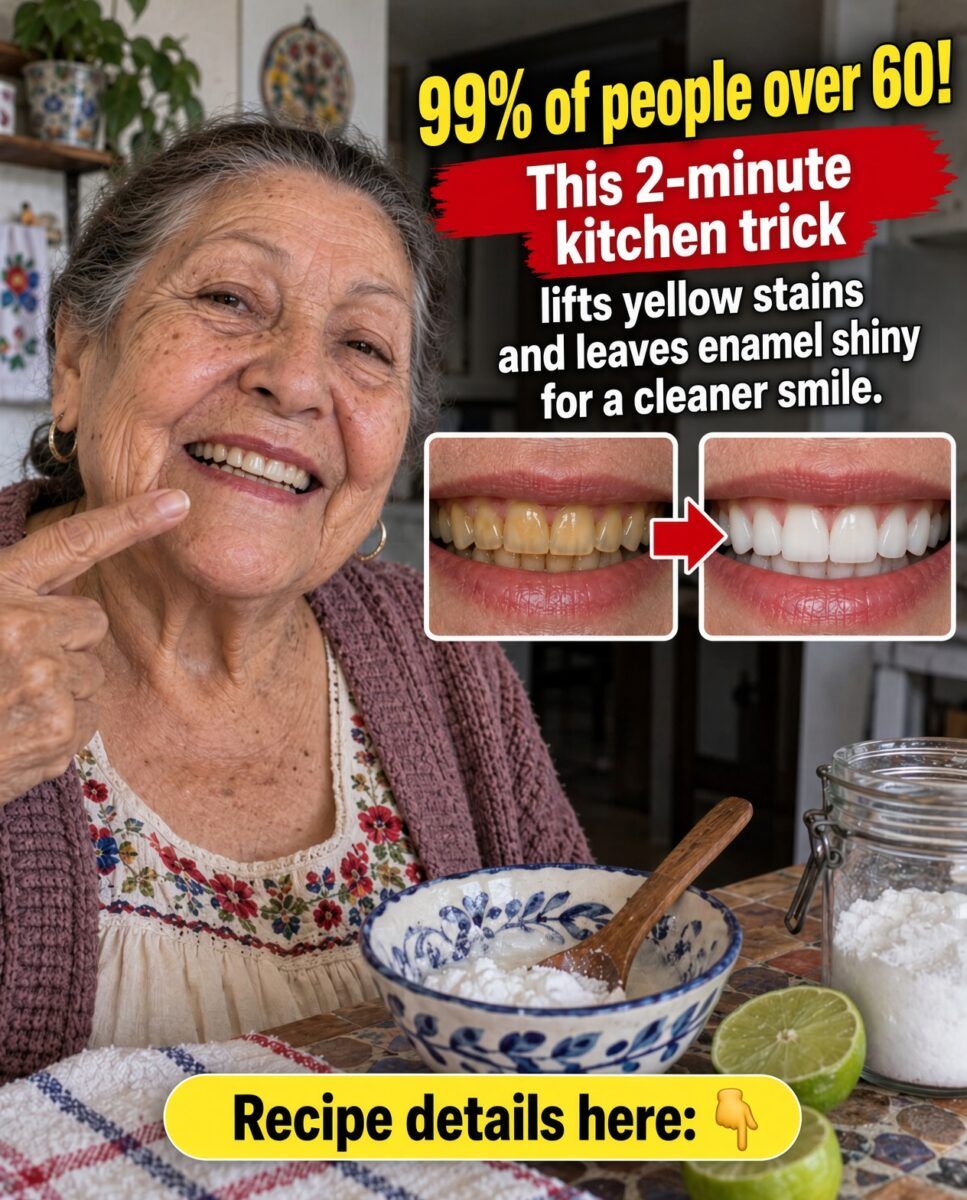
The poster says what almost nobody over 60 has heard: a 2-minute kitchen trick “lifts yellow stains and leaves enamel shiny for a cleaner smile.” The image shows the ingredients on the table: a bowl of baking soda, a spoon, half a lime — and a dramatic before/after of yellowed teeth turning white.
What is this trick, how does it work, and is it safe for your enamel?
What the Trick Is
The recipe that circulates with this claim is simple:
- 1 teaspoon of baking soda
- A few drops of fresh lime or lemon juice
- Mix into a light paste, apply to the teeth with a soft toothbrush, leave for about 2 minutes, rinse thoroughly
The claim: yellow stains lift off and the enamel looks shiny — a cleaner smile “before the next family photo.”
Why Baking Soda
Baking soda (sodium bicarbonate) is a mild abrasive. It has been used in toothpastes for decades because it can help polish away surface stains from coffee, tea, wine and tobacco. Dental associations recognize fluoride toothpastes containing baking soda as effective for stain removal.
That is the part of the claim with real support: baking soda can brighten the appearance of teeth by removing extrinsic (surface) stains.
The Risk: Lime and Enamel
Here is where the trick needs caution. Lime and lemon juice are acids. Enamel — the hard outer layer of the tooth — does not grow back once it is worn away.
- Acidic citrus juice can soften and erode enamel, especially when rubbed directly on the teeth.
- Enamel erosion is irreversible and can make teeth more sensitive, thinner, and over time even more yellow, because the darker dentin underneath shows through.
- Dental professionals warn against DIY whitening pastes with lemon or lime, particularly for frequent use.
The poster says the trick “leaves enamel shiny.” Baking soda alone, used gently, is relatively safe for enamel. But the lime juice added to it is exactly the ingredient that can damage the very enamel the trick claims to polish.
What Actually Works for Yellow Stains After 60
Teeth yellow with age for several reasons: enamel thins, dentin darkens, and decades of coffee, tea, tobacco or medications add stains. Here is what dentists actually recommend:
- Baking-soda toothpaste: a commercial toothpaste with baking soda and fluoride is the safe way to get the polishing effect without the acid.
- Professional cleaning: a hygienist can remove tartar and deep surface stains that home methods cannot.
- Professional whitening: dentist-supervised whitening uses controlled peroxide gels with protection for gums and enamel — far safer than acidic home pastes.
- Avoid frequent acid exposure: limit direct application of citrus, vinegar or whitening “hacks” on the teeth; if you drink acidic beverages, use a straw and rinse with water after.
If you want to try the kitchen version, use baking soda with water only (no lime), once or twice a week at most, with a soft brush and light pressure — and stop if you feel sensitivity.
Signs You Should See a Dentist
Not every discoloration is a stain. See a dentist if you notice:
- Teeth darkening suddenly or after an injury
- Spots, lines or chalky white patches
- Sensitivity to hot, cold or sweets
- Bleeding gums, loose teeth, or sores that do not heal
These can signal decay, enamel defects, gum disease or other conditions that no kitchen trick can fix.
Conclusion
Baking soda can genuinely help polish away surface stains — that part of the viral claim has merit. But adding lime or lemon juice turns a mild polishing trick into an acid attack on your enamel, and enamel does not regenerate.
If you want a brighter smile after 60, the safest path is the boring one: baking-soda toothpaste, regular professional cleanings, and dentist-supervised whitening when you want a bigger change.
This article is for informational purposes only and does not replace professional medical or dental advice. Consult your trusted dentist for personalized guidance.


