
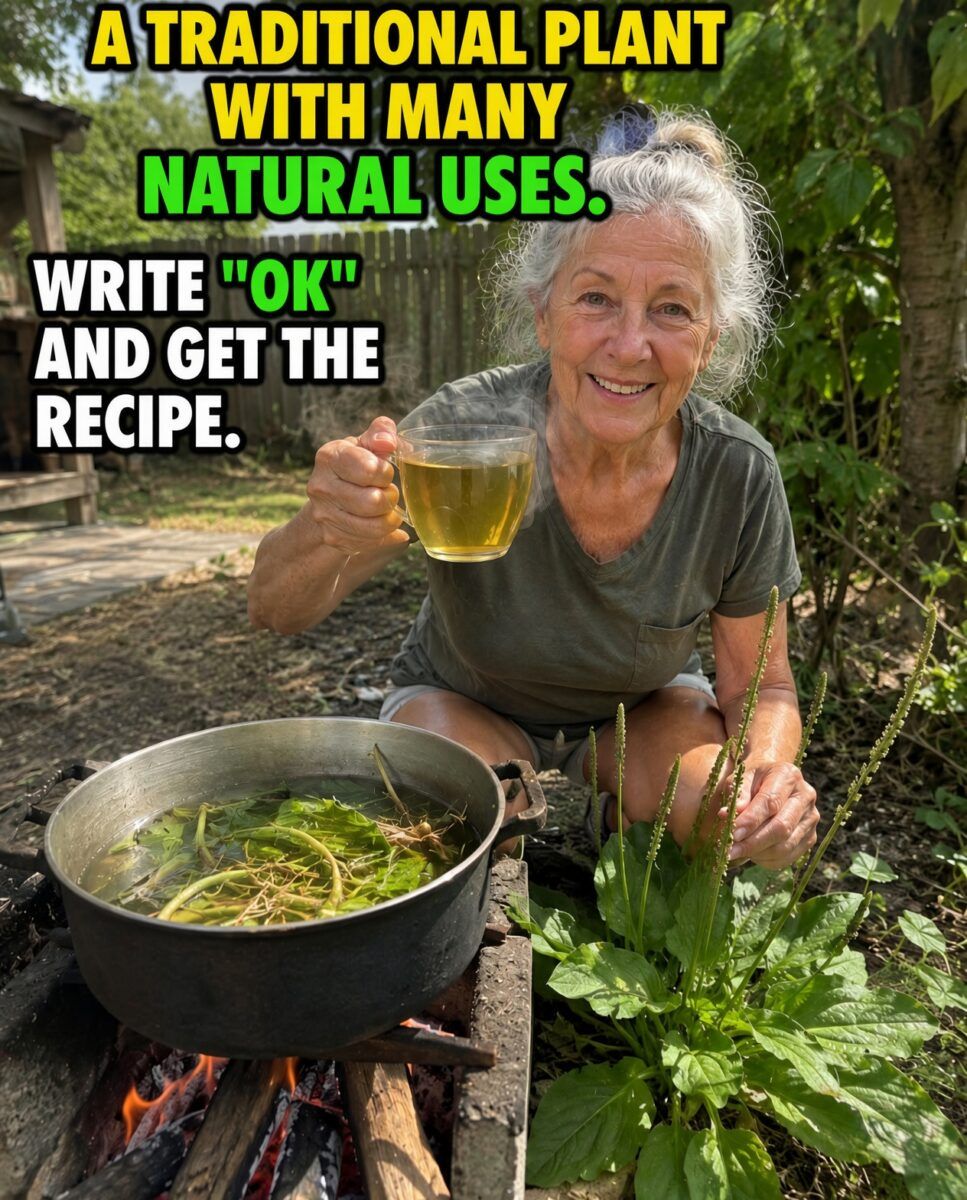
The viral poster shows an older woman in a garden holding a cup of steaming tea beside a pot of boiling leaves and the plant itself: “A TRADITIONAL PLANT WITH MANY NATURAL USES. WRITE ‘OK’ AND GET THE RECIPE.”
The plant is llantén — narrowleaf plantain (Plantago lanceolata), a close cousin of the common broadleaf plantain. It grows wild in fields and gardens across Europe and the Americas, and it has centuries of traditional use. What is it good for?
The Traditional Uses
Folk medicine uses plantain leaves for:
- Respiratory wellness — teas and syrups for coughs, throat irritation and congestion
- Skin care — poultices and washes for minor wounds, insect bites, rashes and irritated skin
- Digestive comfort — mild teas for stomach upset
The preparation is simple: a handful of fresh or dried leaves steeped in hot water for 10 minutes, strained, and drunk as tea — or cooled and applied to the skin.
What Is Actually in the Leaves
Plantain leaves contain:
- Mucilage — soothing gel-like fiber that coats irritated throats and skin
- Aucubin and catalpol — iridoid compounds studied for anti-inflammatory and antimicrobial activity in the lab
- Tannins and flavonoids — astringent, antioxidant compounds
- Vitamins A, C and K
The mucilage is the key to the traditional cough remedy: it forms a soothing film over irritated mucous membranes, which is why plantain appears in many European herbal cough syrups.
What the Evidence Supports
- Cough and throat irritation: the soothing (demulcent) effect of mucilage is well established in herbal medicine; Germany’s Commission E approved plantain leaf for catarrhs of the respiratory tract.
- Skin: the astringent tannins and traditional poultice use have plausible support for minor skin irritations, though high-quality clinical trials are limited.
- What it doesn’t do: there is no evidence plantain cures asthma, COPD, pneumonia or serious respiratory disease. It soothes symptoms — it does not treat the underlying condition.
Safety and Sensible Use
- Plantain leaf tea is generally considered safe in moderate amounts for most adults.
- Allergies: people allergic to plantain pollen or related plants should be cautious.
- Pregnancy: safety data are limited — avoid medicinal amounts during pregnancy and breastfeeding.
- Harvesting: only pick from clean areas away from roads, pesticides and pet waste; misidentification is the real risk with wild plants, so learn the plant well or buy dried leaves from a trusted source.
- Serious symptoms need a doctor: persistent cough, wheezing, shortness of breath, coughing blood, or skin infections with spreading redness, fever or pus are not “tea” problems.
How to Use It Wisely
- Drink 1–2 cups of the tea per day during a cold or cough, for a few days.
- For skin, cool the strong tea and use it as a compress on minor irritations.
- Keep it as a complement to — never a replacement for — prescribed respiratory or skin treatment.
Conclusion
Plantain (llantén) is one of those humble plants hiding in plain sight: a genuinely soothing traditional remedy for coughs, throats and minor skin troubles, backed by centuries of use and plausible science. It will not cure lung disease or erase skin conditions — but for everyday irritation, the overlooked green ally earns its place in the cupboard.
This article is for informational purposes only and does not replace professional medical advice. Consult your trusted doctor for personalized guidance.


