
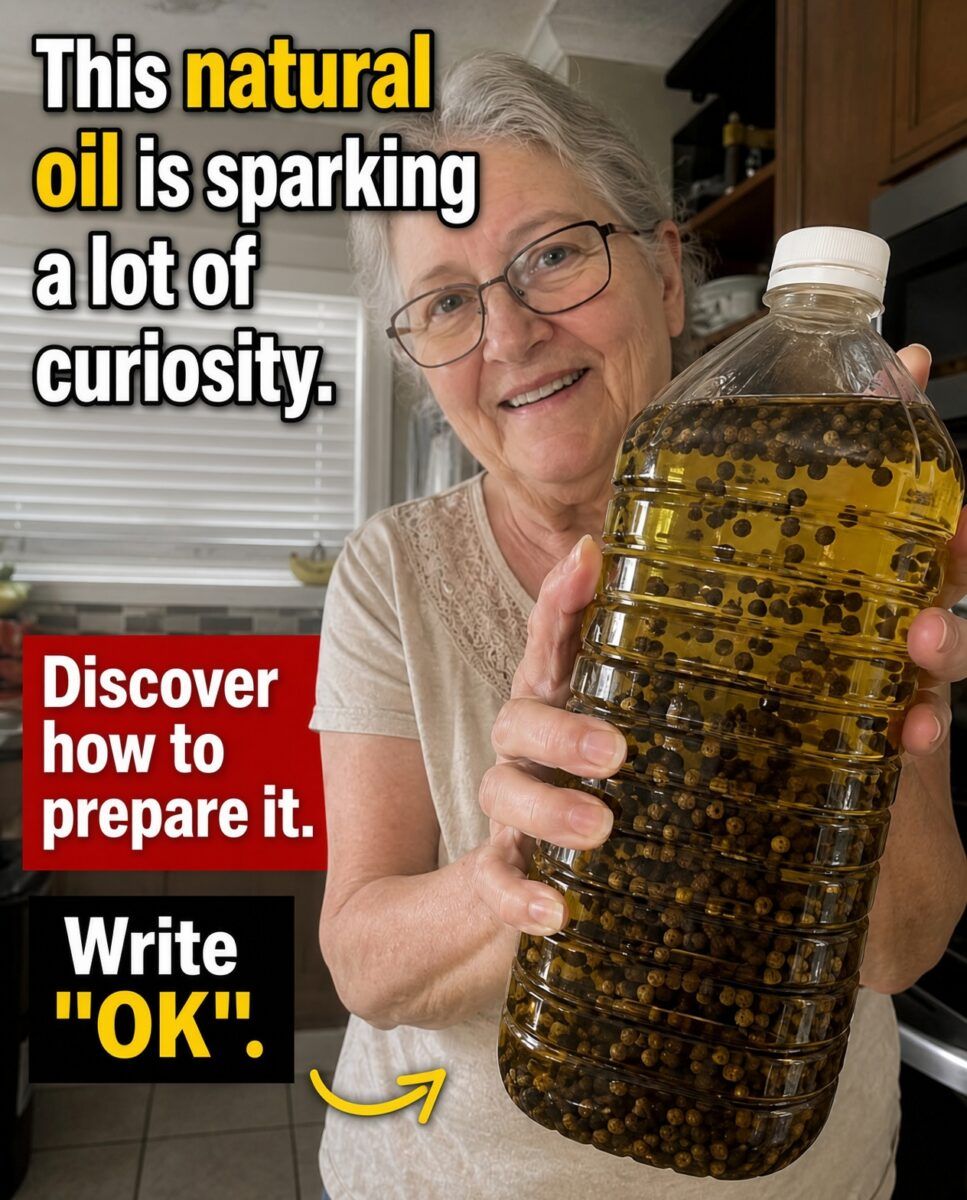
The viral poster shows a smiling older woman holding a big bottle of golden oil infused with spices: “This natural oil is sparking a lot of curiosity. Discover how to prepare it. Write ‘OK’.”
The recipe behind the image is an infused olive oil with turmeric and ginger — three celebrated ingredients in one bottle. What is it, how do you make it, and what can it do?
The Recipe
The preparation circulating with this claim:
- 500 ml of extra-virgin olive oil
- 2–3 tablespoons of ground turmeric (or fresh turmeric root, sliced)
- A piece of fresh ginger root, sliced
- Optional: a pinch of black pepper (its piperine is said to boost curcumin absorption)
Combine in a clean glass bottle, let it infuse in a cool dark place for 1–2 weeks, shaking occasionally, then strain. Use a spoonful a day — in salads, drizzled over food, or straight.
Why These Three Ingredients
Each one is a nutritional heavyweight on its own:
- Extra-virgin olive oil — rich in monounsaturated fats and polyphenols like oleocanthal, with strong evidence from Mediterranean-diet research for heart and metabolic health.
- Turmeric — curcumin is one of the most studied plant compounds, with laboratory evidence of anti-inflammatory activity. The catch: curcumin is poorly absorbed on its own; fat (like olive oil) and black pepper improve uptake.
- Ginger — gingerols with studied anti-inflammatory and digestive effects, widely used for nausea.
Infusing them in oil is actually a smart delivery method: curcumin is fat-soluble, so olive oil helps your body absorb more of it than water-based preparations.
What It Can and Cannot Do
Honest summary:
- A genuinely healthy addition: a spoonful of this infused oil adds polyphenols, healthy fats and anti-inflammatory compounds to your diet. As part of a Mediterranean-style diet, it fits perfectly.
- Inflammation and joints: laboratory and small human studies suggest curcumin and ginger may help with inflammatory markers and mild joint discomfort — but they are not replacements for arthritis medication.
- What it doesn’t do: there is no evidence this oil cures chronic disease, “melts” anything, detoxes organs, or works miracles. The viral framing (“everyone is talking about it”) is marketing, not medicine.
- Calories count: it is still oil — about 120 calories per tablespoon. “Healthy” does not mean unlimited.
Safety Notes
- Use culinary amounts. Concentrated turmeric or ginger supplements are a different story — high doses can interact with blood thinners and diabetes drugs.
- Blood thinners and upcoming surgery: turmeric and ginger in large amounts may increase bleeding risk — tell your doctor.
- Gallbladder issues: turmeric can stimulate bile; people with gallstones should be cautious.
- Infused oils and botulism: fresh garlic or herbs in oil at room temperature can rarely allow bacterial growth — this recipe uses dried/low-moisture spices, but always store infused oils in the refrigerator and use within a few weeks.
How to Use It Wisely
- One tablespoon a day in food is plenty.
- Keep eating the Mediterranean way around it — vegetables, legumes, fish, whole grains.
- Treat it as a healthy habit, not a treatment. If you have a chronic condition, keep your prescribed therapy.
Conclusion
Olive oil with turmeric and ginger is a genuinely good idea in a bottle: healthy fats plus fat-soluble plant compounds your body can actually absorb. It deserves its popularity — just not the miracle framing. Use it daily, enjoy it, and let it be what it is: excellent nutrition, not a cure.
This article is for informational purposes only and does not replace professional medical advice. Consult your trusted doctor for personalized guidance.


