
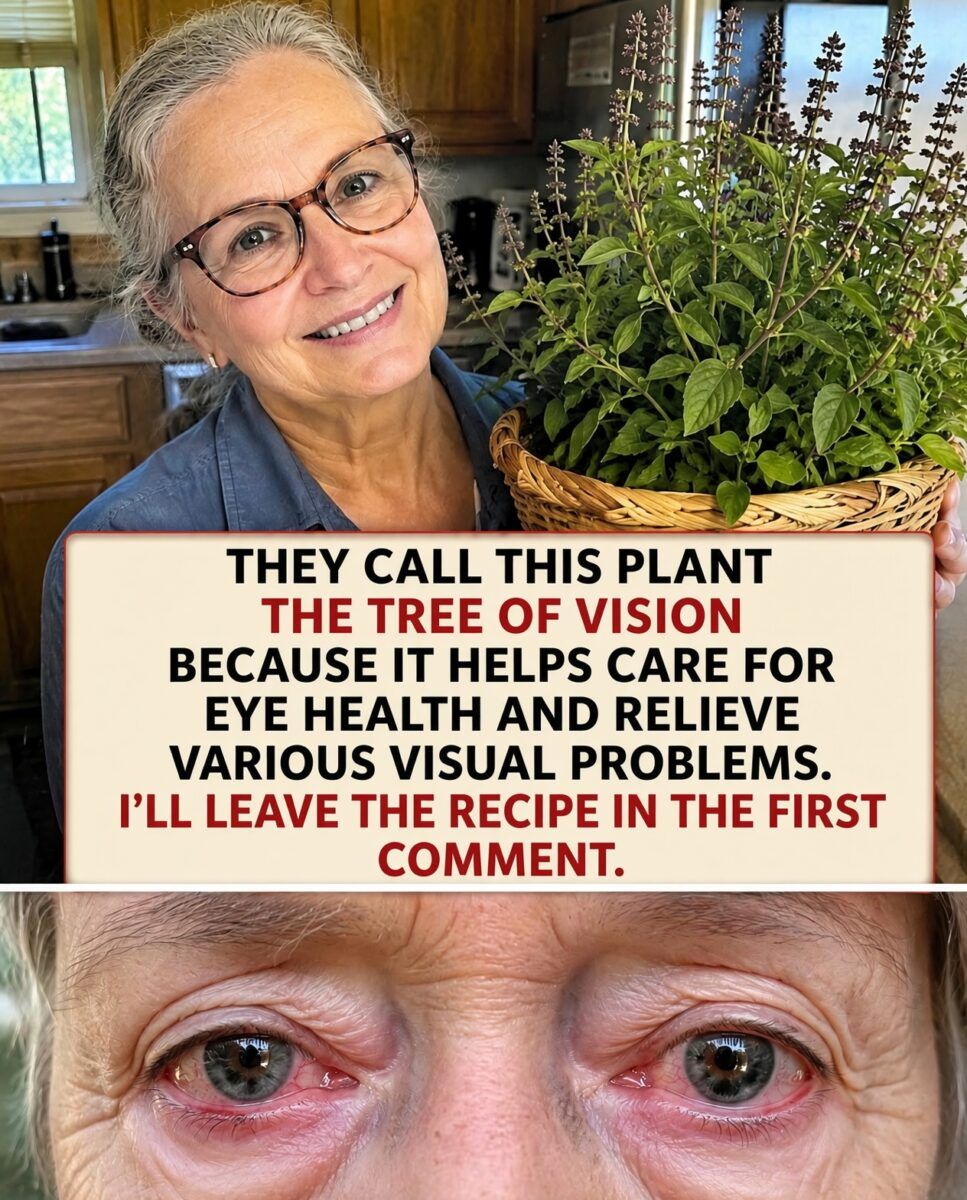
The viral poster shows radiant eyes above a tall leafy tree: “Ancestral secrets for your eyes? Discover the hidden power of the Vision Tree.”
TRADITIONAL CLAIM
the article never names the tree — describes teas from its leaves for soothing tired eyes, supporting clarity against “constant haze,” eye comfort vs blue light/pollution/visual stress. Mystery-plant framing: described poetically, never identified precisely enough to verify.
LEAFY BOTANICALS
contain: flavonoids/carotenoids (lutein-like; lutein/zeaxanthin are the carotenoids concentrated in the human retina); vitamin A precursors (beta-carotene — deficiency causes real blindness); anti-inflammatory polyphenols. Without a botanical name, nothing ties to the “Vision Tree” specifically.
EVIDENCE
AREDS2 trial — lutein/zeaxanthin modestly slow age-related macular degeneration progression (from leafy greens, not one magic tree); vitamin A prevents deficiency night blindness, extra doesn’t sharpen normal vision; eye fatigue’s proven remedies are behavioral: 20-20-20 rule, lighting, blinking, dry-eye care. Does NOT reverse cataracts, fix refractive errors, cure glaucoma/macular degeneration.
SAFETY
unidentified plants are a red flag — never brew teas from plants you can’t botanically identify (toxic lookalikes); sudden vision changes, flashes, floater shower, eye pain, steady vision loss → ophthalmologist promptly; “vision” supplements vary wildly.
WISE USE
eat proven eye foods (leafy greens, orange produce, fatty fish, eggs); protect the surface (screen breaks, humidity, blinking, artificial tears); regular eye exams after 40 — most serious eye diseases are painless until advanced.
CONCLUSION
lovely story; leafy botanicals have real eye-relevant nutrients — but a mystery plant can’t carry a health claim. Honest version: feed eyes known greens, rest them from screens, see your eye doctor. No mystery required.
This article is for informational purposes only and does not replace professional medical advice. Consult your trusted doctor or ophthalmologist for personalized guidance, especially for vision changes, eye pain, or diagnosed eye disease.


