
# The Home Remedy for Skin: What Tradition Says About Warts and Calluses
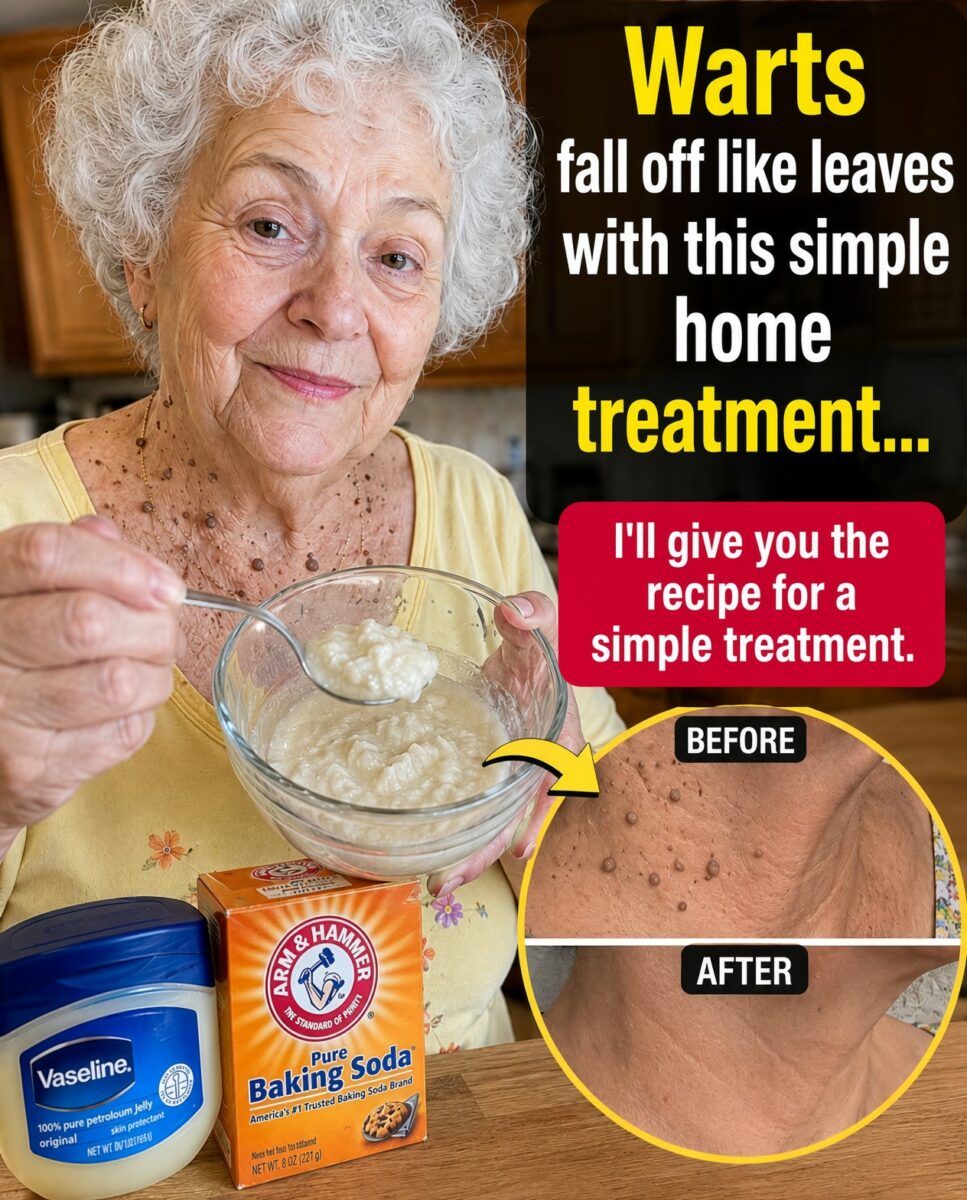
The viral poster shows hands with rough skin beside natural ingredients: “Home remedy for caring for skin and removing bothersome warts and calluses.” Warts and calluses are among the most common — and most stubborn — skin complaints. Drugstore shelves are full of acids and freeze kits, but folk tradition has its own long list of kitchen remedies. What does the poster’s remedy involve, and what can it actually do?
## The Traditional Remedy
The home remedy circulating with this claim typically involves: garlic or onion — crushed and applied to the wart, covered overnight; apple cider vinegar — soaked on a cotton pad, taped over the spot; banana peel — the inside of the peel placed on warts; castor oil with baking soda — made into a paste for callused areas. The idea behind most of them is the same: mild acids or sulfur compounds soften the thickened skin, and occlusion (covering the spot) helps the remedy penetrate.
## What Is Actually in These Remedies
Garlic — contains allicin and sulfur compounds with documented antiviral and skin-irritating properties; warts are caused by HPV, a virus. Apple cider vinegar — acetic acid, chemically similar to the salicylic acid in commercial wart treatments, but unstandardized in strength. Banana peel — mostly folk tradition; little scientific basis. Castor oil — a skin softener; may help calluses feel smoother but doesn’t remove them.
## What the Evidence Supports
Warts often disappear on their own — especially in younger people, the immune system clears HPV warts within months to a couple of years, with or without treatment. This makes every remedy look like it “worked.” Salicylic acid (the pharmacy version) has the best evidence among home treatments — the vinegar approach is a cruder cousin of the same idea, but its acid strength is unpredictable and it can burn surrounding healthy skin. Garlic on warts: small case reports suggest possible benefit, but garlic can also cause chemical burns on skin — there are documented cases of serious garlic burns from overnight application. Calluses: softening and gentle filing works; no home paste dissolves a callus that’s caused by ongoing pressure or friction — the pressure source (footwear, gait) has to change.
## Safety Notes That Matter
Don’t burn yourself: garlic and vinegar can cause real chemical burns, especially on sensitive skin or if left on too long. Never use on the face, genitals, or broken skin without medical advice. Know what you’re treating: not every bump is a wart — moles, skin cancers and other lesions can look similar. A spot that bleeds, changes color, grows fast, or looks unusual needs a dermatologist, not a home remedy. Diabetes warning: people with diabetes should never do aggressive home treatment of foot calluses or warts — poor circulation and reduced sensation make burns and infections dangerous. See a doctor. Don’t spread warts: HPV warts are contagious — avoid picking, and don’t share towels or razors.
## How to Use It Wisely
If you try a folk remedy, protect the surrounding skin (petroleum jelly around the spot), limit contact time, and stop if you see redness, pain or blistering beyond mild irritation. The pharmacy salicylic-acid kits are the same idea in a measured, safer dose. See a dermatologist for: facial or genital warts, rapidly changing spots, painful calluses that keep returning, or anything you’re unsure about.
## Conclusion
Folk wart and callus remedies aren’t pure superstition — mild acids and occlusion genuinely soften skin, and garlic does have antiviral compounds. As gentle traditional care, they’re understandable. But skin deserves respect: burns from “natural” acids are real, and not every bump is what it seems. Try the gentle version, protect your skin, and let a dermatologist handle anything doubtful. Tradition is a starting point, not a diagnosis.
This article is for informational purposes only and does not replace professional medical advice. Consult your trusted doctor or dermatologist for personalized guidance, especially if you have diabetes or an unusual skin lesion.


