
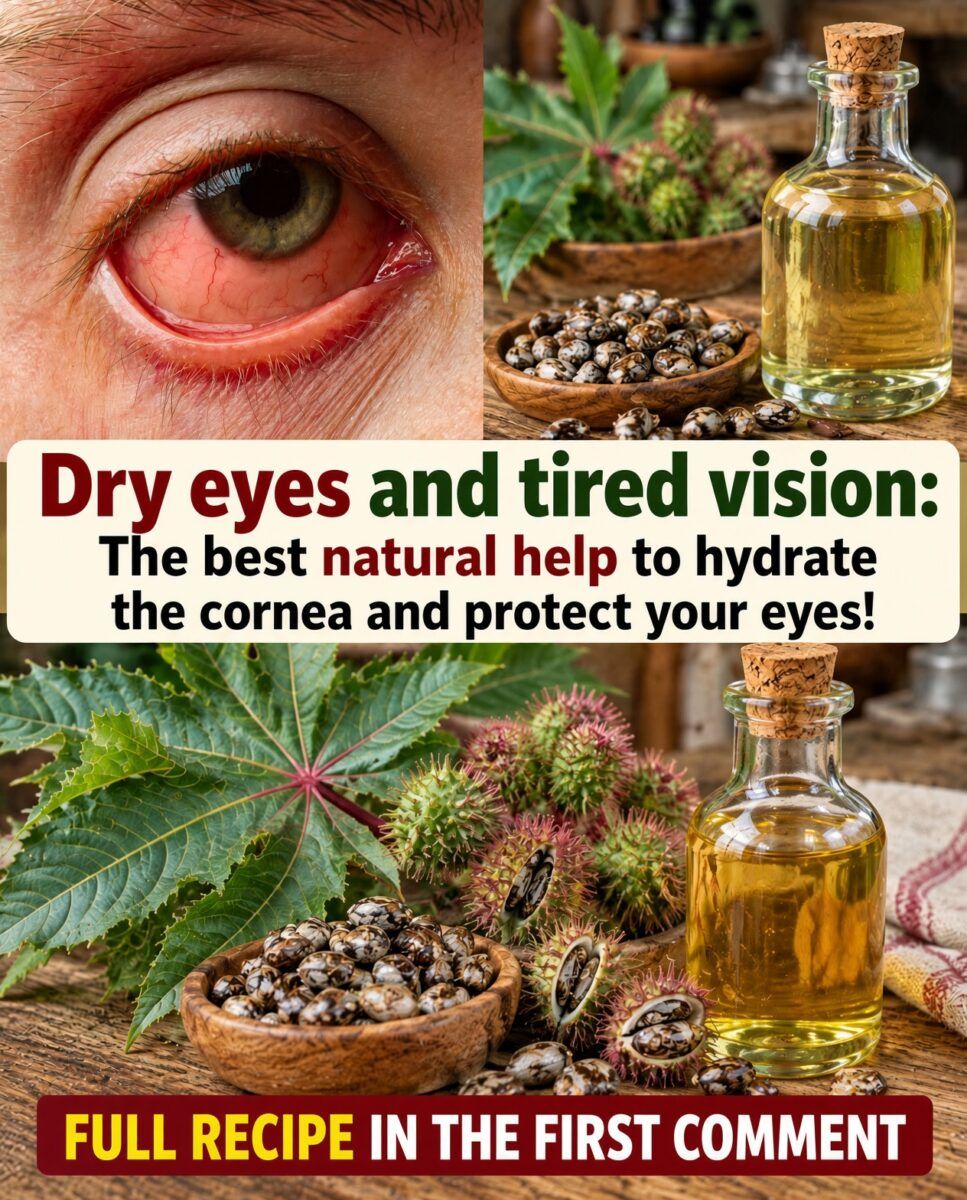
The viral poster shows a red irritated eye, a glass bottle of golden oil with castor seeds and leaves: “Dry eyes and tired vision: the best natural help to hydrate the cornea and protect your eyes! Full recipe in the first comment.” Castor oil — for dry eyes, corneal hydration, and cataract protection. The article behind this Italian poster presents the remedy. What can castor oil actually do for eyes?
## The Remedy
Castor oil, used in or around the eyes in the folk tradition; the poster promises hydration of the cornea and cataract protection.
## What Is Actually in It
Ricinoleic acid — castor oil’s signature fatty acid; emollient and mildly anti-inflammatory. What it isn’t: sterile, ophthalmic-grade, or a cataract treatment — kitchen/cold-pressed castor oil is not eye medicine.
## What the Evidence Supports
Dry eyes: there’s a genuine kernel here — sterile, preservative-free castor oil eye drops exist as a real (if niche) dry-eye treatment in some countries; the oil stabilizes the tear film’s lipid layer. The catch: the studied product is sterile ophthalmic-grade oil — NOT the bottle from the kitchen or health-food shelf. Non-sterile oil in the eyes risks serious infection. Cataract “protection”: no evidence whatsoever — cataracts are lens proteins clouding with age; no oil prevents or reverses them. Corneal hydration: the lipid-layer mechanism is real in proper formulations; folk application is not the same thing. What actually helps dry eyes: artificial tears, humid air, screen breaks, blinking — and an eye doctor for persistent cases.
## Safety Notes — Read Carefully
Never put non-sterile oil in your eyes — kitchen castor oil can carry microbes; eye infections can threaten vision. Allergies: eye-area reactions to plant oils happen — stop if eyes protest. Don’t self-treat: cataracts, glaucoma, and infections need ophthalmology — oil doesn’t substitute. Red, painful eyes or vision changes — see an eye doctor promptly.
## How to Use It Wisely
For dry eyes, use proper artificial tears or ask your doctor about ophthalmic-grade options. Keep the kitchen castor oil for skin and hair — where it genuinely belongs. Get regular eye exams — the real cataract strategy is early detection and, when needed, surgery.
## Conclusion
Castor oil has a genuine (if narrow) dry-eye pedigree — but only as sterile ophthalmic drops, not as kitchen oil, and it does nothing for cataracts. The poster borrows the science and skips the safety. Use the right drops. Guard the eyes with the real tools.
This article is for informational purposes only and does not replace professional medical advice. Consult your trusted ophthalmologist for dry eyes, cataracts, or any vision changes. Never put non-sterile substances in your eyes.


