
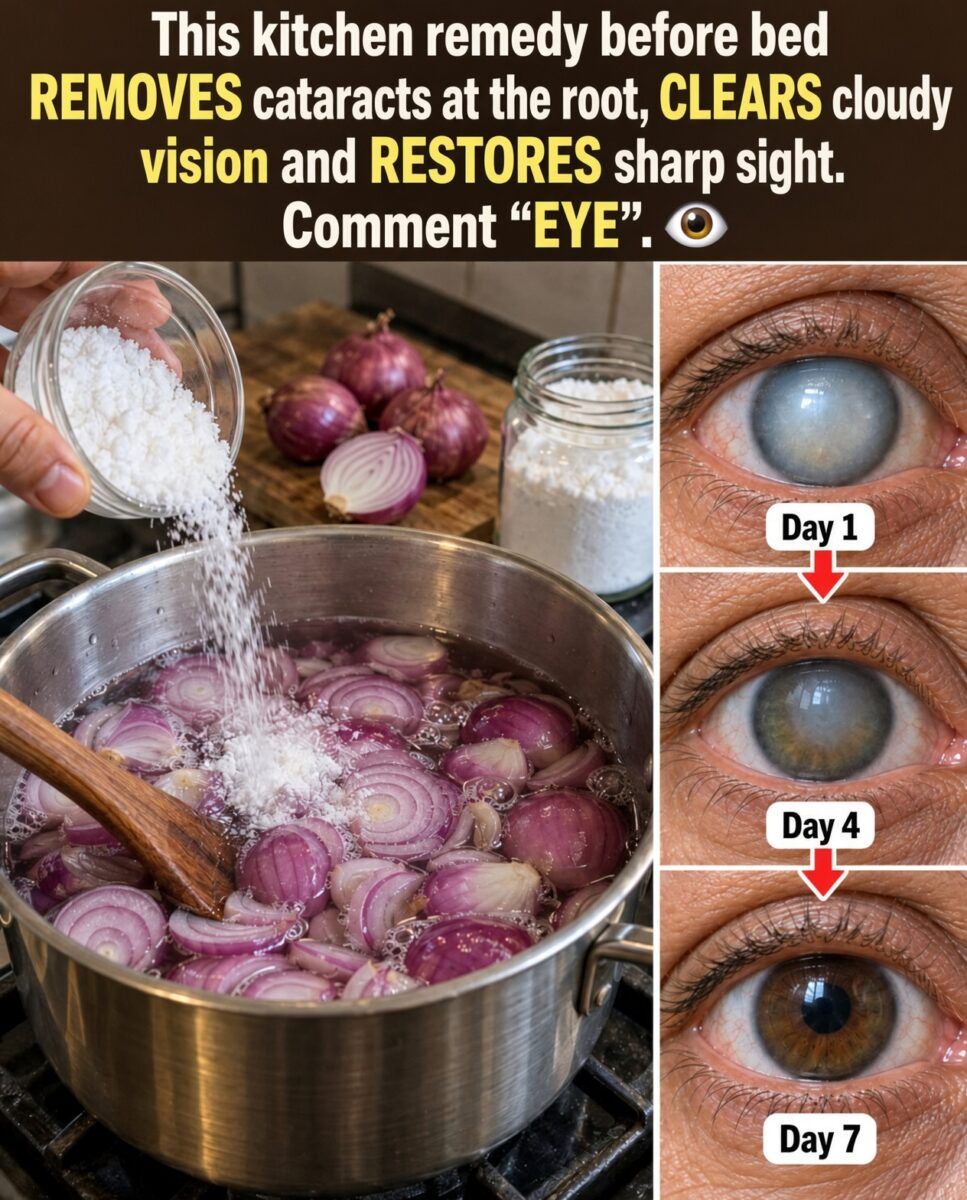
Cloudy vision doesn’t just bother you: it steals your confidence to walk, read, cook and recognize faces. And when it appears, it’s easy to fall for home remedies that promise to “fix it” fast but may irritate the eye more or delay proper care. Many people endure it in silence, thinking “it’s just age” — but that’s not always the case, and that’s where the risk lies.
Why cloudy vision worries so much
Seeing blurry or “foggy” may seem small at first. But when it affects simple activities like reading a label, seeing at night or going down stairs, quality of life starts to break down.
Cloudy vision can have very different causes: from cataracts, dry eye or outdated lenses, to changes from high glucose or more serious retina problems. That’s why you shouldn’t assume everything is solved with a kitchen trick.
The kitchen trick circulating online — and why it’s not convincing
On WhatsApp, Facebook and short videos, recipes with onion, powders, infusions or “miraculous” mixes to improve vision often appear. The message is seductive: cheap, easy and supposedly natural. But just because something is natural doesn’t mean it’s safe or useful inside the eye.
Onion, for example, contains sulfur compounds that irritate — that’s why it makes you cry when you cut it. But that same irritation can harm the eye’s surface if applied directly. And it doesn’t help clear the lens or correct a cataract. Science does not support putting onion juice, salt, vinegar or homemade powders in the eye to improve cloudy vision; ophthalmological reviews warn these practices can cause more burning, redness and even corneal damage.
What may be behind cloudy vision
Not all cloudy vision means cataracts. Sometimes the problem is on the eye’s surface, in the lenses, in blood sugar, or in another condition needing different treatment.
Common patterns: worse at night or with headlights (cataracts or outdated lenses); burning, grittiness, constant blinking (dry eye or irritation); good one day and bad the next (high glucose, eye fatigue); dull or yellowish colors (slow lens changes). A kitchen remedy resolves none of these.
What’s really happening in the eye
Imagine the lens as a transparent window. Over the years, its proteins can clump and turn it opaque — then the image looks like it’s behind fogged glass: less sharp, with less contrast and more glare. That’s typical of cataracts, one of the most common causes of blurry vision in older adults. But the eye’s surface matters too: dryness, inflammation or poor lubrication can make vision fluctuate during the day. Diabetes can also play a role — when glucose swings a lot, vision can change temporarily or worsen over time.
Daily habits that worsen vision without you noticing
Going out in the sun without UV-protection lenses. Smoking, even “a little”. Living with poorly controlled diabetes. Reading or cooking in very poor light. Using drops, remedies or homemade substances without medical indication.
What you can actually do today
1. Do a practical home test: check if you can read a label, recognize faces at medium distance and see steps well in normal light. If two or more are already hard, write it down — that information is very useful at the appointment.
2. Improve lighting: put a closer lamp where you read, take medications or sew. Avoid direct glare on your phone or TV.
3. Protect your eyes outdoors: wear lenses with real UV filter and, if possible, a wide-brim hat.
4. Watch your sugar, pressure and tobacco: if you live with diabetes or hypertension, don’t postpone control. Reducing or quitting smoking does have an impact.
5. Don’t put kitchen stuff in your eye: no onion, no salt, no vinegar, no oil, no homemade “drops”. The eye’s surface is delicate and any irritant can worsen the problem.
Signs you shouldn’t wait on
Sudden vision loss. Flashes of light or new spots. A shadow or “curtain” in the visual field. Strong eye pain. New double vision. These signs can indicate a serious problem needing quick evaluation — they are not fixed with home remedies.
Quick summary
Cloudy vision is a sign that something changed and deserves review. Kitchen tricks may sound tempting, but they don’t replace a diagnosis or real treatment. The most useful thing you can do today: protect your eyes, control chronic conditions, improve lighting, and ask for a complete eye exam if vision is already interfering with daily life.
Frequently asked questions
Can onion remove a cataract? No. There is no solid evidence in people that onion, juiced or cooked, removes a cataract. What it can do is irritate the eye’s surface.
Does cloudy vision always mean cataracts? No. It can also come from dry eye, outdated lenses, diabetes changes, inflammation or retina problems — which is why professional review is needed.
When should I see an ophthalmologist? If blurry vision affects daily activities, worsens quickly, or comes with pain, flashes, shadows or double vision, seek medical care as soon as possible.
This article is for informational and educational purposes only and is not medical advice. Please consult a qualified healthcare professional before making changes to your diet or health routine.


