
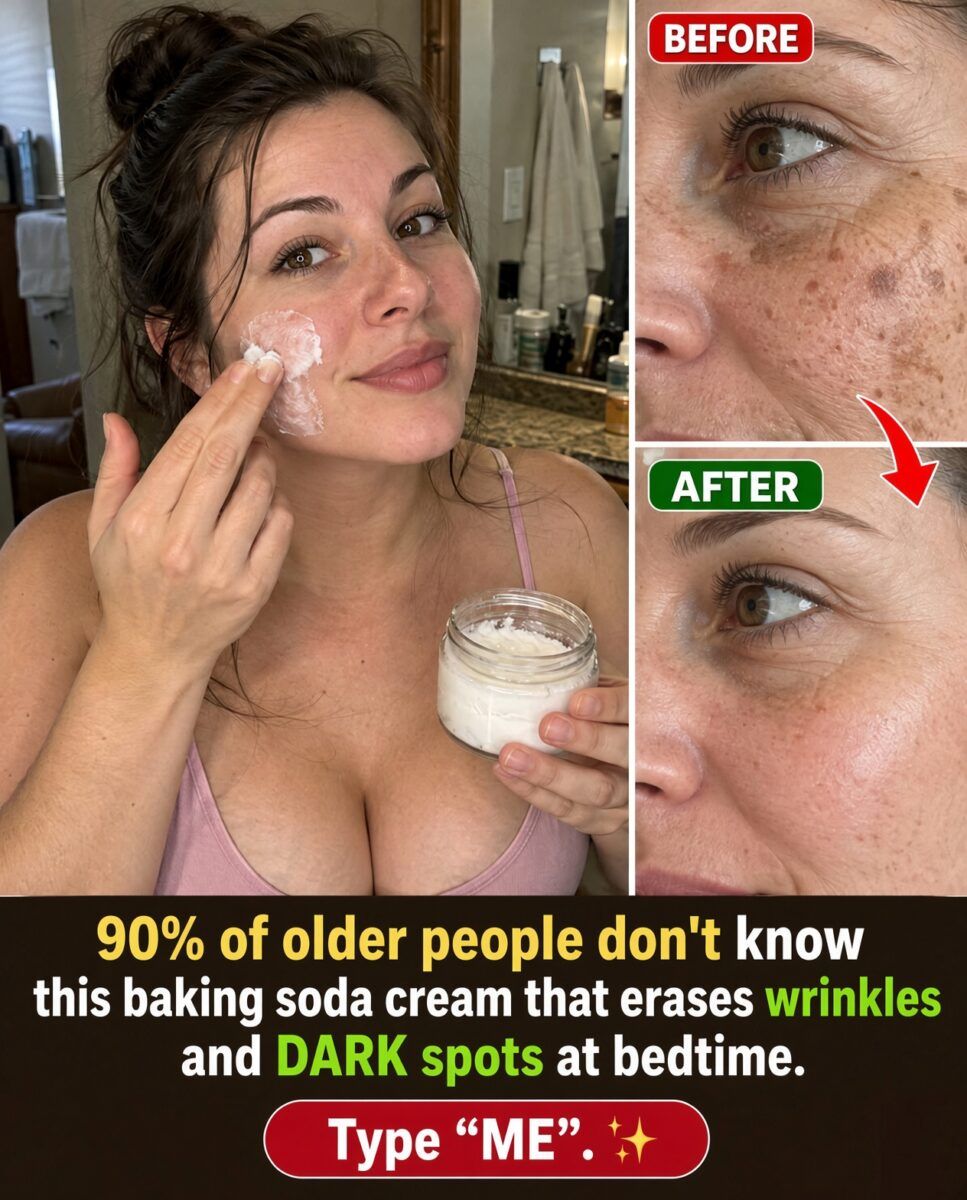
Many people try home remedies because they want a quick, cheap and “natural” solution for spots or wrinkles. The problem is that mature skin doesn’t respond well to everything circulating online — especially when left on all night. What seems harmless can end in burning, dryness and more sun sensitivity. And yes, baking soda on the face is one of those tricks that sounds simple but can prove costly for your skin.
Why baking soda became so popular
Baking soda is in almost every kitchen. It’s used for cooking, cleaning and removing odors, so many people assume it must also work for skin. That idea feels logical, but it’s not always correct. In videos and WhatsApp chains it’s often presented as a “miraculous” mix to lighten spots, soften wrinkles or leave the face “new” in one night. But the reality is different: facial skin isn’t a hard surface you can scrub without consequences.
What happens to skin when you use baking soda
Healthy skin has a natural protective barrier and a slightly acidic pH. That acidity helps retain hydration and defend against irritants and microbes. Baking soda, on the other hand, is alkaline — and that can disrupt this balance. Mature skin tends to be more delicate, drier and more prone to irritation, especially after years of sun exposure. That’s why something that barely bothers one person can cause burning, flaking or redness in mature skin. A momentary feeling of “smooth skin” doesn’t mean the treatment is working — sometimes it just means the surface is getting irritated.
Most common risks of sleeping with baking soda on your face
Leaving any mixture on for hours increases skin contact, raising the risk of reaction — especially on cheeks, nose, eyelids or around the mouth, where skin is thinner. Commonly reported problems: burning or itching on waking; tight, dry skin; flaking on nose, chin or cheeks; persistent redness; darker spots after irritation; eye discomfort if powder migrates overnight. On brown or light-brown skin, repeated inflammation can leave post-inflammatory hyperpigmentation — a darker spot after irritation. Instead of lightening, the remedy can worsen contrast.
What the evidence says about spots and wrinkles
To date, there is no solid evidence that baking soda safely and effectively erases sun spots or wrinkles. What is well described is its ability to irritate skin when used incorrectly. The most common spots in adults are solar lentigines, melasma or a combination — they don’t appear from a single cause and don’t disappear with a single homemade paste. Rubbing or irritating them can make them more noticeable. Wrinkles, for their part, aren’t removed by aggressive exfoliation — they improve more with consistent habits: sun protection, hydration, proper dermatological products and medical treatment when needed.
Signs your skin is reacting badly
If you’ve tried baking soda and notice any of these, stop immediately: burning that doesn’t fade after rinsing; redness lasting hours; intense itching; visible flaking; “cardboard-like” tight skin; spots looking darker afterward. If there’s also swelling, significant pain, crusts, blisters or a changing lesion, seek medical evaluation.
The routine that can actually help mature skin
1. Gentle cleansing morning and night: use lukewarm water and a mild cleanser, no granules or strong fragrances. No need to scrub.
2. Sunscreen every day: the most important step for spots and visible aging. Look for broad-spectrum SPF 30+, even on cloudy days. A wide-brim hat, glasses and shade help too.
3. Hydration to repair the barrier: a cream with glycerin, ceramides or hyaluronic acid helps skin retain water. If your dermatologist prescribed niacinamide or a gentle retinoid, use it as explained — without mixing in irritating home remedies.
4. Consistency and patience: spots and wrinkles don’t change overnight. Texture, dryness and sensitivity do improve over time with a steady routine. The key isn’t doing more — it’s doing the right thing every day.
If you still want to try baking soda, do it with extreme caution
Honestly: it’s not recommended as a facial treatment. But if someone insists on trying it, at least reduce the risk: test on a small forearm area, not the face; wait 24 hours for a reaction; if it burns or reddens, don’t use it; never leave it on overnight; don’t combine it with lemon, vinegar or hydrogen peroxide; keep it away from eyelids and eyes. And if you already have rosacea, dermatitis, very dry skin or easily worsening spots, skip these experiments.
When to see a dermatologist
Some spots look simple but aren’t. If a lesion changes color, grows, itches a lot, bleeds or has irregular borders, get it checked. Also consult if you’ve used homemade products for months without improvement, or if your skin irritates easily. In many cases the right treatment isn’t stronger — it’s more precise.
Frequently asked questions
Does baking soda remove face spots? There’s no solid evidence it removes spots safely. In some people it can irritate skin and make the spot look worse.
Can I leave baking soda on my face all night? Not recommended. Prolonged contact raises the risk of burning, dryness, flaking and later pigmentation.
What’s better for sun spots? Daily sunscreen, steady hydration and, if needed, dermatologist-indicated treatments for your skin type.
This article is for informational and educational purposes only and is not medical advice. Please consult a qualified healthcare professional before making changes to your diet or health routine.


