
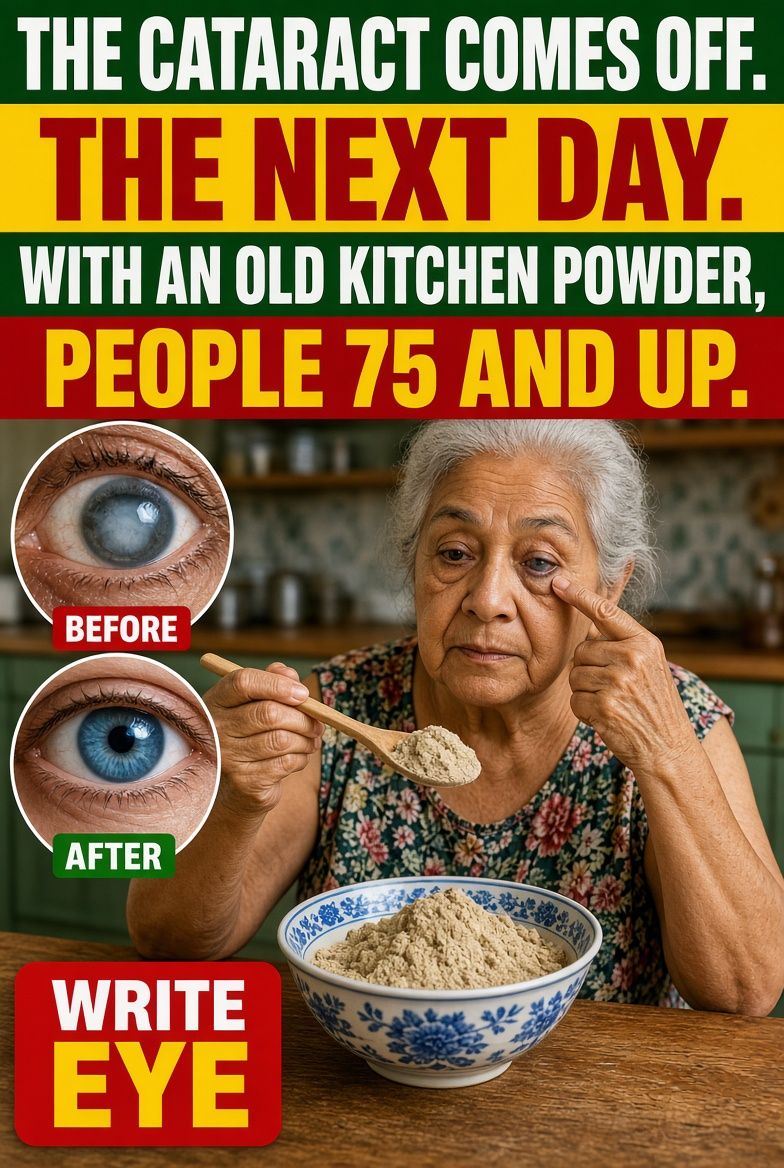
When cloudy vision appears, light starts bothering you and colors no longer look the same, worry grows fast. And if someone promises you a “miracle” solution with a kitchen powder, it’s easy to fall into hope — and into confusion. The problem is that these messages go viral precisely because they touch a real discomfort and an urgent need: seeing better without complications. But eye health deserves clarity, not shortcuts. And at the end of this article I’ll show you the part almost nobody explains about these posts.
What a cataract is, in simple words
A cataract happens when the lens, the eye’s natural lens, turns cloudy over time. That makes vision look blurry, as if looking through fogged glass. It’s more common with age, though it can also relate to diabetes, eye injuries, prolonged use of some medications, or family history.
The important part: a cataract doesn’t “dissolve” with home remedies. Messages promising immediate results usually exaggerate or mix testimonials with incomplete information — and that can delay proper care.
Why these posts go viral
Because they appeal to three very human things: fear, hope and urgency. A “before and after” image hits hard, and reading that something “removes the cataract the next day” sounds tempting. But scientific evidence doesn’t back those claims.
In fact, medical organizations and clinical studies agree that the definitive treatment for an advanced cataract is usually surgical, not homemade. That doesn’t mean you should be alarmed — it means separating what sells clicks from what really cares for your sight.
What medical sources actually say
The American Academy of Ophthalmology and other health bodies note that cataracts progress gradually and that treatment depends on how much they affect daily life. When the problem already interferes with reading, driving, cooking or recognizing faces, a specialist can evaluate safe options.
Blurry vision doesn’t always mean cataract, but it is a signal to get checked by a professional. Also remember that some eye discomfort can look like cataract and actually be something else, like dry eye, prescription problems or cornea changes. That’s why self-medicating or trying homemade mixes on your eyes is not a good idea.
Signs that deserve an eye check-up
If you notice one or several of these changes, it’s worth scheduling an evaluation: worsening blurry or cloudy vision; more light sensitivity or glare; needing more lighting to read; colors looking dull or yellowish; frequent prescription changes; trouble seeing at night.
Not every symptom means an emergency, but it is a sign something needs review — and the sooner the problem is detected, the more options you’ll have to handle it calmly.
What you must NOT do with viral “remedies”
This point is key. No matter how convincing a post sounds, don’t put unprescribed substances in your eyes. The eye surface is delicate and any irritation can worsen discomfort. Homemade products aren’t designed for ophthalmic use.
Especially avoid: applying powders, juices, infusions or homemade mixes to the eye; using drops without professional indication; skipping your medical check-ups to follow social-media advice; waiting months if vision is already affecting your routine.
The reality is simple: if something sounds too good to be true, it probably is. And in visual health, the cost of trying “magic solutions” can be high.
What you CAN do starting today
If you or a family member are noticing vision changes, these steps help you act in order: observe the pattern — note when blurry vision started, whether it worsens at night, light sensitivity, or one eye seeing differently from the other; schedule a check-up — an eye exam can identify whether it’s cataract or another cause; use good lighting — improving light at home for reading, cooking or walking safely; protect your eyes from the sun — UV-protective lenses help general eye health; manage associated conditions — if you live with diabetes or another chronic condition, medical follow-up helps protect vision long term.
The part almost nobody tells you about these ads
Many viral contents aren’t designed to inform — they’re designed to generate clicks, comments or private messages. That’s why they use extreme phrases, shocking images and quick promises. That combination activates emotion before analysis.
And here’s the most important detail: when a post asks you to write a word, share the message or follow a strange instruction, the goal sometimes isn’t your health — it’s reach. Having a critical eye is also a form of self-care.
The best decision isn’t always the fastest one; often it’s the one that leads you to a trustworthy check-up.
Frequently asked questions
Can cataracts be removed with home remedies? No. As far as medical sources show, home remedies don’t eliminate a cataract. They can give a false sense of relief and delay proper care.
When should I see an ophthalmologist? When you notice blurry vision, glare, trouble reading or vision changes affecting your routine. No need to wait until the problem is severe.
Do all older people have cataracts? Not all, but risk rises with age. Other factors matter too: diabetes, family history, injuries or certain medications.
This article is for informational and educational purposes only and is not medical advice. Please consult a qualified healthcare professional before making changes to your diet or health routine.


