
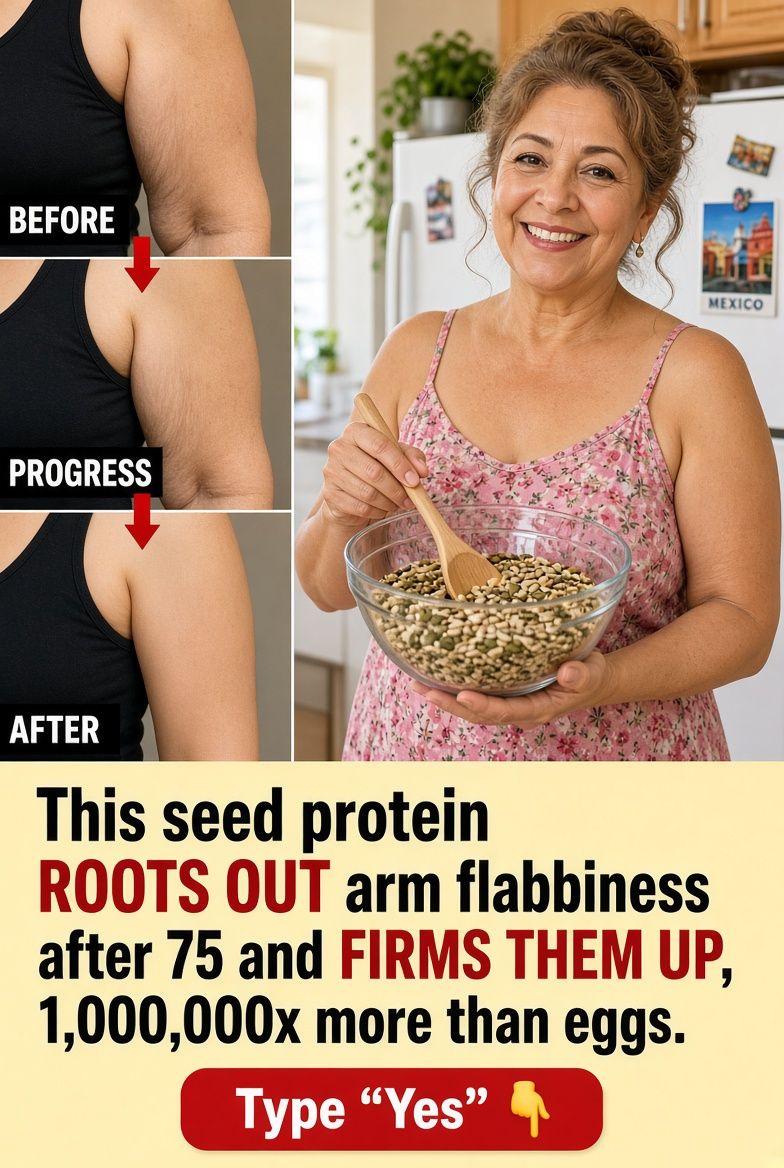
After 75, many people notice their arms no longer look or feel like they used to. The skin hangs a little more, lifting bags or carrying grandchildren gets harder, and sometimes that hits self-esteem directly. The worst part is that ads abound promising quick results with seeds, powders or “miracle remedies”, but almost never explain what really works. The good news is that flabbiness is not set in stone: with enough protein, simple exercises and consistency, it can improve.
Why arms look flabby after 75
With age, the body naturally loses muscle mass. This is called sarcopenia, which means loss of muscle and strength over the years. It shows a lot in the arms because there is less muscular “filling” and the skin also loses collagen and elastin — the fibers that give it firmness and elasticity.
The truth is it is not just “hanging fat”. It is usually a mix of several factors: less muscle in triceps and shoulders, thinner skin from time and sun, and less physical activity in daily life.
If you also eat little protein and spend a lot of time sitting, the muscle weakens faster. Research in older adults shows that the combination of adequate protein and resistance training helps slow the loss of strength. In other words: the body still responds, even if more slowly than before.
The ad trick: seeds vs. eggs
On social media the idea circulates that one seed “beats” the egg in protein. It sounds impressive, but the comparison is usually misleading: they compare 100 grams of a dry seed with 100 grams of egg, and of course the seed seems to win because the egg has a lot of water.
But in real life nobody eats 100 grams of seeds in one go. A normal portion of pumpkin seeds, for example, provides protein, yes, but also calories. The egg, on the other hand, is practical, economical, and provides very good quality protein. They do not compete; they complement each other.
The key is not finding a miracle food, but spreading quality protein throughout the day and pairing it with movement.
What each everyday food provides
- Egg — 1 large piece — 6 to 7 g protein — complete and easy to use daily
- Pumpkin seeds — 2 tablespoons — 8 to 9 g — good complement, not a substitute
- Hemp seeds — 3 tablespoons — 9 to 10 g — very good, though not always easy to find
- Beans — 1 cup — 14 to 15 g — better combined with tortilla or rice
- Chicken breast or tuna — 100 g — 20 to 25 g — very useful for raising protein
- Panela cheese or cottage cheese — 100 g — 11 to 18 g — practical and easy to include
What really helps is eating enough protein at breakfast, lunch and dinner.
What really helps firm the arms
Skin and muscle do not change by magic. They need two things: adequate nutrition and muscular stimulation. If you only change food, the arm does not tone up. If you only exercise but eat too little, there is not much progress either.
The good part is you do not need a gym to start. Studies in older adults show that even light exercises, done safely and consistently, can improve strength and function. And that shows in daily actions: combing hair, lifting a bag, reaching a shelf, or hugging more securely.
Simple exercises you can do at home
Start with a short routine, three times a week, without pain and without rushing. Use a firm chair and water bottles if you have no dumbbells. Do each movement slowly, watching your posture.
- Front raises: seated, hold a bottle in each hand and raise your arms forward to shoulder height. Lower slowly. Do 8 to 10 repetitions.
- Triceps extension: with elbows close to the body, bring the bottles back as if pushing air. Do 8 to 10 repetitions.
- Wall push: stand one step from the wall, rest your hands and bend your elbows slightly. Push and return. Do 8 repetitions.
- Squeeze a towel or soft ball: hold it between your palms at chest height, squeeze 5 seconds and release. Repeat 8 times.
If you feel shoulder pain, dizziness, have high blood pressure or had recent surgery, it is best to consult your doctor or physiotherapist first. Safety always comes first.
Protein without movement does no miracles
This is the point many people miss. Eating better helps, yes, but the muscle needs a reason to stay. If the arm is barely used, the body understands that tissue is no longer so necessary and gradually reduces it.
That is why the ideal combination is simple: enough protein + resistance exercises + consistent routine. No need to train an hour. Sometimes five or ten well-done minutes are worth more than a long session that never gets repeated.
And here is a useful truth: consistency beats intensity. It is better to do little and keep going than to do a lot for one week and then quit.
7-day practical guide to start at home
- Day 1: observe your food. Write down what you ate yesterday. If breakfast was just coffee with sweet bread, you already found room for improvement.
- Day 2: raise breakfast protein. Try 2 eggs and a tablespoon of pumpkin seeds over nopales, beans or panela cheese.
- Day 3: improve the main meal. Add pot beans and a portion of chicken, tuna or fish.
- Day 4: do the chair routine. Dedicate 5 minutes to the arm exercises.
- Day 5: change the snack. Instead of cookies alone, try natural yogurt with pumpkin seeds.
- Day 6: repeat the exercise. If it was hard, lower the repetitions. 6 well-done beats 15 poorly done.
- Day 7: measure progress. Use a tape to measure the widest part of the relaxed arm — a real reference, not just the mirror.
Mistakes that slow progress
- Believing in 3-day results. Muscle does not rebuild in a weekend.
- Dropping eggs because “the new seed came out”.
- Doing many uncontrolled repetitions and ending with shoulder pain.
- Living on tea, broth or very poor diets, which also take muscle away.
- Sleeping badly and getting a lot of sun without protection, which ages the skin more.
Flabbiness does not improve with punishment. It improves with realistic, repeated, safe habits.
Flabby arms after 75 are not a sentence or a shame. They are a sign the body needs more support: enough protein, strength movement, and patience.
Important notice: this article is informative and does not replace the assessment of your doctor, nutritionist or physiotherapist. If you have a chronic illness, pain, dizziness or doubts about your diet or exercise, seek professional guidance before making changes.


