
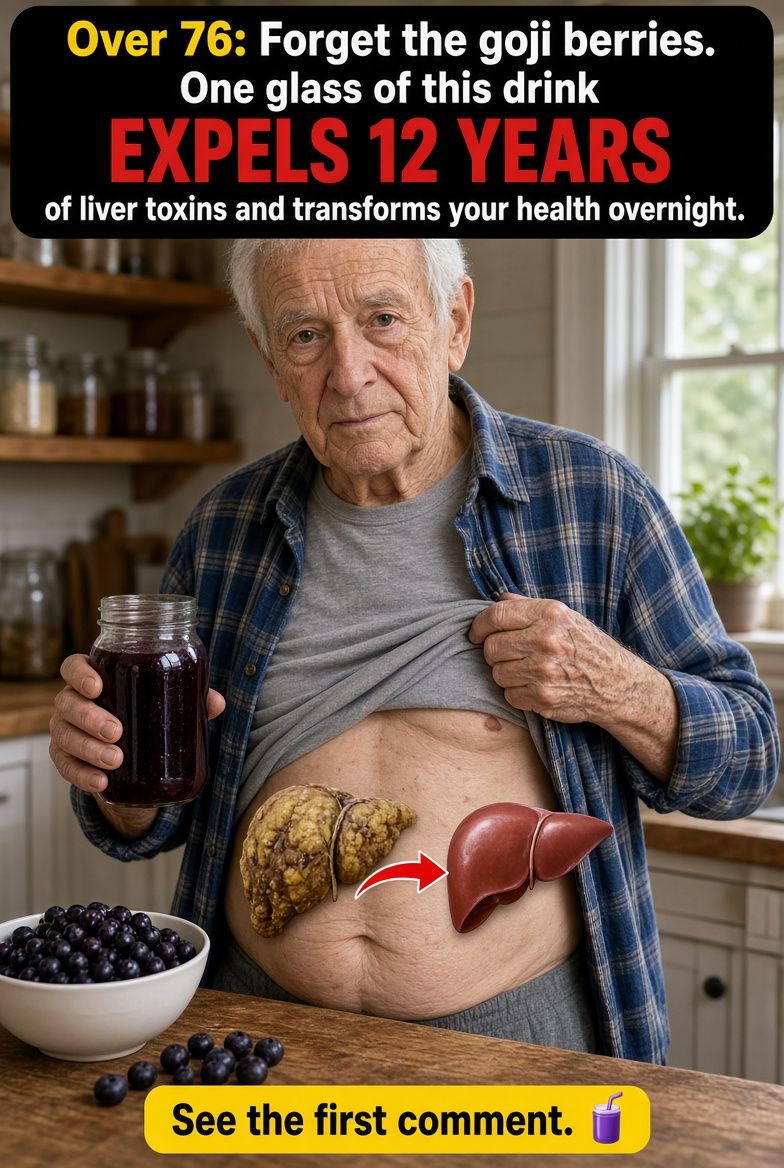
After 65, the body no longer forgives the same way. What used to feel like “just a heavy meal” now feels like bloating, tiredness, and that belly that won’t go down even if you eat less. Meanwhile, online they keep selling the idea that an exotic, expensive, hard-to-find fruit can solve everything. Reality is simpler, cheaper, and much more useful: a well-made homemade glass can help more than you imagine.
Why so many older adults feel heavy and bloated
Over the years, metabolism slows and the body tolerates excess sugar, fat and alcohol worse. Science has shown that being overweight, a sedentary life and frequent soda consumption are associated with fat in the liver, inflammation and general discomfort. In other words, the problem is almost never a single meal, but the sum of many.
The good news is that the liver responds very well when its daily load is reduced. And that is where a simple change can make a difference.
What goji promises and what the evidence really says
Goji berries, also called Lycium barbarum, are sold as a “superfruit” with almost miraculous benefits. The problem is that many of those promises sound better in an ad than in a scientific study.
Some small studies have found modest improvements in liver enzymes in people who took goji extracts for several weeks. But the evidence in humans remains limited and is not enough to say goji “cleanses” the liver. They can also be costly, and you do not always know the product’s quality for certain. Plus an important point: they can interact with medications, especially anticoagulants like warfarin.
In short, they are not bad by themselves, but they are not the main solution either. Science does not place them above a balanced diet, less sugar and more water.
The homemade glass that can really help and why it works
The most practical alternative does not come in an elegant box or imported capsules. It comes from dark fruits you can actually find: blackberries, blueberries or frozen berry mixes.
These fruits contain anthocyanins, natural pigments that give them their purple or blue color. Various scientific reviews have linked these compounds with less oxidative stress and better fat control in the liver, although more studies in people are still needed.
The important thing here is not to sell it as a miracle. A homemade glass can provide water, fiber if not fully strained, and real antioxidants, without the excess sugar of many commercial juices. And that, for an older person, is already a lot.
Advantages of the homemade glass vs. goji
- Price: goji — high and variable; homemade glass — more accessible, especially frozen.
- Availability: goji — health stores or internet; homemade glass — supermarket, markets.
- Added sugar: goji blends sometimes contain it; homemade — zero, if you don’t add it.
- Evidence: goji — small preliminary studies; homemade — more support in antioxidants and healthy diet patterns.
- Daily use: goji — can get expensive; homemade — easier to sustain.
The real difference is not just in the fruit. It is in what you can repeat without overspending or complicating your life.
How to prepare the glass step by step
The key is to keep it simple. No need for rare ingredients or “natural” sweeteners that also raise sugar in the end.
Ingredients:
- Half a cup of blackberries, blueberries or frozen berry mix
- 1 glass of plain water
- Juice of half a lemon
- Optional: a few mint leaves or a pinch of cinnamon
Preparation:
- Wash or disinfect the fresh fruit if it is not frozen.
- Blend the fruit with the water for 20 to 30 seconds.
- Add the lemon and taste.
- If it is too sour, add more water, not sugar.
- Drink it fresh, preferably with breakfast.
If you use frozen fruit, no need to thaw first. And if you have no blender, you can crush the fruit with a fork, mix with water and lemon, and drink it as a light fresh water. It does not have to be perfect to be useful.
The mistake that turns a good glass into liquid dessert
This is the detail almost nobody mentions. Many people prepare a healthy drink and then add honey, brown sugar, sugar or even boxed juice “to make it taste better”. That is where much of the benefit is lost. The liver does not need another sugar hit disguised as a remedy. If you want to help it, the drink must stay light and simple.
A healthy drink is not defined by what it promises, but by what it does not add to the body.
Habits that help more than any superfruit
The truth is this: no glass compensates for a routine that keeps damaging the liver every day. If you really want to notice a difference, start with these changes:
- Swap soda for plain water or unsweetened lemon water.
- Walk 15 to 20 minutes after eating.
- Reduce alcohol, even “just a little”.
- Dine earlier and lighter.
- Check your weight, glucose and cholesterol with your doctor.
Scientific evidence is consistent on something basic: when excess sugar goes down, physical activity improves and weight is controlled, the liver usually responds better.
Practical tips to start tomorrow
- Buy a bag of frozen berries or blackberries for several days.
- Leave a glass or bottle in the fridge with water and fruit for the next morning.
- Remove sugar from the first attempt. Get used to the natural taste first.
- Drink it with breakfast, not as a meal replacement.
- Observe how you feel after 7 to 14 days: less heaviness, less soda craving, better hydration.
Conclusion
Goji can sound modern, but it is not the only or the best answer. A homemade berry glass, well prepared and without added sugar, can be a more practical, cheaper and easier-to-repeat option in daily life. The key is not a miracle fruit, but a pattern you can actually maintain: less sugar, more water, more movement and lighter meals.
Frequently asked questions
Can I drink this glass if I have diabetes?
Yes, but in small portions and without honey, sugar or commercial juice. It is best to use whole fruit in moderate amounts and consult your doctor or nutritionist to adjust it to your plan.
Are goji bad?
They are not poison. The problem is they do no magic and can be expensive or of doubtful quality. They can also interact with some medications. If your doctor sees no problem, they can be consumed, but they are not indispensable.
How long until you notice something?
There is no exact date. Some people feel less heaviness in one or two weeks if they drop soda and improve hydration. Lab-study changes can take longer and depend on many factors.
Disclaimer: this article is informative and does not replace the assessment of a health professional. If you have a chronic illness, take medications or have persistent symptoms, consult your doctor before changing your diet.


