
Seeing a new spot, a strange lump, or an unusual change in your skin can generate fear, embarrassment, and even the temptation to search for a quick fix online. And when videos or posts appear promising that root touch-ups will “clean” your skin in hours, it’s easy to cling to hope. But that hope can delay something much more important: detecting a serious problem early. The good news is that there is a safe way to proceed, and at the end of this article, I’ll show you the most helpful step you can take today.
What are those roots that appear in viral posts?
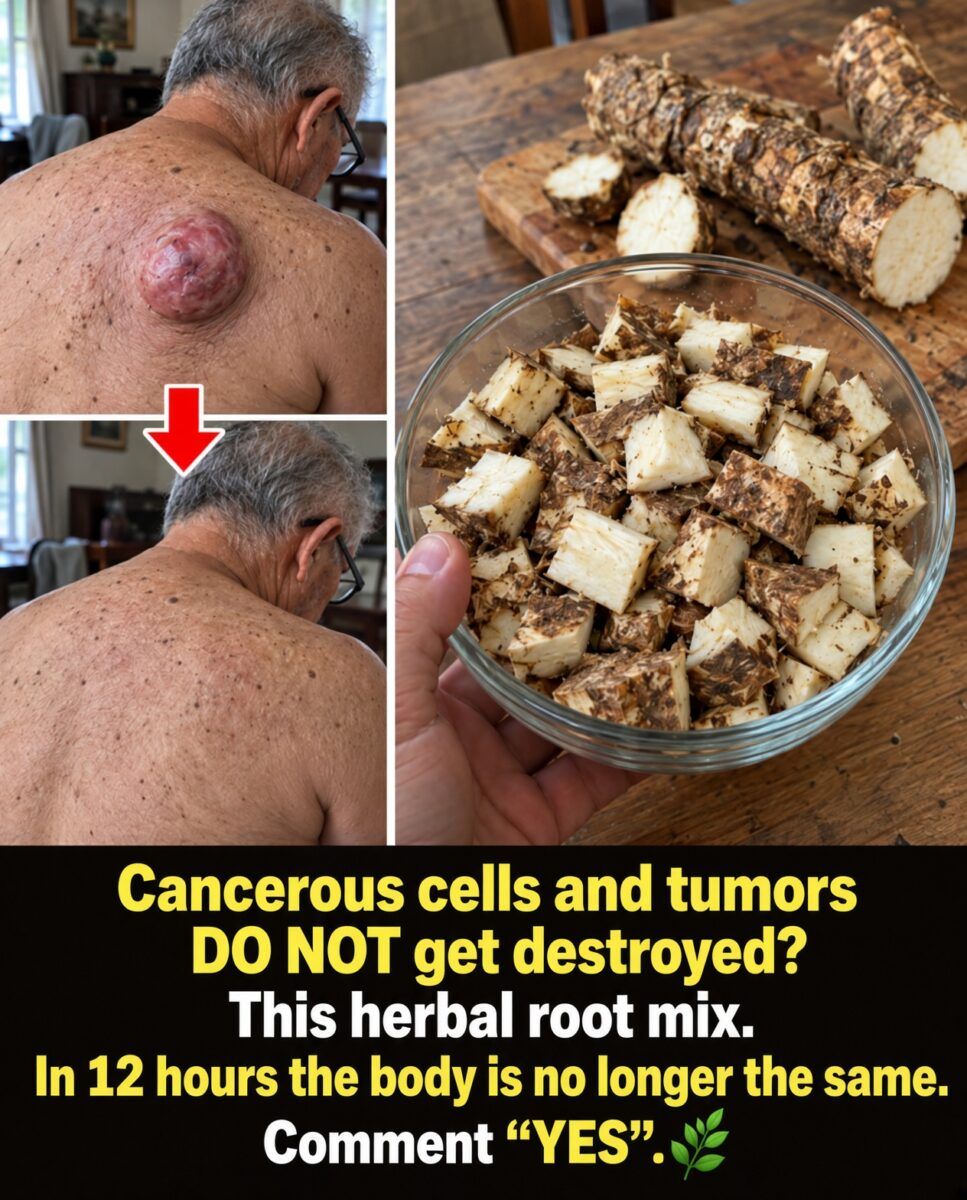
In many viral posts, the roots shown are usually burdock, also known as gobo root. Sometimes it’s mixed with dandelion or other similar plants. In Mexico, it’s not always easy to find in regular markets, but it can be obtained in health food stores or herb shops.
Burdock has traditionally been used in teas or decoctions for digestive discomfort, fluid retention, or as a general skin support. It contains compounds such as inulin and some antioxidants. But that doesn’t mean it eliminates abnormal cells or cures tumors.
Traditional use for minor ailments is one thing; promising a cure for something potentially serious is quite another.
What the studies really say
Some laboratory studies have found that burdock or dandelion extracts can affect the growth of certain cells in test tubes or in animals. That sounds impressive, but science demands much more than that.
The reality is that these results have not been confirmed as an effective treatment in humans. According to sources such as Memorial Sloan Kettering and Cancer Research UK, there is no solid evidence that these roots treat or eliminate cancer in humans.
Furthermore, the International Agency for Research on Cancer reminds us that no single food or herb can prevent or treat cancer. Scientific evidence supports healthy habits, not miracle cures.
And here’s the key point: it’s one thing to observe an effect in a laboratory, and quite another for a person to take it at home, with an uncertain dose, a homemade preparation, and without medical supervision.
Why a “before and after” photo can be deceiving
Images on social media are often powerful because they appeal to emotion. You see a lesion and then “clear” skin, and you think the remedy worked. But often essential information is missing: the actual diagnosis, the time elapsed, other treatments used, or even if the photo was edited.
The truth is that an image doesn’t replace a clinical evaluation. A spot that changes shape, bleeds, hurts, or grows could be anything from benign to skin cancer. Only a doctor can differentiate between them with a proper examination and, if necessary, a biopsy.
Social media doesn’t show the cost of waiting. And that cost can be wasted valuable time.
Real risks of relying solely on home remedies
Waiting for a root canal to “take effect” can not only delay diagnosis, but it can also bring other risks that many people don’t consider.
- Delay in care: an injury may grow or spread while the remedy is being tried.
- Drug interactions: Some herbs may affect blood sugar or clotting.
- Quality problems: the roots may be contaminated with soil, pesticides, or the wrong plants.
- False sense of security: feeling that “something is already being done” can lead to postponing medical consultations.
Burdock, for example, may not be harmless for everyone. If you take medication for diabetes, high blood pressure, or blood thinning (anticoagulants), it’s advisable to speak with a healthcare professional before consuming it.
What you can do for your skin starting today
The good news is that you don’t need extreme solutions to start taking better care of yourself. There are simple actions that do support your health and can make a real difference in the long run.
Habits that do help
- Check your skin once a month in front of the mirror.
- Ask a family member to check your back, neck, and other hard-to-see areas.
- Use sunscreen every day, even if it’s cloudy.
- Wear clothing that covers your skin when you’re going to be in the sun for a long time.
- Eat more fruits, vegetables, and fresh foods.
- Walk at least 20 to 30 minutes a day if your physical condition allows it.
- Get plenty of sleep and try to reduce stress with simple routines.
These habits don’t promise miracles, but they do reduce risks and support overall well-being. And that, in terms of health, is worth a great deal.
How to check your skin without complications
Self-examination of the skin doesn’t have to be difficult. In fact, you can do it in just a few minutes a month if you follow a simple method.
First, find a well-lit area. Examine your face, scalp, neck, arms, chest, back, legs, and feet. Use a handheld mirror for areas that are difficult to see. If you notice a new spot or a lesion that has changed, note it down with the date.
Next, check if it has grown, changed color, has irregular edges, or bleeds. These details are very helpful to the doctor.
If you’re embarrassed to check yourself, ask someone you trust for help. Sometimes a family member notices things you might miss.
When should you see a doctor without delay?
Don’t wait to see if it goes away on its own if you notice any of these signs:
- A spot that grows quickly or changes shape.
- An injury that bleeds, hurts, or itches persistently.
- A lump that doesn’t disappear in two or three weeks.
- A mole or spot that changes color or borders.
- Extreme fatigue, unexplained weight loss, or pain that doesn’t go away.
In many cases, the medical check-up is simple and quick. In public clinics or private practices, a professional can guide you directly on the next steps. Early detection significantly improves the prognosis.
What to do if you’ve already tried the root mixture
If you’ve already consumed tea, a decoction, or an extract of any root, don’t panic. The important thing now is to act with clear information and without hiding it.
First, stop using it if you experience discomfort, allergic reactions, dizziness, or any other unusual side effects. Then, tell your doctor honestly what you took, how long you used it, and if you are taking any other medications. This information can help prevent interactions or confusion.
And most importantly: don’t put off getting checked out just because “it doesn’t hurt much yet.” Many skin diseases start silently.
Concrete steps you can take today
If you want to move from worry to action, do this today:
- Examine your skin carefully and note any changes.
- If possible, take a clear photo of the injury for comparison later.
- Call your health center or consult a dermatologist.
- Do not stop taking prescription medications to try home remedies.
- Share this information with a family member so they can also review it.
- Bring a list of questions to your medical appointment.
That’s the most important point of this entire article: timely medical checkups offer more protection than any herbal remedy . Real hope lies not in a bowl of herbs, but in acting promptly.
Conclusion
Roots like burdock may have traditional uses, but they are not a proven cure for unusual spots, lumps, or suspicious skin lesions. Scientific evidence does not support their use as a cancer treatment or as a substitute for medical evaluation.
If you notice a change that doesn’t go away, don’t ignore it. Review it, make a note of it, consult a doctor, and follow the advice of a professional. Sometimes, the smallest step is the one that can do the most to protect your health.
Frequently Asked Questions
Can I drink burdock tea while having a stain checked?
Only use if authorized by your doctor and always informing them which herbs you are consuming. It should not be used as a treatment for a suspected injury or as a substitute for medical consultation.
Do the before and after photos prove that it works?
No. Those images don’t demonstrate effectiveness because they don’t show the actual diagnosis, the time elapsed, or whether other treatments were used. Many can be misleading.
What should I tell the doctor if I’ve already tried the mixture?
Tell them honestly what you took, for how long, and if you noticed any symptoms. This information helps to better assess your case and rule out interactions.
Disclaimer: This content is for informational purposes only and is not a substitute for evaluation, diagnosis, or treatment by a healthcare professional. If you have symptoms or a skin lesion that concerns you, consult a doctor as soon as possible.


