
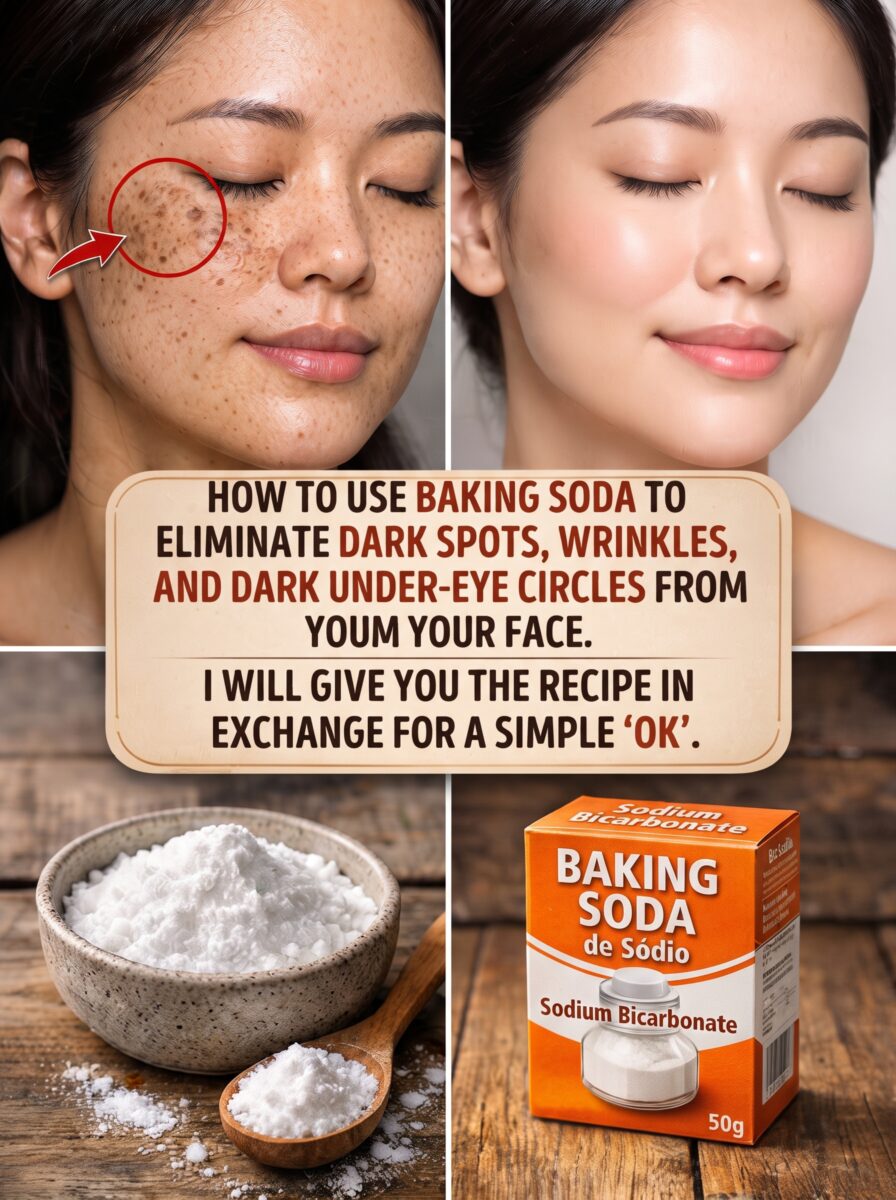
Baking soda on the face: benefits, risks, and how to use it safely. Baking soda is a common household staple. Many people are exploring its potential for facial care routines, especially when seeking natural options to improve the appearance of skin prone to dark spots, fine lines, or dark circles.
However, while many ideas circulate on social media for achieving more even and fresh skin, it is essential to understand that using this product on the face requires extreme caution. Its alkaline nature (with a pH around 8-9) can disrupt the skin’s natural balance (which is slightly acidic, with a pH between 4.5 and 5.5), potentially causing dryness, irritation, or sensitivity, according to dermatology experts.
Therefore, rather than promising miraculous results, let’s realistically and safely explore how some people incorporate the product into their beauty routines, always with moderation and respecting the skin’s reactions.
In this article, I share a practical and honest guide on using baking soda for facial care, focusing on its role as a gentle exfoliant and neutralizer, so you can evaluate whether it fits into your routine without unnecessary risks. And at the end, I reveal an extra tip that many readers use to enhance their skin’s daily glow… keep reading!
What Baking Soda Really Does to the Skin
Baking soda is a fine powder with physical exfoliating properties thanks to its gentle particles. When mixed with water or a moisturizing ingredient, it can help remove dead skin cells from the skin’s surface, temporarily leaving it with a smoother and more luminous texture.
Some studies and dermatological sources indicate that it acts as a mild neutralizing agent, helping to balance excess acidity in oily or acne-prone skin. This is why it is frequently mentioned in exfoliation protocols to improve overall skin appearance.
But beware: it does not penetrate the deeper layers of the skin, does not alter melanin production, and does not fill in wrinkles. Its effect is superficial and temporary. Research from reliable sources indicates that excessive use can weaken the skin barrier, causing more problems than benefits.
Potential Benefits (According to Users)
Provides gentle exfoliation for non-sensitive skin.
Can provide a feeling of deep cleansing and a smoother texture.
Inexpensive and easy to find in any supermarket.
Certain combinations with natural ingredients make use more tolerable.
Important Risks and Precautions (Do Not Ignore Them)
Before trying anything, remember: every skin is unique. Many dermatologists warn that baking soda can:
Cause dryness or a tight sensation.
Trigger irritation, redness, or itching.
Increase sensitivity to the sun.
Worsen conditions like rosacea, eczema, or sensitive skin.
Never use it if you have open wounds, inflammatory acne, or very sensitive skin. And always perform a patch test: apply a small amount to your forearm, wait 24 hours, and observe.
How to Prepare and Use Baking Soda Safely at Home
If you decide to try it, do so in moderation: at most once a week (or less if your skin is sensitive). Here are some simple recipes shared by those who use it with care.
1. Basic Recipe: Gentle Exfoliating Paste (For a Softer Texture)
Mix 1 teaspoon of baking soda with 2 to 3 teaspoons of water (or milk/natural moisturizer) until a creamy paste forms.
Cleanse your face with your usual cleanser.
Apply the paste with gentle circular motions, avoiding the eye and lip area.
Massage for a maximum of 1 to 2 minutes (do not scrub hard).
Rinse thoroughly with lukewarm water.
Pat dry gently and immediately apply your favorite moisturizer, and sunscreen if it is daytime.
2. Honey Variant (For Dry or Normal Skin)
1 teaspoon of baking soda + 1 tablespoon of pure honey (moisturizing and soothing).
Mix, apply the same way, leave on for 3 to 5 minutes, and rinse.
3. Coconut or Vegetable Oil Variant (For Extra Hydration)
1 teaspoon of baking soda + 1 teaspoon of virgin coconut oil.
Ideal for dry skin, but use in moderation, as coconut oil can be comedogenic.
Quick Comparison: Baking Soda vs. Recommended Exfoliants
| Appearance | Homemade Baking Soda | Gentle Chemical Exfoliants (AHA/BHA) |
| Cost | Very low | Medium to high |
| Exfoliating effect | Physical (abrasive) | Chemical (dissolves dead cells) |
| Risk of irritation | High in case of abuse | Low if chosen properly according to skin type |
| Frequency | Once a week or less | 2 to 3 times per week |
| Scientific evidence | Limited (anecdotal) | Extensive studies (dermatological) |
Frequently Asked Questions (FAQ)
Does baking soda permanently remove dark spots?
No, there is no solid scientific evidence. It can improve surface appearance by removing dead skin cells, but for persistent spots, consult a dermatologist.
Is it useful for wrinkles or fine lines?
It can make the skin look smoother temporarily, but it does not reduce wrinkles or stimulate collagen. For that, retinol or peptides are more effective.
Can I use it on dark circles?
Avoid using it in the eye area—the skin in this region is very thin and sensitive. Opt for cold compresses or caffeine creams instead.
Would you like help adapting or formatting this translation for a specific platform or blog?


