
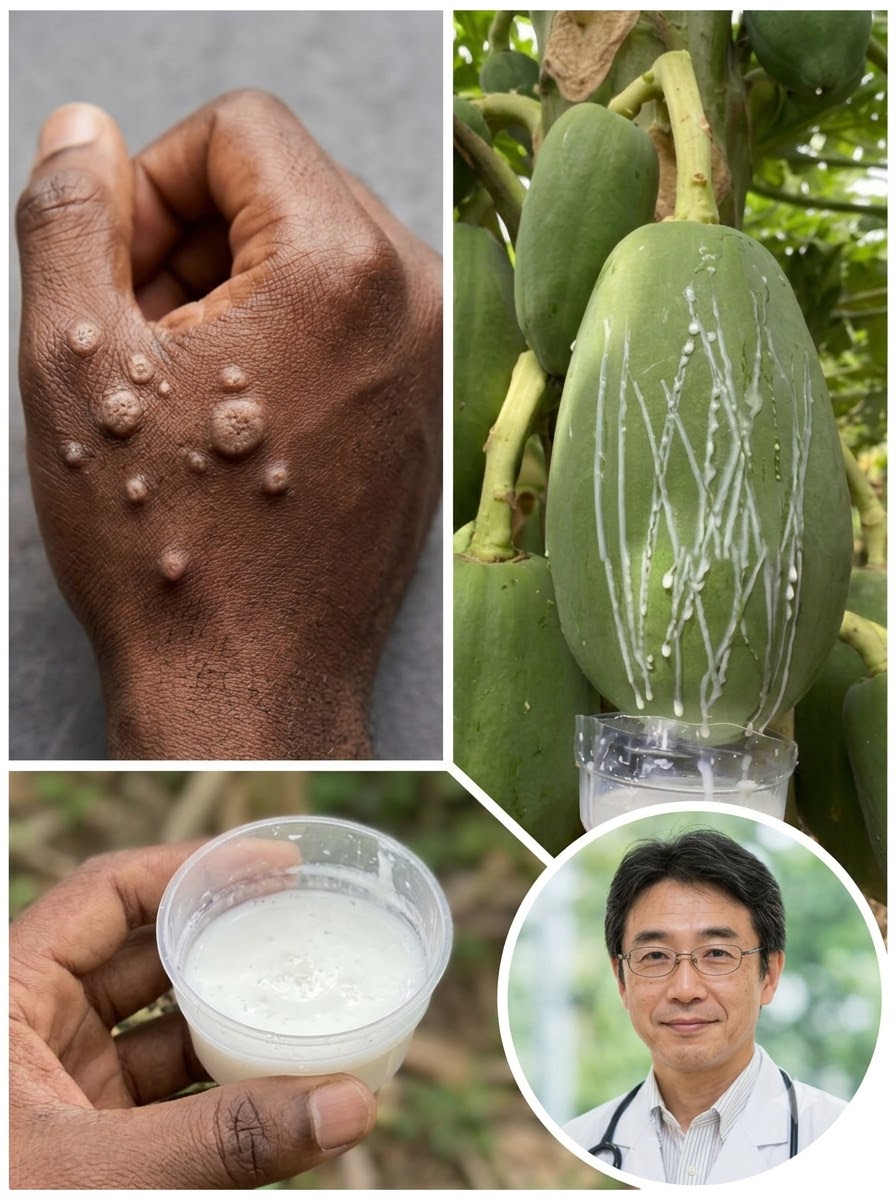
Discover the traditional use of papaya latex for warts, how it works, potential skin risks, and safer options for managing common warts at home.
Introduction
Warts are common skin growths that can appear on the hands, fingers, feet, and other parts of the body. They are usually caused by certain types of human papillomavirus (HPV), which infects the outer layer of the skin.
Throughout history, people have explored traditional plant-based remedies to address common skin concerns. One traditional remedy involves papaya, also known as papaw, particularly the milky sap called papaya latex found in the fruit and other parts of the plant.
Papaya latex contains naturally occurring enzymes and other compounds that have attracted interest for their biological activity. However, although papaya has a long history of traditional use, there is not enough reliable clinical evidence to establish that fresh papaya latex safely and effectively removes warts.
Understanding how this remedy is traditionally used, along with its potential risks and better-studied alternatives, can help you make informed decisions about skin care.
1. What Is Papaya Latex?
Papaya (Carica papaya) is a tropical fruit known for its sweet flesh and nutritional value. The plant produces a milky white sap, commonly called papaya latex, which can be released when the unripe fruit or other plant tissues are cut.
This latex contains several biologically active substances, including papain, an enzyme that helps break down proteins.
What Makes Papaya Latex Interesting?
Papaya latex has been studied for several properties:
- Proteolytic activity: Papain can break down certain proteins.
- Traditional topical use: Papaya preparations have been used in various traditional practices for skin-related concerns.
- Biological activity: Researchers have investigated papaya-derived compounds for their potential applications in different fields.
These properties do not automatically mean that papaya latex can eliminate the virus responsible for warts. Its effects on healthy skin and wart tissue require careful consideration.
2. How Is Papaya Latex Traditionally Used for Warts?
In some traditional practices, fresh papaya latex is applied directly to a wart in the hope that its enzymes will affect the thickened skin.
A commonly circulated traditional method recommends applying a small amount of the milky sap twice daily.
However, this method has not been established as a safe, effective wart treatment through high-quality clinical trials. Fresh latex can also vary in concentration, making its effects difficult to predict.
Important Safety Considerations
Direct application of fresh papaya latex is not recommended as a do-it-yourself treatment because it may irritate the skin or cause contact dermatitis. The risk may be greater with concentrated sap, repeated applications, or prolonged contact.
Avoid applying it to:
- The face or areas around the eyes.
- Genital skin or other sensitive areas.
- Broken, inflamed, or infected skin.
- Moles, birthmarks, or growths that have not been identified by a healthcare professional.
People with a known papaya or latex allergy should avoid exposure. Papaya-derived enzymes can also trigger allergic reactions in susceptible individuals.
3. Can Papaya Latex Actually Remove Warts?
The enzymes in papaya latex provide a possible explanation for why the sap has been explored in traditional skin care. Nevertheless, the ability of an enzyme to break down proteins does not demonstrate that it can safely remove a wart or eliminate the underlying HPV infection.
At present, there is insufficient high-quality human evidence to recommend fresh papaya latex as a proven treatment for warts.
Some warts disappear naturally as the immune system responds to the virus, while others persist or spread. Improvement after using a home remedy does not necessarily establish that the remedy caused the wart to disappear.
For this reason, traditional use should be distinguished from clinically demonstrated effectiveness.
4. Evidence-Based Options for Common Warts
If you want to manage an ordinary wart, several established options may be more appropriate than applying raw plant sap.
Salicylic Acid
Over-the-counter salicylic acid products are commonly used for certain common and plantar warts. They gradually remove layers of thickened skin.
Follow the product instructions carefully, and avoid applying these products to the face, genital area, irritated skin, or other areas excluded by the label. People with diabetes, poor circulation, or reduced sensation should seek medical advice before attempting self-treatment.
Cryotherapy
Cryotherapy uses freezing to destroy wart tissue. A healthcare professional can perform this treatment, and some over-the-counter freezing products are also available for selected common warts.
More than one treatment may be necessary, and temporary discomfort, blistering, or changes in skin color can occur.
Watchful Waiting
Some uncomplicated warts disappear without treatment. If a wart is painless and does not cause practical problems, a healthcare professional can help determine whether monitoring it is reasonable.
Professional Assessment
A dermatologist can confirm whether a skin growth is actually a wart and recommend an appropriate treatment based on its location, size, and appearance.
Seek medical evaluation if a growth changes rapidly, bleeds, becomes painful, looks unusual, or fails to improve with appropriate care.
5. How to Help Prevent Warts From Spreading
Warts can spread through direct contact or contaminated surfaces. Simple habits may reduce the risk of transmission.
- Avoid picking, scratching, or cutting warts.
- Wash your hands after touching an affected area.
- Do not share nail clippers, files, or other personal grooming tools used on a wart.
- Keep affected areas clean and avoid irritating the surrounding skin.
- Wear footwear in communal showers and changing areas to reduce exposure to infections that cause plantar warts.
These precautions can help limit irritation and reduce opportunities for the virus to spread.
Frequently Asked Questions
Is papaya latex a proven natural remedy for warts?
No. Papaya latex has a history of traditional use, but reliable clinical evidence is insufficient to confirm its safety and effectiveness for removing warts.
Can papaya latex be applied twice daily?
Twice-daily application is described in some traditional remedies, but this does not establish that the practice is safe. Fresh papaya latex can irritate or damage skin, so it is better to choose a treatment with clearer safety instructions.
Does papaya latex kill HPV?
There is no established clinical evidence that applying papaya latex to the skin eliminates HPV or reliably cures the infection responsible for warts.
How long do common warts take to disappear?
The timeline varies. Some warts resolve naturally over months or longer, while others persist. Treatment response depends on the type, location, and individual circumstances.
When should I see a doctor about a wart?
Seek professional advice if you are unsure whether a growth is a wart, if it is painful or bleeding, if it changes in appearance, or if it occurs on the face or genital area. Medical guidance is also important for people with weakened immune systems or conditions that affect circulation.
Conclusion
Papaya latex, the milky sap obtained from the papaya plant, is an interesting part of traditional herbal practice because it contains enzymes such as papain. However, its traditional use for warts should not be mistaken for proven medical effectiveness.
Applying fresh latex directly to a wart may cause skin irritation or allergic reactions, and there is insufficient evidence to recommend the practice as a reliable treatment.
For people dealing with common warts, established options such as salicylic acid, appropriate cryotherapy, or professional assessment offer a more evidence-based starting point.
Natural ingredients can be valuable subjects of research, but safe skin care begins with understanding both their potential and their limitations.


