
Discover the traditional use of papaya leaves for boils, their potential properties, important safety precautions, and evidence-based ways to care for boils at home.
Introduction
Boils, also known as furuncles, are painful, pus-filled lumps that develop beneath the skin. They commonly occur when bacteria infect a hair follicle, often involving Staphylococcus aureus. Boils may appear on the face, neck, armpits, buttocks, or thighs and can cause redness, swelling, and tenderness.
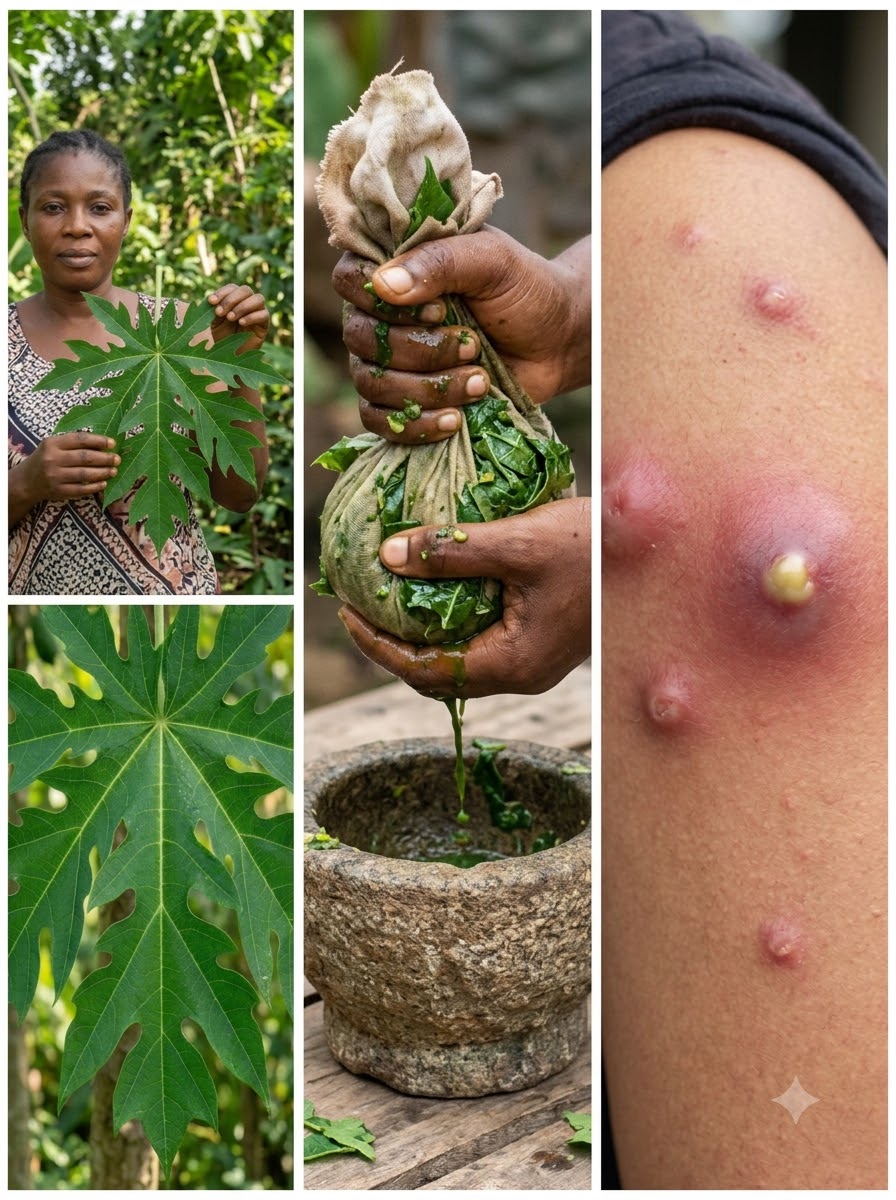
In traditional herbal practices, papaya (pawpaw) leaves have been used in various home remedies for skin concerns. Some traditional preparations involve crushing fresh leaves to produce a paste or juice that is applied to the affected area.
Papaya leaves contain naturally occurring plant compounds that researchers have investigated for their biological properties. However, there is not enough reliable clinical evidence to establish that papaya leaf juice or paste can treat boils or eliminate the bacteria responsible for them.
Understanding the traditional use of papaya leaves, the potential risks of applying raw plant material to infected skin, and the available treatment options can help you make safer decisions.
1. What Are Boils?
A boil is a localized skin infection that develops around a hair follicle. It often begins as a small, tender, red bump that gradually becomes larger and may fill with pus.
Common signs include:
- A painful, swollen lump beneath the skin.
- Redness and warmth around the affected area.
- A white or yellow center as pus accumulates.
- Tenderness when the area is touched.
- Occasionally, fever or a general feeling of being unwell.
Several boils may develop together, forming a larger cluster known as a carbuncle.
Although small boils sometimes drain and heal on their own, deeper infections may require medical treatment. Squeezing or cutting a boil at home can worsen inflammation and spread infection.
2. Papaya Leaves and Their Traditional Uses
Papaya, scientifically known as Carica papaya, is a tropical plant valued for its fruit, seeds, leaves, and other parts.
Papaya leaves contain various plant compounds, including flavonoids, phenolic compounds, and other substances that have been studied for their biological activity.
Naturally Occurring Plant Compounds
Laboratory research has investigated papaya leaf extracts for antioxidant and other biological properties. However, results obtained in laboratory settings do not necessarily translate into effective treatments for human skin infections.
Traditional Applications
In some communities, crushed papaya leaves have traditionally been used in topical preparations for different skin complaints.
The proposed rationale is that the plant’s naturally occurring compounds might influence local inflammation or microbial activity. Nevertheless, there is insufficient clinical evidence to confirm that applying papaya leaves to a boil improves healing or treats the underlying infection.
3. How Is Papaya Leaf Paste Traditionally Prepared?
A traditional preparation involves crushing fresh papaya leaves into a paste and extracting their juice.
The commonly described method includes:
- Selecting fresh papaya leaves.
- Washing and crushing the leaves.
- Grinding them into a paste.
- Extracting the juice or using the crushed leaves as a poultice.
Some traditional instructions recommend applying the preparation twice daily.
Important safety note: This is a description of a traditional practice, not a medically validated treatment recommendation. Applying raw plant material or homemade juice to a boil is not recommended because it may introduce contaminants, irritate damaged skin, or delay appropriate treatment. There is no established safe dosage or application schedule for treating boils with papaya leaves.
4. Safer Ways to Care for a Boil at Home
For a small, uncomplicated boil, several established self-care measures can help reduce discomfort while the area heals.
Apply a Warm Compress
Use a clean cloth soaked in warm—not hot—water. Place it gently over the boil for approximately 10–15 minutes, several times a day.
Warm compresses may encourage a small boil to drain naturally and can help relieve discomfort.
Use a clean cloth each time, and wash your hands before and after caring for the area.
Keep the Area Clean
Gently clean the surrounding skin and keep the area covered with a clean dressing if it begins to drain.
Dispose of used dressings carefully and avoid sharing towels, clothing, or personal grooming items that may have contacted the infected area.
Never Squeeze or Puncture the Boil
Squeezing or attempting to drain a boil with a needle can push infection deeper into the surrounding tissue or spread bacteria to other areas.
If a boil is large, very painful, or fails to improve, a healthcare professional may need to drain it using an appropriate sterile technique.
Seek Medical Attention When Necessary
Medical evaluation is particularly important if:
- The boil is on the face, especially near the nose or eyes.
- Redness or swelling spreads beyond the lump.
- You develop fever, chills, or feel increasingly unwell.
- The boil is large, very painful, or keeps returning.
- You have diabetes or a weakened immune system.
- The boil does not improve with basic home care.
Some boils require professional drainage, and antibiotics may be necessary in certain cases.
5. Can Papaya Leaves Prevent or Cure Boils?
At present, there is insufficient high-quality human research to establish that papaya leaves can prevent boils, eliminate the bacteria causing them, or accelerate healing.
Even if a plant extract demonstrates antimicrobial activity in laboratory testing, its effectiveness and safety on an actual skin infection must be established separately.
Boils are often associated with bacterial infections, so appropriate hygiene and timely medical care remain important.
Papaya leaves should not replace warm compresses, professional drainage when indicated, or prescribed medication.
6. How to Reduce the Risk of Future Boils
Simple hygiene practices may help reduce the spread of bacteria and lower the risk of recurring skin infections.
- Wash your hands regularly.
- Clean minor cuts and abrasions promptly.
- Avoid sharing towels, razors, or clothing that comes into contact with infected skin.
- Wash clothing, towels, and bedding that have contacted a draining boil.
- Keep skin folds clean and dry.
- Seek medical advice if boils repeatedly develop in the same area.
Recurrent boils may require further evaluation to identify contributing factors and determine whether additional treatment is needed.
Frequently Asked Questions
Can papaya leaves remove pus from a boil?
There is no reliable clinical evidence that papaya leaf paste or juice draws out pus or treats a boil. A clean warm compress is a better-supported home-care option for a small, uncomplicated boil.
Can I apply papaya leaf juice twice a day?
Twice-daily application appears in some traditional instructions, but its safety and effectiveness have not been established. Applying unsterilized plant juice to infected or damaged skin may cause irritation or contamination.
How long does a boil take to heal?
Healing time varies according to the boil’s size, depth, and severity. Some small boils improve within one to two weeks, while larger or deeper infections may require medical treatment.
Should every boil be treated with antibiotics?
No. Not every boil requires antibiotics. Some need professional drainage, and antibiotics are prescribed when clinically appropriate based on the infection and the person’s circumstances.
Are papaya leaves safe for everyone?
Not necessarily. Plant material may cause irritation or allergic reactions, and homemade preparations may be contaminated. People with sensitive skin or existing skin damage should be especially cautious.
Conclusion
Papaya leaves have a history of traditional use for various skin concerns, and their naturally occurring compounds continue to attract scientific interest. However, there is not enough clinical evidence to confirm that papaya leaf juice or paste can safely and effectively treat boils.
For a small, uncomplicated boil, a clean warm compress, good hygiene, and avoiding squeezing are safer starting points. Large, persistent, or worsening boils should be assessed by a healthcare professional.
Traditional remedies can be interesting to explore, but protecting the skin and treating infections appropriately should always come first.


