
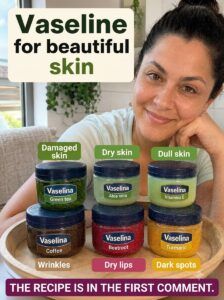
Dry skin can cause tightness, flaking, roughness, and discomfort, especially during winter, after very hot baths, or due to the frequent use of harsh soaps. The lips, elbows, heels, and hands are some of the areas that lose hydration most easily.
A simple homemade recipe combines pure petroleum jelly, natural oil, and vitamin E. The mixture forms a thick balm that can help reduce water loss and leave the skin temporarily softer and more protected.
Despite the popular images on social media, petroleum jelly does not eliminate wrinkles, remove dark spots, or repair skin diseases. Its main benefit is creating a protective barrier on the skin’s surface.
Ingredients
To prepare the balm, use:
- 2 tablespoons of pure, unscented petroleum jelly;
- 1 teaspoon of coconut oil, olive oil, or sweet almond oil;
- 2 to 3 drops of vitamin E, optional;
- 1 small, clean, and dry container.
For the face, almond oil usually has a lighter texture. Coconut oil can be too heavy for oily or acne-prone skin. Olive oil is also emollient, but it has a more intense aroma.
How to prepare
Place the petroleum jelly in a heat-resistant container. Melt it slowly in a double boiler, stirring with a clean spoon.
You can also heat it in the microwave for a few seconds, but you should avoid high temperatures. The petroleum jelly only needs to soften, not boil.
Add the oil of your choice and mix until you obtain a uniform texture. If desired, add vitamin E and stir again.
Transfer the mixture to a small, clean jar and allow it to cool completely. Keep it closed and protected from heat, water, and direct light.
Do not put wet fingers into the container, as moisture can contaminate the mixture. Use a small, clean spatula whenever possible.
How to use on dry skin
After bathing, gently pat your skin dry, leaving it slightly damp. Apply a thin layer of balm to dry areas such as hands, knees, elbows, and heels.
Vaseline doesn’t add water to the skin. It mainly helps prevent existing moisture from evaporating. Therefore, the best time to use it is after showering or over a regular moisturizer.
For very dry heels, apply a small amount before bed and put on cotton socks. Avoid walking barefoot immediately after application, as the skin may become slippery.
Recipe for dry lips
You can apply a very small amount directly to clean lips. The balm helps protect against wind and cold and reduces the feeling of dryness.
Do not add cinnamon, lemon, baking soda, or essential oils to the lip balm, as these ingredients can cause burning and irritation.
If you experience persistent cuts, swelling, or sores at the corners of your mouth, seek professional advice.
Can it be used on the face?
Pure petroleum jelly can be applied in small amounts to very dry areas. At night, apply a thin layer after your moisturizer, avoiding excessive use.
People with oily or acne-prone skin should only test on a small area. Although pure petroleum jelly is not considered an acne treatment, its occlusive texture can be uncomfortable and trap sweat, oil, or residue when applied to poorly cleansed skin.
Avoid contact with eyes and do not use the mixture on open wounds or infections.
And what about wrinkles and age spots?
Vaseline can make lines caused by dehydration appear less noticeable because it smooths the surface. However, it does not enhance the effect of Botox or eliminate deep wrinkles.
It also does not lighten dark spots. Mixtures with coffee, turmeric, beetroot, or green tea may temporarily alter the product’s color, but they do not treat melasma or hyperpigmentation.
To prevent darkening of skin blemishes and premature aging, the most important step is to use sunscreen daily.
Important precautions
Test on a small area before first use. Discontinue use if burning, redness, itching, or swelling occurs.
People with dermatitis, active eczema, inflamed acne, or allergies to the ingredients should seek dermatological advice. Use this recipe as a complementary moisturizing treatment, not as a substitute for treatments prescribed by professionals.


