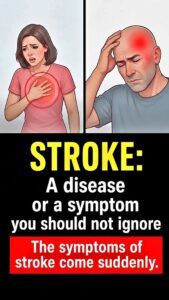
A stroke can happen suddenly, and recognizing the warning signs quickly can make a critical difference.
The brain needs a continuous supply of blood and oxygen. When blood flow to part of the brain is blocked or a blood vessel ruptures, brain cells can become damaged within minutes. That is why a stroke is considered a medical emergency.
The most important thing to remember is simple:
Stroke symptoms often appear suddenly. Do not wait to see if they go away.
If you or someone around you suddenly develops symptoms that could indicate a stroke, seek emergency medical help immediately.
What Is a Stroke?
A stroke occurs when blood flow to part of the brain is interrupted or when a blood vessel in the brain breaks.
There are two major types:
- Ischemic stroke: caused by a blocked blood vessel.
- Hemorrhagic stroke: caused by bleeding from a ruptured blood vessel.
Both can damage brain tissue and require urgent medical evaluation.
7 Sudden Stroke Symptoms You Should Know
1. Sudden Weakness or Numbness
One of the most recognizable warning signs is sudden weakness or numbness in the:
- Face
- Arm
- Leg
It is particularly concerning when the symptoms occur on one side of the body.
For example, someone may suddenly notice that their right arm feels weak or that they cannot hold an object properly.
2. One Side of the Face Droops
Ask the person to smile.
Does one side of their face appear lower than the other?
Facial drooping or numbness on one side can be an important warning sign of stroke.
This is one reason the B.E. F.A.S.T. stroke recognition method begins with checking the face.
3. Sudden Difficulty Speaking
A person having a stroke may suddenly:
- Slur their words
- Have difficulty speaking
- Struggle to find words
- Have trouble understanding what others are saying
Ask the person to repeat a simple sentence. If their speech suddenly sounds unusual or unclear, treat it as an emergency warning sign.
4. Sudden Vision Problems
Stroke can sometimes cause sudden changes in vision.
A person may experience:
- Blurred vision
- Double vision
- Loss of vision in one or both eyes
Sudden vision changes should not simply be dismissed as tiredness or an ordinary eye problem.
5. Sudden Dizziness or Loss of Balance
Another possible warning sign is a sudden problem with balance or coordination.
Someone may suddenly:
- Feel extremely dizzy
- Have trouble walking
- Lose coordination
- Feel as though they are about to fall
The American Stroke Association includes sudden balance or coordination problems among the B.E. F.A.S.T. warning signs.
6. A Sudden, Severe Headache
A sudden, severe headache with no known cause can also be a stroke warning sign, particularly when it occurs unexpectedly or together with other neurological symptoms.
A severe headache alone does not necessarily mean someone is having a stroke, but sudden neurological changes should never be ignored.
7. Sudden Confusion
Someone experiencing a stroke may suddenly become confused or have difficulty understanding what is happening.
They may seem unable to:
- Follow a conversation
- Understand simple questions
- Express themselves clearly
- Recognize what is being said
Sudden confusion combined with speech difficulties is an important warning sign.
Remember B.E. F.A.S.T.
One of the easiest ways to remember several major stroke warning signs is B.E. F.A.S.T.
B — Balance
Sudden loss of balance or coordination?
E — Eyes
Sudden vision changes?
F — Face
Does one side of the face droop or feel numb?
A — Arms
Is one arm weak or numb? Does it drift downward when both arms are raised?
S — Speech
Is speech slurred, strange, or difficult to understand?
T — Time
Time to call emergency medical services immediately.
The CDC and American Stroke Association both emphasize rapid action when stroke symptoms appear.
What Should You Do If You Suspect a Stroke?
If you notice one or more sudden stroke symptoms:
1. Call your local emergency medical service immediately.
2. Note the exact time the symptoms started.
This information can help medical professionals determine appropriate treatment.
3. Do not wait to see whether the symptoms disappear.
Stroke symptoms can sometimes improve temporarily, including during a transient ischemic attack (TIA). Even when symptoms disappear, urgent medical evaluation is still important.
4. Do not drive yourself if emergency medical services are available.
Emergency medical personnel can begin assessment and care while transporting the person to the hospital.
What About a “Mini-Stroke”?
A transient ischemic attack (TIA) can cause symptoms similar to those of a stroke, but the symptoms may disappear after a short period.
That does not mean the episode should be ignored.
The American Stroke Association describes TIA as a warning event that requires urgent medical assessment because it can signal an increased risk of a future stroke.
So if someone suddenly develops facial weakness, arm weakness, speech difficulty, vision changes, or other possible stroke symptoms—even if they later feel normal—medical attention is still important.
Can Stroke Symptoms Be Different in Women?
Women can experience the same major stroke symptoms as men, including facial drooping, arm weakness and speech difficulty.
The American Stroke Association also notes that women may experience additional symptoms such as general weakness, confusion or memory problems, fatigue, nausea, or vomiting. These symptoms can sometimes be overlooked.
This makes awareness especially important: a sudden, unusual neurological change should not simply be attributed to exhaustion or stress.
Why Every Minute Matters
Stroke treatment is time-sensitive.
When blood flow to part of the brain is interrupted, brain cells can become damaged quickly. The sooner an eligible patient receives appropriate treatment, the greater the opportunity to limit brain injury and disability.
That’s why recognizing the symptoms is only the first step.
The next step is acting immediately.
Final Thoughts
A stroke does not always begin with dramatic symptoms. Sometimes the first sign is something that appears surprisingly simple—a crooked smile, one weak arm, unusual speech, sudden dizziness, or an unexpected change in vision.