
Knee pain can make simple things like getting up from a chair, walking a few blocks, or climbing stairs exhausting. That’s why it’s so tempting to believe viral promises that claim to regenerate cartilage in just three days. The problem is that this idea creates false hope and can delay proper treatment. The good news is that there are real strategies to improve pain, strength, and mobility, and by the end of this article, you’ll see which approach actually helps the most.
What really happens inside a knee with osteoarthritis
Osteoarthritis isn’t simply “wear and tear,” as if the knee were a worn-out mechanical part. It’s actually a disease of the entire joint. Over time, the cartilage, bone, synovial membrane, and other tissues can change, leading to pain, stiffness, inflammation, and loss of movement.
Healthy cartilage acts as a smooth surface, helping the knee move without excessive friction. When it’s damaged, not only does pain occur, but the way the joint bears weight can also be altered. But that doesn’t mean every sharp pain indicates damaged cartilage .
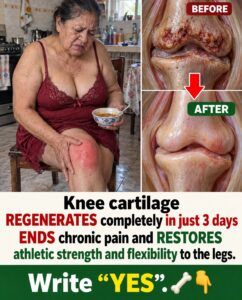
The knee hurts for many reasons, and the level of pain does not always reflect the actual level of damage.
Can cartilage regenerate completely in 3 days?
There is no serious clinical evidence to support that claim. Neither food, nor teas, nor supplements, nor a “miracle” routine has been shown to completely rebuild the cartilage of a knee with osteoarthritis in 72 hours.
In fact, organizations like the CDC point out that there is currently no cure for osteoarthritis, although there are effective ways to manage symptoms and improve function. That distinction is key: feeling better is not the same as regenerating tissue .

A person can walk better because they have strengthened their muscles, improved their mobility, or reduced the stress on the joint. That is already a significant improvement, even if the cartilage hasn’t “regenerated.”
Why pain doesn’t always tell you how much cartilage is left
It’s a common misconception that more pain means more damage. However, the relationship isn’t so straightforward. Some people experience significant changes in their appearance but feel little pain, while others suffer intense discomfort without advanced damage.
That’s why a diagnosis isn’t made solely with an internet photo or an isolated X-ray. The healthcare professional considers symptoms, medical history, physical examination, and, when necessary, imaging studies.

Furthermore, not all knee pain in older adults is osteoarthritis. Meniscus injuries, tendon problems, bursitis, muscle weakness, or alignment issues can also contribute. Identifying the correct cause leads to the correct treatment .
The surprising thing: movement is often part of the treatment
When your knee hurts, the natural reaction is to want to rest completely. But staying still for too long can worsen weakness, stiffness, and reduced mobility. Evidence shows that appropriate physical activity can reduce pain and improve function in people with arthritis.
The CDC recommends low-impact activities such as walking, swimming, water aerobics, cycling, and tai chi. It also suggests starting slowly and gradually increasing the intensity as tolerated.

And here’s an important point: proper exercise shouldn’t feel like a test of pain tolerance. It should help, not punish .
Examples of activities that usually help
- Short walks on flat terrain
- Stationary bike with low resistance
- Water exercises to reduce impact
- Strengthening thighs, hips and calves
- Balance exercises to prevent falls
These approaches don’t create new cartilage in three days. But they can improve something that matters a great deal in daily life: a more functional knee.
Strengthening your muscles can greatly change the outlook
The muscles surrounding the knee help stabilize it and distribute the load more evenly. When these muscles are weak, the joint has to work harder. That’s why physical therapy often includes exercises for the quadriceps, glutes, and hip muscles.
According to research and recommendations from organizations like the NIAMS, therapeutic exercise can be a key tool for reducing symptoms and maintaining independence. It’s not magic, but it is evidence-based medicine.
In many cases, the realistic goal is not to “heal” the knee in days, but to enable the person to get up better, walk more, and climb stairs with less fear.
Body weight also has a greater influence than it seems
When you are overweight or obese, each step can put more pressure on your knee. That’s why losing weight gradually can help reduce pain and disability associated with arthritis.
The CDC points out that even a small reduction can make a difference. But there’s an important distinction: in older adults, it’s not about extreme diets or losing muscle mass, but about combining adequate nutrition with appropriate activity.
That means eating better, moving better, and maintaining strength. The goal isn’t to lose weight at any cost, but to protect your joints and muscle mass .
Are there any foods that rebuild cartilage?
It has not been proven that any common food can completely regenerate cartilage worn down by osteoarthritis. A healthy diet can support overall well-being, but it is not equivalent to anatomical reconstruction of the joint.
This also includes viral recipes with gelatin, collagen, seeds, spices, or smoothies that promise extraordinary results. It sounds appealing, but such a claim would require very solid clinical evidence, and to date, none exists.
Nutrition does matter, but for more realistic reasons: energy, strength, weight control, muscle recovery, and overall health.
Dietary habits that can support knee health
- Consume enough protein to maintain muscle
- Include fruits and vegetables every day
- Choose legumes, fish and healthy fats
- Avoid extreme diets that weaken the body
- Stay well hydrated, especially if you exercise
What about glucosamine, collagen, and other supplements?
Just because a product says “joints” on the label doesn’t mean it will rebuild cartilage. Some supplements may help certain people with symptoms, but that’s not the same as regenerating tissue.
The answer depends on the ingredient, the dosage, any medications the person is already taking, and their medical conditions. Therefore, it’s advisable to discuss any supplement with a healthcare professional before using it on your own.
Improving pain and regenerating cartilage are two distinct goals, and should not be confused.
A knee can improve even if the cartilage doesn’t grow back completely.
This is perhaps the most useful message of the entire article. The goal shouldn’t be to transform an aging knee into a “new” joint, but rather to restore quality of life.
That can mean getting up with less difficulty, walking longer, sleeping better, climbing stairs more safely, and maintaining independence in daily activities. In other words, real progress .
The physical activity programs recommended by the CDC have demonstrated benefits in pain, flexibility, movement, and daily performance. And that matters more than an impossible viral promise.
Practical plan: what you can do starting today
If your knee has been hurting for a while and an urgent injury has been ruled out, you can start with simple, safe steps. The key is to progress gradually, not to jump into an intense routine all at once.
Step 1: Observe which movements bother you the most and which ones you tolerate better.
Step 2: Choose a low-impact activity, such as gentle walking, stationary cycling, or water exercises.
Step 3: Start with 5 to 10 minutes and gradually increase if the pain does not worsen.
Step 4: Add gentle strengthening for thighs and hips, ideally with professional guidance.
Step 5: Review your weight, footwear, and daily routine to reduce unnecessary strain on your knee.
Step 6: If the pain increases significantly or lasts for weeks without improvement, seek medical evaluation.
Consistency is worth more than a single heroic session. In fact, that’s one of the reasons why physiotherapy often works: it’s based on cumulative progress, not extreme effort.
When do you need a medical check-up without waiting for home remedies?
There are signs that shouldn’t be ignored. If the pain appeared after a fall or injury, if you can’t put weight on your leg, if there’s a visible deformity, or if your knee is very swollen, red, or hot, you need a medical evaluation.
It’s also important to consult a doctor if there’s a fever, general malaise, or a significant loss of function. In those cases, it’s not the time to try internet remedies or wait “three more days.”
Quick summary of what we do and don’t know
| Viral promise | What the evidence says |
|---|---|
| “Cartilage regenerates completely in 3 days” | It has not been proven |
| “One food can rebuild the knee” | There is no solid evidence |
| “Walking always worsens the knee” | Not necessarily; the right activity helps. |
| “Strengthening muscles can improve function” | Yes, it’s backed up. |
| “Losing weight can help if you are overweight” | Yes, it can reduce strain and pain |
Frequently Asked Questions
Can knee cartilage regenerate completely with food?
There is no proven food that can completely rebuild cartilage lost due to osteoarthritis. Diet can support overall health, but it does not replace evidence-based treatment.
Does walking cause more wear and tear on a knee with osteoarthritis?
Not necessarily. Appropriate physical activity is usually part of the recommended management. Ideally, you should start gradually and choose low-impact activities.
What exercise is best for strengthening knees after age 70?
There isn’t one that works for everyone. Gentle walking, cycling, water aerobics, and tailored strengthening exercises can all be helpful. A physical therapist can help you choose the safest option for your specific needs.
Conclusion
A knee with osteoarthritis doesn’t go from damaged cartilage to a fully regenerated joint in three days. Viral promises are no substitute for medical evidence.
But that doesn’t mean resigning yourself to the pain. Adapted exercise, muscle strengthening, weight management when appropriate, physical therapy, and other individualized treatments can greatly improve function and quality of life.
The most useful goal isn’t to pursue a “new” knee in 72 hours. It’s to ensure that the knee you have allows you to move better, maintain strength, and remain independent for longer.
Medical notice: This content is educational and does not replace the evaluation of a healthcare professional. Do not change or discontinue treatments on your own, and seek urgent medical attention if your knee is very red, hot, swollen, deformed, or if you cannot bear weight on your leg.


