
Varicose veins can make your legs feel heavy, tired, and uncomfortable, leading many people to seek natural remedies in the hope of a quick fix. The problem is that a dilated vein doesn’t change its structure in a few hours, even if a photo might suggest otherwise. This difference between temporary relief and a real cure is confusing, and that’s where many remedies promise more than they can deliver. The good news is that there are helpful measures to relieve symptoms and medical treatments that target the affected vein; I’ll show you what really helps and what signs you shouldn’t ignore.
What exactly are varicose veins?
Varicose veins are superficial veins that have become dilated and twisted because blood is not returning efficiently to the heart. In the legs, this return depends on small valves that should open and close like gates. When these valves fail, blood pools, pressure increases, and the vein widens.
Therefore, simply saying “poor circulation” falls short. The reality is more specific: the problem usually lies in venous return and valves that no longer seal properly. And that’s why an infusion or tea cannot “repair” a structurally damaged vein.
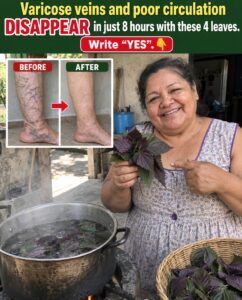
Can four sheets of paper erase varicose veins in eight hours?
The short answer is no. There is no solid clinical evidence to show that boiling four leaves, drinking an infusion, or applying it to the skin will eliminate varicose veins that have developed in eight hours. There may be a feeling of relief, rest, or less swelling, but that doesn’t equate to eliminating the diseased vein.
Feeling better is one thing; correcting venous damage is quite another. That difference is very important because many “before and after” photos are misinterpreted. A leg may look different after resting, elevating, or temporarily reducing swelling, but that doesn’t prove the varicose vein has disappeared.
Why photos can be deceiving
Varicose veins change in appearance depending on body position, lighting, and how long a person has been standing. If someone spends several hours standing, the veins may become more prominent. If they then lie down and elevate their legs, the pressure decreases and the leg may appear better.

This creates striking images, but it doesn’t prove a cure. In fact, a proper assessment of venous disease requires a clinical examination and, when appropriate, duplex ultrasound. The surface can be deceiving; studying the flow reveals what’s really going on.
Common symptoms of varicose veins
Some people only notice visible veins. Others experience discomfort that can affect their daily lives. The most common symptoms include heaviness, mild to moderate pain, swelling, and itching around certain veins.
Cramps, leg fatigue, and, in more advanced cases, skin discoloration may also occur. And here’s the important point: not all pain or swelling is due to varicose veins, so it’s best not to assume otherwise without a medical evaluation if the symptoms are severe or new.

What can help improve circulation in the legs
The good news is that there are simple measures that can improve venous return and relieve symptoms. They won’t eliminate existing varicose veins, but they can make a real difference in how your legs feel throughout the day.
These are some of the most useful ones:
- Walk for several minutes a day to activate the calf muscle pump.
- Avoid sitting or standing still for extended periods.
- Elevate your legs during rest to temporarily reduce venous pressure.
- Wear compression stockings when recommended by a healthcare professional.
- Take care of the skin on your legs and watch for persistent changes.
The reason is simple: the calf muscles help push blood upwards. When we walk, this “pump” is activated. When we remain immobile for many hours, blood tends to pool more easily in the legs.

Walking can do more than you imagine
This is one of the most underrated habits. Walking won’t eliminate a varicose vein, but it does improve blood flow and can reduce the feeling of heaviness. Even short walks throughout the day can be helpful if you spend a lot of time sitting or standing.
If your job requires you to stay still, try moving your ankles, flexing and extending your feet, or getting up every so often. It’s simple, but consistency usually yields better results than waiting for a miracle cure.
Elevating your legs: temporary relief, not a cure
Elevating your legs can temporarily reduce swelling and fatigue. This happens because it facilitates blood return to the heart and reduces pressure within the superficial veins.
This effect explains why some legs look “better” after resting. But let’s be clear: improving their appearance for a few hours doesn’t mean the underlying problem has disappeared. The diseased vein remains if it isn’t treated properly.
Compression stockings: when they are useful and when to be careful
Compression stockings apply graduated pressure to the leg and can help some people with venous symptoms. They are widely used because they are practical and, in the right patients, can improve heaviness and swelling.
But they’re not the same for everyone. The type of compression and pressure level depend on the venous problem and other health conditions. In people with significant arterial disease, for example, intense compression may require prior medical evaluation.
| Measurement | What can you do? |
|---|---|
| Walk | Activates the calf muscle pump |
| Raise your legs | It can temporarily reduce heaviness and swelling |
| Avoid prolonged immobility | Promotes venous return |
| Compression stockings | They can relieve symptoms in suitable individuals. |
| Leaf infusions | They have not proven to erase varicose veins in eight hours. |
Does body weight influence varicose veins?
Yes, weight can play a role, but it doesn’t explain everything. Being overweight can increase the strain on the legs and worsen some symptoms. However, varicose veins are also related to genetics, age, pregnancy, prolonged standing, and other factors.
Venous disease is multifactorial. Therefore, blaming only weight is neither fair nor accurate. If there is excess weight, a gradual and safe reduction can help, but it is not the only factor contributing to the problem nor the only path to improvement.
When more than home care is needed
If varicose veins cause frequent pain, persistent swelling, bleeding, or skin changes, a professional evaluation is advisable. In these cases, duplex ultrasound can show how blood flows and where venous reflux is occurring.
This is important because a photograph only shows the surface. Ultrasound, on the other hand, helps to see which veins are malfunctioning and what treatment would be most appropriate. Depending on the assessment, procedures such as sclerotherapy or other techniques that close diseased veins from the inside may be considered.
Medical treatments that do act on the diseased vein
When a varicose vein truly needs treatment, the goal isn’t to “cleanse the blood,” but rather to close or treat the malfunctioning vein so that the blood flows through other healthy veins. This approach is medically sound and is chosen based on the patient’s anatomy and symptoms.
In other words, if the problem is structural, the solution must also be structural. Therefore, an infusion can complement a self-care routine, but it does not replace medical treatment when venous disease is already established.
Beware of a leg that suddenly swells up
Not all leg swelling is due to varicose veins. If only one leg suddenly swells and is also painful, hot, tender, or changes color, it requires medical attention. One cause that should be ruled out is deep vein thrombosis.
Don’t try to treat something like this with vigorous massage, boiled leaves, or by waiting for it to “go away.” A thrombosis can become complicated and requires prompt medical evaluation. Speed is crucial here.
Urgent signs you shouldn’t ignore
There is a combination of symptoms that warrants immediate attention: sudden shortness of breath, chest pain, fainting, or coughing up blood, especially if accompanied by a swollen and painful leg. This may suggest a pulmonary embolism.
This is not a situation to observe from home or to try natural remedies. Seek urgent help immediately if this occurs.
Practical steps you can start today
If you want to take care of your legs now, start with simple, sustainable actions. They won’t make varicose veins disappear, but they can improve comfort and help prevent symptoms from worsening.
- Walk for at least a few minutes several times a day, according to your ability.
- If you work sitting down, get up every so often and move your ankles.
- When resting, elevate your legs above heart level if that is comfortable.
- Check for swelling, changes in color, itching, or wounds that do not heal.
- Consult your doctor if pain, swelling, or bleeding becomes frequent.
These habits are more helpful than they seem because they address the problem through movement and venous return. Furthermore, they help identify early on when home care alone is no longer sufficient.
Conclusion
Varicose veins aren’t dirt inside your leg, nor are they something a drink can “clean” in eight hours. They are dilated veins caused by a real problem with venous return and its valves. Some measures, such as walking, elevating your legs, and wearing appropriate compression garments, can relieve symptoms. And when the problem is more serious, there are medical studies and treatments that act directly on the affected vein.
The key is to distinguish between temporary relief and a real solution. If your legs are painful, swollen, or show skin changes, don’t ignore it.
Frequently Asked Questions
Can four leaves eliminate varicose veins in eight hours?
No. There is no solid clinical evidence that an infusion or preparation of leaves makes structural varicose veins disappear in that time.
Do varicose veins mean my entire circulation is faulty?
Not necessarily. Varicose veins are usually related to superficial venous return. Arterial circulation and other components of the cardiovascular system are separate issues.
Do I need surgery if I have varicose veins?
Not always. Some people only require conservative measures and monitoring. When there are significant symptoms or complications, a professional can assess specific procedures on a case-by-case basis.
Medical notice: This content is for informational purposes only and does not replace the evaluation, diagnosis, or treatment prescribed by a healthcare professional.


