
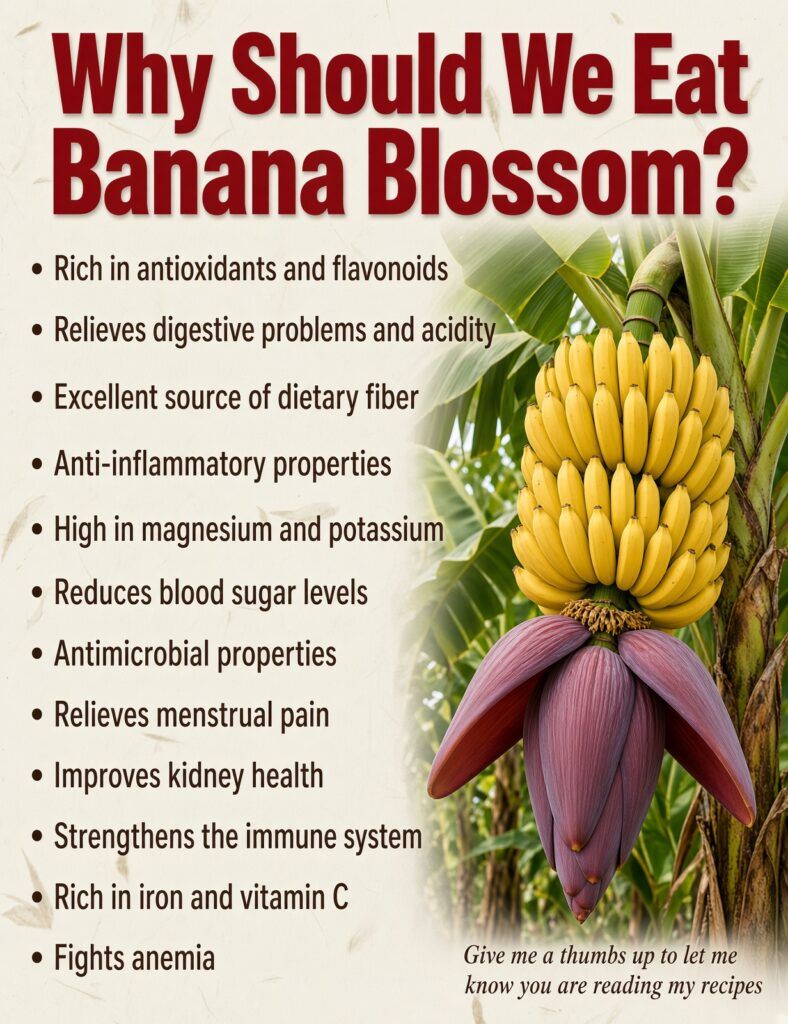
Have you ever looked at a banana plant and wondered whether the large purple flower hanging beneath the bananas could also be eaten?
Known as banana flower, banana blossom, or banana heart, this unusual part of the banana plant has been used as a food ingredient in many traditional cuisines.
Beyond its distinctive appearance, banana flower contains dietary fiber, polyphenols, flavonoids, minerals, and other naturally occurring plant compounds. Research has found that banana flowers can be particularly rich in fiber and antioxidant-associated compounds.
So, why are more people becoming interested in this traditional food?
Here are 10 potential reasons to add banana flower to a varied, balanced diet.
1. Banana Flower Is Rich in Dietary Fiber
One of the most interesting nutritional characteristics of banana flower is its fiber content.
Research examining banana flowers and their bracts has found substantial amounts of dietary fiber, including both soluble and insoluble fractions.
Dietary fiber is important for normal digestive function and can help add bulk to the diet.
Including fiber-rich foods such as vegetables, fruits, legumes, whole grains, and banana flower can be part of a healthy eating pattern.
In simple terms: banana flower can be a useful way to add more plant-based fiber to your meals.
2. It Contains Antioxidant Compounds
Banana flowers contain various polyphenols and other phenolic compounds that have demonstrated antioxidant activity in laboratory testing.
Antioxidants are compounds that can help protect cells from oxidative stress.
Studies have identified several phenolic compounds in banana flower, including compounds related to ferulic acid, salicylic acid, quercetin, and other plant chemicals.
This makes banana blossom an interesting ingredient for people looking to include a greater variety of plant foods in their diet.
3. Banana Blossom Provides Important Minerals
Banana flowers contain several minerals, although the exact amounts can vary depending on the banana variety, growing conditions, preparation, and whether the flower is fresh or dried.
Research has identified potassium, magnesium, calcium, phosphorus, and sodium among the minerals present in banana flower.
Potassium and magnesium are particularly important nutrients because they contribute to normal muscle, nerve, and other body functions.
However, banana flower should be considered one source among many, rather than a replacement for a varied diet.
4. It May Support Healthy Digestion
Thanks to its dietary fiber content, banana flower can be incorporated into meals as part of a diet that supports normal digestive function.
Fiber can help support regular bowel movements and contributes to a healthy digestive system.
Interestingly, a recent randomized clinical trial involving adults with prediabetes found that banana blossom supplementation did not significantly change fasting blood glucose or HbA1c, but participants receiving the fiber-rich product showed improvements related to bowel regularity.
This is an important distinction:
Banana flower may be a useful fiber-rich food, but it should not be presented as a treatment for digestive disorders.
5. Banana Flower Contains Flavonoids and Polyphenols
Flavonoids are a large family of naturally occurring plant compounds found in many fruits and vegetables.
Banana flower has been found to contain flavonoids and other phenolic compounds, contributing to its antioxidant activity.
These compounds are one reason scientists continue to investigate banana blossoms as a potential functional food ingredient.
Adding different colorful plant foods to your meals is a simple way to increase the variety of naturally occurring plant compounds in your diet.
6. It May Help Support a Balanced Diet
Banana flower is relatively unusual in Western diets but has long been used as a culinary ingredient in parts of Asia and other tropical regions.
It can be:
Cooked in curries
Added to soups
Stir-fried with vegetables
Mixed into salads
Cooked with coconut milk
Added to vegetarian dishes
Prepared with herbs and spices
Its slightly bitter, earthy flavor can work particularly well with garlic, ginger, chili, turmeric, coconut, and other flavorful ingredients.
Rather than treating banana flower as a miracle food, think of it as another nutrient-containing vegetable that can add variety to your meals.
7. Banana Flower Has Been Studied for Blood Sugar Support
This is one of the claims commonly associated with banana blossom.
Laboratory and animal studies have suggested that compounds in banana flower may influence glucose-related processes. More recent human research has also investigated banana blossom supplementation in adults with prediabetes.
However, the human clinical trial found no significant improvement in fasting blood sugar or HbA1c after eight weeks compared with placebo.
Therefore, it would be misleading to say that eating banana flower lowers blood sugar or treats diabetes.
A more accurate statement is:
Banana flower contains fiber and bioactive plant compounds that are being studied for their potential metabolic effects, but more human research is needed.
8. What About Inflammation?
Banana blossom contains polyphenols, flavonoids, and other bioactive compounds that have demonstrated antioxidant activity in laboratory research.
This has led to interest in its potential anti-inflammatory properties.
However, laboratory findings do not automatically mean that eating banana flower will reduce inflammation or treat an inflammatory condition in humans.
For everyday wellness, it is better to view banana flower as part of an overall diet rich in vegetables, fruits, legumes, whole grains, and other minimally processed foods.
9. Can Banana Flower Support the Immune System?
Banana flower contains nutrients and plant compounds that contribute to its overall nutritional value.
However, claims that banana flower can “boost” or “strengthen” the immune system should be interpreted carefully.
A healthy immune system depends on many factors, including adequate nutrition, sleep, physical activity, stress management, and overall health.
No single food can replace these foundations.
Banana flower can simply be one nutritious component of a varied diet.
10. It Is a Fascinating Example of Using the Whole Plant
One of the most interesting things about banana flower is that it is often considered an underused part of the banana plant.
Instead of using only the fruit, many traditional cuisines also make use of the flower and other parts of the plant.
Researchers have described banana flower as a promising source of dietary fiber and bioactive compounds, including phenolics and flavonoids.
This makes banana blossom interesting not only from a nutritional perspective but also from a food sustainability and food-waste perspective.
How to Prepare Banana Flower
Fresh banana flower can have a slightly bitter taste, so preparation is important.
Simple Preparation
Remove the tougher outer purple bracts.
Take out the small florets underneath.
Remove the tougher parts of the florets if needed.
Slice the tender flower finely.
Place the sliced flower in water with a little lemon juice.
Rinse before cooking.
Cook with your favorite vegetables, herbs, spices, or protein.
Different culinary traditions prepare banana flower in different ways, so you can experiment with soups, salads, curries, and stir-fries.
Can You Eat Banana Flower Raw?
Yes, the tender parts can be eaten, although many people prefer to cook banana flower because cooking can soften its texture and reduce some of its natural bitterness.
If you are trying it for the first time, cooking it with flavorful ingredients such as garlic, ginger, onion, chili, or coconut milk can make it easier to enjoy.
Banana Flower and Menstrual Health
Some traditional practices use banana flower in foods intended to support women’s health, including during menstruation.
However, there isn’t enough high-quality clinical evidence to conclude that banana flower relieves menstrual pain.
If you experience severe or persistent menstrual pain, it is important to discuss it with a healthcare professional rather than relying on a particular food.
What About Kidney Health?
You may also see claims that banana flower “cleanses the kidneys” or improves kidney health.
These claims are stronger than the available evidence supports.
Banana flower contains minerals and dietary fiber, but there is not enough human evidence to recommend it as a treatment or cleanse for kidney disease.
People with kidney disease may also have specific dietary restrictions, including restrictions related to potassium, so they should follow individualized advice from their healthcare professional.
Banana Flower: What Science Really Says
The research on banana flower is promising but still developing.
Studies have demonstrated that banana flower contains:
Dietary fiber
Polyphenols
Flavonoids
Phenolic acids
Potassium
Magnesium
Other minerals
Various bioactive plant compounds
Laboratory studies have demonstrated antioxidant activity, while human research is still relatively limited.
Therefore, it’s better to describe banana flower as a nutrient-rich traditional food with interesting potential benefits, rather than a natural medicine that can cure diseases.
Final Thoughts
Banana flower may not be as famous as the banana itself, but this colorful blossom deserves a place in the conversation about nutritious traditional foods.
Its fiber, minerals, polyphenols, flavonoids, and other plant compounds make it an interesting addition to a varied diet. Research has also highlighted its antioxidant properties and potential as a functional food ingredient.
At the same time, claims that banana flower can cure anemia, eliminate menstrual pain, treat kidney problems, or dramatically lower blood sugar go beyond what current human evidence can establish.
So rather than thinking of banana blossom as a miracle remedy, think of it as something simpler:
A traditional, fiber-rich plant food that can bring variety, nutrients, and new flavors to your kitchen. 🌿🍌
SEO FAQ
What are the main benefits of banana flower?
Banana flower is a source of dietary fiber, minerals, polyphenols, flavonoids, and other plant compounds. Research has demonstrated antioxidant activity, although evidence for specific health outcomes in humans remains limited.
Is banana flower good for digestion?
Its dietary fiber content can contribute to a diet that supports normal digestive function. A recent human trial also reported improvements in bowel regularity among participants receiving a fiber-rich banana blossom product.
Does banana flower lower blood sugar?
Current human evidence does not establish banana flower as a treatment for high blood sugar. One recent clinical trial found no significant changes in fasting blood sugar or HbA1c after eight weeks of supplementation.
Is banana flower rich in antioxidants?
Yes. Studies have identified polyphenols and flavonoids in banana flower and demonstrated antioxidant activity in laboratory analyses.
How can I eat banana flower?
It can be cooked in curries, soups, stir-fries, salads, and other traditional dishes. The tender portions can be sliced and prepared with herbs and spices to reduce bitterness.


