
After 60, it’s easy to worry about your bones and start looking for signs in your nails, teeth, or everyday aches and pains. The problem is that many of these signs aren’t what they seem, and that can lead to taking too much calcium or ignoring a real risk. The problem is twofold: on the one hand, anxiety arises; on the other, valuable time is lost that could be used to truly care for your bone health. The good news is that there is a more reliable way to know what’s going on, and at the end of this article, you’ll see something that almost no one checks in time.
What changes after 60 isn’t always immediately apparent.
Bones are living tissue, not fixed structures. They are constantly being renewed, but with age this balance can be disrupted, and more bone can be lost than formed.
As this loss progresses, osteopenia or osteoporosis can develop. And here’s the key point: osteoporosis often progresses silently.
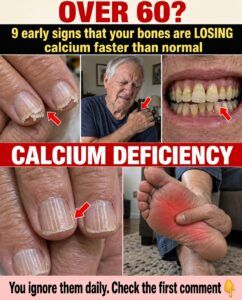
This means that a person can feel “fine” and still have fragile bones. Therefore, looking at fingernails or teeth is not a reliable indicator of bone density.
Osteoporosis doesn’t always give warning with pain; often it gives warning with a fracture.
Why brittle nails don’t necessarily indicate a lack of calcium
Nails can become brittle for many reasons. Age, repeated contact with water, detergents, chemicals, minor bumps, and even some skin conditions can change them.

Nutritional deficiencies also play a role, but that doesn’t automatically mean there’s a calcium deficiency. In fact, brittle nails can occur in people with normal bone density.
In other words, nails tell a story about the body’s surface, not about bone mineral density.
Signs on the nails that warrant medical attention
If you notice any sudden changes, deformities, discoloration, or pain around the nail, it’s best to discuss it with a professional. But don’t rely solely on that information to decide on supplements on your own.

- Dry or brittle nails: do not confirm a calcium deficiency.
- Stretch marks or separating layers: these can have several causes.
- Sudden color change: yes, it deserves evaluation.
Yellow teeth are not an indicator of bone health either.
Over time, tooth enamel wears down, revealing more of the dentin, which is naturally more yellow. Additionally, coffee, tea, tobacco, and certain foods can change the color of teeth.
Gum problems, cavities, and tooth sensitivity also have their own causes. Therefore, yellowed teeth don’t necessarily mean the skeleton is “absorbing calcium.”
Oral health is still important, absolutely. But it’s assessed through a dental checkup, not as a substitute for a bone density scan.

Shoulder or foot pain: common, but not specific
Musculoskeletal pain is very common after age 60. A bothersome shoulder can be due to tendons, muscles, joints, or posture. Pain in the sole of the foot also has many causes.
Osteoporosis alone generally doesn’t explain everyday localized pain unless there’s a fracture. And that’s precisely what makes many viral lists of symptoms misleading.
The truth is simple: a common symptom can have dozens of explanations.
The difference that does matter: blood calcium vs. bone health
It’s important to distinguish between two concepts that many people confuse. Hypocalcemia means low blood calcium. Osteoporosis means loss of bone density and strength.
They are not the same. A person can have normal blood calcium levels and still have osteoporosis. The body regulates blood calcium very precisely, even when bones are weakening.
When blood calcium levels drop significantly, tingling around the mouth, cramps, spasms, or muscle stiffness may occur. Severe cases require medical attention.
Quick comparison to avoid confusion
| Find | Does it show a lack of calcium? |
|---|---|
| Brittle nails | No |
| Yellowed teeth | No |
| Shoulder pain | No |
| Foot pain | No |
| Low blood calcium | It may indicate hypocalcemia and requires medical interpretation. |
| DXA with low bone density | It can identify osteopenia or osteoporosis. |
The most useful test for bones: DXA densitometry
Bone densitometry, also called DXA, measures bone mineral density using a very low dose of radiation. It is one of the most useful tools for detecting osteoporosis and estimating fracture risk.
This is much more reliable than trying to guess bone health by looking at nails, teeth, or isolated ailments. Depending on age, sex, and risk factors, a professional can decide if it’s appropriate.
These factors include a history of fractures, low weight, prolonged use of certain medications, and some diseases. Several studies and clinical guidelines agree that DXA provides crucial information for preventing fractures.
If you are over 60, talking about bone density scans may be more helpful than talking about “hidden signs” in the mirror.
Calcium, yes, but in the right amount
Calcium is essential for bones, muscles, and nerves. However, more isn’t always better. Taking supplements without first reviewing your diet can be unnecessary or even counterproductive.
Ideally, you should know how much calcium you get daily from food and how much you actually need based on your age and health condition. Food sources include dairy products, yogurt, cheese, fish with bones, and some fortified foods.
Some vegetables also provide calcium, although the amount varies. If your diet isn’t sufficient, a healthcare professional can assess whether a supplement is advisable.
Common sources of calcium in the diet
- Milk, yogurt and cheese.
- Sardines or salmon with bones.
- Fortified foods, such as some plant-based drinks.
- Leafy green vegetables, depending on the type.
Vitamin D also matters, a lot.
Vitamin D helps absorb calcium. If it’s lacking, bones can suffer. However, that doesn’t mean all older adults need megadoses of vitamin D.
The need depends on sun exposure, diet, pre-existing conditions, and other variables. Excessive supplementation can also cause problems.
Therefore, the goal is not to “take as much as possible”, but to safely obtain what the body needs.
Bones are best protected when you think about the whole body.
Bones don’t work alone. Muscles, balance, and mobility directly influence the risk of falls, and a fall can be the moment a fragile bone breaks.
Research in older adults shows that combining proper nutrition, exercise, and fall prevention helps more than focusing on a single nutrient.
That means protecting your skeleton goes far beyond just taking calcium.
Actions that do help on a daily basis
- Walk regularly, according to your ability.
- Do strength exercises with supervision if necessary.
- Work on balance and stability.
- Consume enough protein.
- Check lighting, carpets, and obstacles in your home.
- Wear sturdy and secure footwear.
What you can do starting today, step by step
First, stop using your nails or teeth as a calcium “meter.” It’s not a reliable tool and can lead to incorrect decisions.
Second, take an honest look at your diet. Are you meeting your calcium and protein needs, or are you eating less and less due to a lack of appetite?
Third, note any falls, fractures, loss of height, or sudden back pain. This information provides a better indication of bone risk.
Fourth, ask during your appointment if you need a DXA scan. That single conversation could change fracture prevention for years to come.
Fifth, review your medications. Some increase the risk of falls, dizziness, or bone loss, and that warrants professional adjustment.
When is it appropriate to pay immediate attention?
If you suffered a fracture after a minor fall, that warrants evaluation. The same applies if you notice a significant loss of height, a more hunched back, or sudden, intense pain after even a small movement.
This information can be more important than any change in the nails. In fact, a fragility fracture often reveals more about the bones than a list of viral symptoms.
And here’s the part that many overlook: sometimes the first real sign of osteoporosis isn’t a discomfort, but a bone that breaks too easily.
Conclusion
After 60, bone health is important, but it’s crucial to avoid false alarms. Brittle nails, yellow teeth, shoulder pain, or foot discomfort don’t necessarily indicate calcium deficiency or osteoporosis.
The most useful way to assess bone risk is to review medical history, risk factors, and, when appropriate, perform a DXA bone density scan. Add to that a proper diet, sufficient protein, vitamin D as needed, exercise, and fall prevention.
In short: don’t wait to see misleading signs. Act on reliable information and in a timely manner.
Frequently Asked Questions
Do brittle nails mean I need calcium?
Not necessarily. Brittle nails have many causes and are not a reliable indicator of calcium deficiency or osteoporosis.
Does a normal calcium test mean my bones are strong?
No. Blood calcium levels can be normal even if osteoporosis is present. DXA densitometry assesses bone density, which is a different matter.
Should everyone over 60 take calcium pills?
Not automatically. It depends on diet, age, medical history, and other factors. Often, it’s best to first check how much calcium you’re getting from food.
Medical disclaimer: This content is for informational purposes only and does not replace the assessment, diagnosis, or personalized recommendations of a healthcare professional.


