
Seeing protein in a urine test, or noticing persistent foam in the toilet, can be quite frightening. And it’s easy to fall for the promise of a “detox” drink that supposedly fixes everything while you sleep. The problem is that this idea often provides false reassurance and delays what’s important: understanding why protein is appearing in your urine. The good news is that there are real ways to reduce it and protect your kidneys, but they don’t come in a magic bottle. At the end of this article, I’ll show you what to do step by step so you can act with more clarity and less fear.
Protein in urine: what it really means
The most important protein usually detected in urine is albumin. Normally, healthy kidneys keep it in the blood and filter only what the body needs to eliminate.
When these filters are damaged or irritated, albumin can pass into the urine. This is called albuminuria , and it can be an early sign of kidney disease.
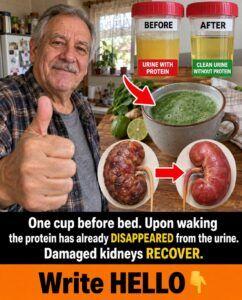
But here’s a key point: a single abnormal test result doesn’t always mean chronic kidney damage. Dehydration, strenuous exercise, fever, an infection, or even a heart problem can temporarily elevate the protein.
Protein in urine cannot be guessed by appearance: it is measured with laboratory tests.
Does foam in urine mean kidney damage?
Not necessarily. Foamy urine may be noticeable, but its appearance is not enough to determine the protein content or whether kidney disease is present.

In fact, some people with albuminuria don’t notice any visible changes. Others do see foam, but that can also be due to the speed at which urine flows, dehydration, or soap residue in the toilet.
The most useful test is usually the urine albumin-to-creatinine ratio , known as uACR . According to the NIDDK, a result above 30 mg/g is considered abnormal.
In other words: a picture of the toilet does not replace an analysis.

Can a green smoothie repair kidney filters?
A smoothie with leafy greens, citrus fruits, or ginger can be part of a healthy diet. But that doesn’t make it a treatment for albuminuria.
And here’s the important part: nutritional needs change depending on the stage of kidney disease. Some people need to monitor their sodium, potassium, phosphorus, protein, or fluid intake; others don’t have as many restrictions at first.
This means that a “healthy” drink for one person may not be suitable for another. For example, if potassium levels are high, some common smoothie ingredients may not be appropriate.

The truth is simple: green does not mean medicinal .
What can help reduce albuminuria
This is where it’s best to stop looking for shortcuts. In suitable individuals, interventions do exist that can reduce albuminuria and help slow the progression of chronic kidney disease.
One of the most important is blood pressure control. The NIDDK notes that keeping it well controlled is probably one of the most effective measures to slow the progression of kidney disease.
There are also medications such as ACE inhibitors and angiotensin receptor blockers ( ARBs ). In appropriate patients, these have been shown to reduce albumin loss and slow kidney deterioration.
If you have diabetes, controlling your blood sugar is also part of taking care of your kidneys. According to clinical studies, kidney damage progresses more slowly when blood pressure, blood sugar, and other risk factors are well managed.
Not everyone with protein in their urine needs the same treatment; the cause matters more than fashion.
Reducing salt intake can help more than a “kidney detox”
Often the most useful change is not in an exotic ingredient, but in the sodium hidden in processed foods, instant soups, sausages, snacks and commercial sauces.
Excess sodium promotes fluid retention, can raise blood pressure, and increase the workload on the heart and kidneys. That might not sound very “viral,” but it’s true.
As a general reference, the NIDDK mentions a limit of 2,300 mg of sodium per day for adults, although some people with kidney disease need a different target indicated by their doctor or nutritionist.
We also need to talk about protein in the diet. The body needs it to maintain muscle and tissue, but in excess it can complicate the management of some patients with kidney disease. Therefore, it’s not about eliminating it completely, but rather adjusting it to each individual case.
Quick comparison: viral promise vs. medical reality
| Viral promise | What the evidence says |
|---|---|
| A smoothie eliminates protein overnight | It has not been proven |
| Clear urine means there is no more protein. | Not necessarily |
| Albuminuria may indicate kidney damage. | Yeah |
| An elevation can be temporary. | Yeah |
| There are treatments that can reduce it in suitable patients | Yeah |
What to do if a test shows protein in the urine
Instead of trying to “fix” the urine overnight, it’s best to use the result as a clue to act systematically.
Step 1: Confirm which test you had done
Ask if they measured albumin using the uACR test. This measurement helps determine if the loss is mild, moderate, or more significant.
Step 2: Check complete kidney function
Albuminuria and eGFR don’t mean the same thing, but together they give a clearer picture of kidney health. One can change before the other.
Step 3: Ask if the study needs to be repeated
If you were dehydrated, had a fever, exercised intensely, or had an infection, your protein levels may rise temporarily. Repeating the test helps distinguish between a temporary issue and a persistent problem.
Step 4: Monitor blood pressure and glucose
If you have high blood pressure or diabetes, following your medical plan is one of the best ways to protect your kidneys in the long term.
Step 5: Adjust your diet with professional support
There is no single diet that works for everyone with albuminuria. Sodium, potassium, phosphorus, protein, and fluid intake must be individualized based on your test results and kidney stage.
Signs that deserve more attention
Occasional foam in the urine does not confirm kidney disease. But if it is persistent, especially if you also have diabetes, high blood pressure, or cardiovascular disease, it’s worth discussing it with a healthcare professional.
It’s also important to pay attention to any swelling that appears in the feet, ankles, or around the eyes. These changes can accompany a significant loss of protein.
And there are signs that shouldn’t wait: decreased urine output, difficulty breathing, rapidly progressing swelling, confusion, persistent vomiting, or a sudden deterioration in overall health require medical evaluation.
The reality is that a drink cannot differentiate between a stable chronic kidney problem and an acute situation that needs immediate attention.
Practical tips you can implement starting today
If you’ve already been told you have protein in your urine, these steps can help you get off to a good start:
- Ask for the exact value of your uACR and your eGFR.
- Don’t change the amount of water you drink on your own.
- Reduce your intake of ultra-processed foods high in sodium.
- If you have diabetes or high blood pressure, follow the prescribed treatment.
- Avoid taking supplements or “detox” products without checking if they are safe for your kidneys.
- Schedule an appointment to discuss the results with your doctor or renal nutritionist.
These steps may not sound as spectacular as a viral recipe, but they do better protect your kidneys.
What the evidence suggests about taking care of your kidneys
Several studies and clinical guidelines agree on one important point: when albuminuria is detected early and the cause is treated, many people can reduce their risk of worsening.
That doesn’t mean everything will immediately return to normal. But it does mean that the discovery isn’t a death sentence.
The key is to address the right factors: blood pressure, glucose, sodium, appropriate medications, and regular follow-up. This combination is often much more effective than searching for a miracle drink.
The best strategy is not to hide the problem, but to understand it and deal with it in time.
Conclusion
A drink with vegetables or ginger can be part of a healthy diet, but there is no solid evidence that it eliminates protein from urine overnight or repairs damaged kidneys upon waking.
Protein in urine is measured, not guessed from foam or color. Sometimes it’s temporary; other times it’s an early sign of kidney disease that warrants monitoring.
The good news is that there are real ways to help: controlling blood pressure, treating diabetes when present, lowering excess sodium, adjusting diet, and using renoprotective medications when indicated.
If you saw foam in your urine today or received abnormal test results, don’t blame yourself or panic. Instead, use that information as the first step toward taking care of your kidneys with a real plan.
Frequently Asked Questions
Which drink eliminates protein from urine?
No home remedy has been reliably proven to eliminate albuminuria. Treatment depends on the cause and may include blood pressure management, diabetes management, and specific medications.
Does foamy urine always mean kidney damage?
No. Foaming can occur for various reasons, and it’s not enough to diagnose kidney disease. Tests like uACR and eGFR are needed to determine the cause.
If the protein disappears, does that mean the kidneys have healed?
Not always. A reduction is a favorable sign, but it should be interpreted in conjunction with other clinical data and repeated results.
Medical advice: This content is for informational purposes only and is not a substitute for professional medical advice. If you experience severe swelling, difficulty breathing, decreased urination, or a sudden change in your overall condition, seek immediate medical attention.


