
When cancer weakens the body and appetite disappears, it’s normal to cling to any promise that sounds quick and easy. The problem is that a “miracle” drink might offer hope for a few minutes, but it can also lead to dangerous decisions if it replaces real treatment. Loss of strength, weight loss, and nausea do require attention because they can worsen rapidly and hinder recovery. The good news is that there are helpful, safe, and evidence-based steps to support patients without falling for false promises… and at the end of this article, you’ll see the most common mistake that causes many people to waste valuable time.
The short answer: no, a mixture of leaves does not cure cancer in 24 hours
Cancer is not a single disease, but a group of diseases with distinct causes, stages, and behaviors. Therefore, there is no drink, herb, or juice that can destroy a tumor in a day. The National Cancer Institute and the NCCIH state that there is no evidence that any food or supplement alone can cure cancer, slow its progression, or prevent it from recurring.
And here’s the important point: just because a plant has interesting compounds in the lab doesn’t mean that drinking it will work the same way for a person. That difference between “seems promising” and “actually helps” is enormous.
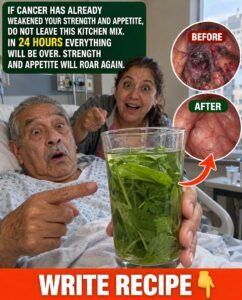
Why these viral promises are so dangerous
Viral posts often use emotional language: “cure,” “detox,” “eliminate,” “in 24 hours.” This sparks hope, but it can also stifle critical thinking. When someone is tired, in pain, or afraid, it’s easier to believe in simple solutions.
But that’s not all. The biggest risk isn’t just spending money on something that doesn’t work. The real danger is delaying treatment that does have evidence to support it , such as surgery, chemotherapy, radiation therapy, immunotherapy, or targeted therapies, depending on the type of cancer.
What might be happening when someone loses their appetite and strength
Loss of appetite is very common in cancer. It can occur due to the tumor itself or as a side effect of treatment: nausea, vomiting, constipation, diarrhea, pain when swallowing, mouth sores, changes in taste, anxiety, depression, and fatigue.

Cancer cachexia is a serious problem: it causes muscle and fat loss, weakness, and intense fatigue. It’s not simply a matter of “eating less.” In fact, the body changes the way it uses energy, which is why sometimes eating more alone isn’t enough.
Warning signs that should not be ignored
If these signs appear, it is advisable to notify the medical team as soon as possible:
– Unintentional weight loss
– Clothes becoming looser in a short time
– Difficulty getting up or walking
– Inability to eat or drink enough
– Persistent vomiting
– Frequent dehydration or dizziness

And if there is confusion, fainting, difficulty breathing, significant bleeding, or fever during cancer treatment, the evaluation should be urgent.
“Natural” herbs can also interfere with treatment
This point surprises many people. Just because something is natural doesn’t mean it’s harmless. Some herbs, extracts, and supplements can change how the body absorbs, processes, or eliminates certain cancer medications.
The NCI and NCCIH warn that some herbal products can decrease the effectiveness of chemotherapy or increase adverse effects. Therefore, a homemade infusion or concentrated extract should not be used without first discussing it with your oncologist.

Before taking anything “natural,” share this list with your medical team.
– Prescription and over-the-counter medications
– Vitamins and minerals
– Concentrated or traditional teas
– Herbal capsules, powders, or extracts
– “Detox” or “cleansing” products
This simple list can prevent interactions that would otherwise go unnoticed.
So, what does help when you lack appetite?
The goal isn’t to find a secret drink. The goal is to keep the patient nourished, hydrated, and as strong as possible while receiving treatment. This is where nutrition plays a crucial role.
The NCI recommends eating small, frequent meals rather than forcing three large meals. Many people tolerate five or six small meals a day better. It often helps to focus on protein- and energy-rich foods first.
Options that are usually useful, depending on individual tolerance.
– Eggs, yogurt, milk, and cheese
– Chicken, fish, beans, and lentils
– Tofu and peanut butter
– Homemade or commercially prepared nutritious shakes as recommended by a doctor
– Cold foods if the smell causes nausea
If you have mouth sores, difficulty swallowing, or feel full quickly, the texture and temperature can be adjusted. Sometimes, eating the most nutritious food first before drinking a lot of liquid makes a big difference.
What to do step by step if your appetite suddenly drops
First step: notify your oncologist or nursing team if loss of appetite lasts for more than a few days or is accompanied by weight loss.
Second step: note down what symptoms are interfering: nausea, pain, constipation, mouth sores, changes in taste, or extreme tiredness.
Third step: Seek guidance from a registered dietitian, ideally one with experience in oncology. The NCI recommends this help once weight loss has already occurred.
Fourth step: try small meals every 2 or 3 hours, prioritizing good quality protein and calories.
Fifth step: Do not start taking herbs, medicinal teas, or concentrated supplements without notifying the medical team.
The difference between nutritional support and a false cure
This is a key point. A proper diet can help maintain weight, energy, and muscle mass. It can certainly improve how a person feels during treatment. But diet does not replace cancer therapy, nor does it eliminate a tumor on its own.
Nutrition complements treatment; it doesn’t replace it. That idea, though simple, prevents many mistakes. And it also helps to understand why an individualized plan often works better than a viral recipe shared on social media.
What research and medical guidelines say
The guidelines from the National Cancer Institute and the National Center for Complementary and Integrative Health agree on one fundamental point: no complementary approach has been proven to cure cancer on its own. Some complementary therapies may help with specific symptoms, such as anxiety, nausea, or pain, but always as support, not as a replacement for cancer treatment.
Furthermore, studies show that patients with malnutrition or muscle loss have more difficulty tolerating treatments and recovering. Therefore, addressing appetite and weight early is crucial; it’s an integral part of comprehensive care.
A simple comparison to avoid being misled
The following table summarizes the difference between a viral promise and a useful strategy:
Viral promise | What the evidence says:
A drink destroys cancer in 24 hours | Not proven;
An herb replaces chemotherapy | No
; Eating better can support the patient | Yes;
Some complementary therapies relieve symptoms | Yes, in specific cases;
Delaying effective care can be harmful | Yes
If something sounds too good to be true, especially in cancer, it deserves a very careful review.
When to seek medical help without waiting
There are situations where it’s not advisable to “try” a homemade recipe first. Seek medical attention promptly if the person:
– Cannot keep liquids down
– Vomits repeatedly
– Has weakness that prevents her from walking safely
– Experiences intense pain when eating or swallowing
– Loses weight rapidly
– Appears increasingly dehydrated
And if the person with cancer is very weak, it shouldn’t be assumed that “nothing can be done.” Many causes of the discomfort can be treated.
Conclusion: What works is not a secret mixture, but acting in time.
There is no evidence that a mixture of leaves will eliminate cancer in 24 hours. However, there is evidence that loss of appetite, weight, and strength requires early attention, as it can affect recovery and tolerance to treatment.
The best course of action is clear: report symptoms, investigate treatable causes, receive individualized nutritional support, and never suspend or delay cancer therapies based on unsubstantiated promises. This is the safest way to care for the patient with dignity, science, and common sense.
Frequently Asked Questions
Is there a leaf that cures cancer?
No leaf, herb, tea, or juice has been proven to cure cancer. Some plants contain compounds that are studied in laboratories, but that doesn’t mean they work as a treatment for humans.
What should I do if a person with cancer barely wants to eat?
It’s advisable to inform your oncologist and, if possible, a registered dietitian. Small, frequent meals, foods higher in protein and energy, and treatment for symptoms such as nausea, pain, or mouth sores are often recommended.
Can I drink teas or herbal teas during chemotherapy?
It’s not always safe. Some herbs and supplements can interfere with medications. It’s best to inform your medical team before using concentrated or medicinal products.
Medical disclaimer: This content is for informational purposes only and is not a substitute for professional medical advice. Do not stop, delay, or change cancer treatment to try herbs, supplements, juices, or home remedies.


