
Many people see messages like “the hospital will shut you up” or “they clean your filter in 36 hours” and immediately feel hopeful. If you’re experiencing fatigue, bloating, or concerns about your kidney health, any quick fix sounds tempting. But it’s also easy to fall for exaggerated information that confuses more than it helps. The truth is, kidneys don’t need miraculous “flushes”; they need consistent, healthy habits. And here’s the important part: while there are drinks that can be part of a healthy routine, they don’t work miracles. At the end of this article, I’ll tell you how to distinguish helpful advice from a misleading promise.
Why do these messages go so viral?
When a text promises quick, cheap, and “hidden” results, it triggers something very human: the need for a simple solution. But kidney health doesn’t work with shortcuts. The kidneys filter the blood constantly, regulate fluids, and help balance minerals, so there’s no single drink that will “cleanse” them in just a few hours.
The most confusing part is that some drinks can indeed support hydration or provide beneficial compounds. But that doesn’t mean they detoxify, repair, or replace a medical evaluation. In fact, institutions like the National Kidney Foundation and the Mayo Clinic insist that hydration, nutrition, and managing conditions like hypertension or diabetes are more important than any “quick fix.”
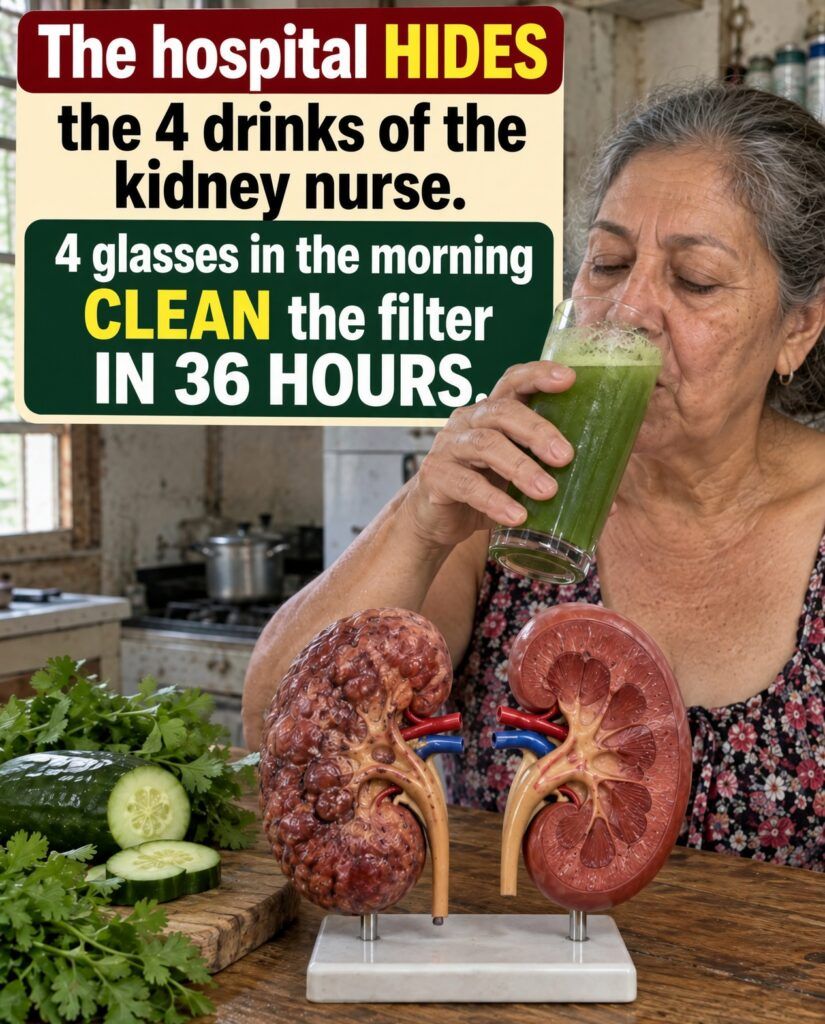
The 4 drinks that usually appear in these ads
In viral posts, the “four drinks” are almost always juices, infusions, or homemade blends. Some of these might be reasonable as part of a balanced diet, but not for the miraculous reasons they promise. Let’s look at the most common ones and what the evidence clearly says.
1. Water
The simplest is also the most important. Water helps maintain good hydration, which in turn supports normal kidney function. However, the ideal amount depends on age, climate, physical activity, and whether the person has any medical conditions.
Drinking more water doesn’t “clean” the kidneys like a coffee filter; it simply helps the body function better when hydration is adequate.

2. Sugar-free infusions
Some people drink herbal teas or mild infusions to replace sodas or sugary drinks. This substitution can be beneficial. But be aware: not all herbs are harmless, and some can interact with medications or be unsuitable for people with kidney disease.
The key is simple: if an infusion is enjoyed for pleasure and doesn’t replace treatment, it can be part of a healthy routine. If it’s used as a “cure,” we’re entering deceptive territory.
3. Unsweetened cranberry juice
Cranberry is more associated with urinary health than with “cleansing” the kidneys. Some studies suggest benefits in preventing certain urinary discomforts, but that doesn’t mean it eliminates toxins or treats kidney problems. Furthermore, many commercial cranberry juices contain added sugar, which doesn’t help.

If consumed, it should be done in moderation and not as a miracle cure.
4. Green smoothies
Spinach, cucumber, celery, parsley, and other greens frequently appear in these recipes. They provide water, fiber, and micronutrients, which is beneficial. But a green smoothie won’t “unblock” your kidneys or cleanse your body in 36 hours.
Furthermore, if a person has advanced kidney disease, some ingredients may provide too much potassium or phosphorus. Therefore, what might be a light option for one healthy person may not be suitable for another.

What science does say about kidney health
Kidney health research is quite clear on one point: sustained habits matter more than quick fixes . Maintaining good hydration, controlling blood pressure, monitoring blood sugar, avoiding excess salt, and not overusing anti-inflammatories are far more relevant measures.
It is also known that frequent consumption of sugary drinks can increase the risk of metabolic problems that, over time, affect the kidneys. In contrast, replacing them with water or sugar-free beverages is often a real improvement.
But here’s the part many ads omit: if kidney disease is already present, the recommendations change. In those cases, drinking “more fluids” isn’t always better. Some people need specific limits based on their medical condition.
Signs you shouldn’t ignore
While this article isn’t meant to alarm you, it is important to recognize some signs that warrant medical attention. Not because they automatically indicate a serious problem, but because it’s wise to have them checked early.
- Persistent swelling in legs, ankles or face.
- Noticeable changes in urine, such as persistent foam or a marked decrease.
- Fatigue that does not improve with rest.
- High blood pressure.
- Painful urination or frequent urinary discomfort.
If you notice one or more of these symptoms, it’s best to consult a healthcare professional. Don’t wait for a drink to “do the job.”
How to spot a fake promise in seconds
This is especially useful because viral ads often use very catchy words. If you see phrases like “cures in 24 hours,” “cleans the filter,” “the hospital is hiding it,” or “costs less than a dollar and beats an expensive wash,” you should stop and think twice. These expressions aim for emotional impact, not medical accuracy.
A rule of thumb: if the message promises universal, quick, and unambiguous results, it’s probably oversimplifying. Real health almost never works that way.
What you can do starting today to take care of your kidneys
Now, let’s get down to business. These steps are simple, realistic, and aligned with general health recommendations:
- Choose water as your main beverage and reduce soft drinks and sugary beverages.
- Moderate your salt intake , especially in ultra-processed foods.
- Keep your blood sugar and blood pressure under control if you have already been diagnosed with diabetes or hypertension.
- Do not take supplements or herbs “for the kidneys” without first checking if they are safe for you.
- Consult your doctor before changing your fluid intake if you have kidney disease, heart failure, or are under medical treatment.
These habits might not sound as spectacular as a viral video, but they’re the ones that truly matter in the long run. And when it comes to health, that’s worth far more than a flashy promise.
Quick comparison: myth vs. reality
To make it clearer, here’s a simple comparison:
| Viral myth | Reality |
|---|---|
| “Cleanses the kidneys in 36 hours” | There is no drink that does that. |
| “The hospital is keeping quiet about it” | It’s a catchy phrase, not scientific proof. |
| “Four glasses in the morning” | Hydration should be tailored to each individual. |
| “A cheap glass survives a wash” | Medical treatments cannot be replaced with homemade drinks. |
So, are these drinks worth it?
It depends on what they are, your health status, and how they fit into your routine. Water, safe herbal teas, unsweetened juices, and smoothies with appropriate ingredients can be part of a healthy diet. What you shouldn’t do is rely on a single beverage to solve a kidney problem on its own.
The best decision is not to look for the “secret trick”, but to build habits that do make sense: stay well hydrated, eat less sodium, move more and get checkups when appropriate.
Conclusion
Viral messages about drinks that “cleanse” your kidneys in 36 hours sound powerful, but they’re not a reliable way to understand kidney health. What does work is far less spectacular and much more valuable: sufficient water, a balanced diet, management of chronic conditions, and medical guidance when needed. If something promises immediate and universal results, be wary. And if you truly want to take care of your kidneys, start with simple habits that are backed by evidence.
Frequently Asked Questions
Is there a drink that cleanses the kidneys?
No. No drink cleanses the kidneys in a medical sense. Some help with hydration or replace less healthy options.
Is drinking more water always better for the kidneys?
Not always. In healthy people, good hydration helps, but those with kidney disease or other conditions may need specific limits.
Do green juices detoxify the body?
They don’t detoxify on their own. They can provide nutrients, but they don’t replace a balanced diet or medical treatment.
Important: This content is for informational purposes only and does not replace the evaluation, diagnosis, or treatment of a healthcare professional.


