
Introduction
Looking for a simple way to refresh your hair care routine using familiar kitchen ingredients?
Cloves, ginger, rosemary, and cinnamon are often featured in traditional beauty recipes. Their distinctive aromas and naturally occurring plant compounds make them popular ingredients in homemade hair care preparations.
One popular DIY recipe combines these ingredients with a mild shampoo to create an aromatic scalp-cleansing mixture. It is sometimes called a “hair growth bomb shampoo” because of claims that it strengthens hair, accelerates growth, and fights hair loss.
But how much do we actually know about these benefits?
Although some plant ingredients have been studied for potential effects on the scalp and hair, there is limited evidence that this particular homemade shampoo promotes faster hair growth or prevents hair loss. Its safety and effectiveness also depend on the ingredients, their concentrations, and how the mixture is prepared.
Here is the recipe, how to use it more safely, and what to know before adding it to your hair care routine.
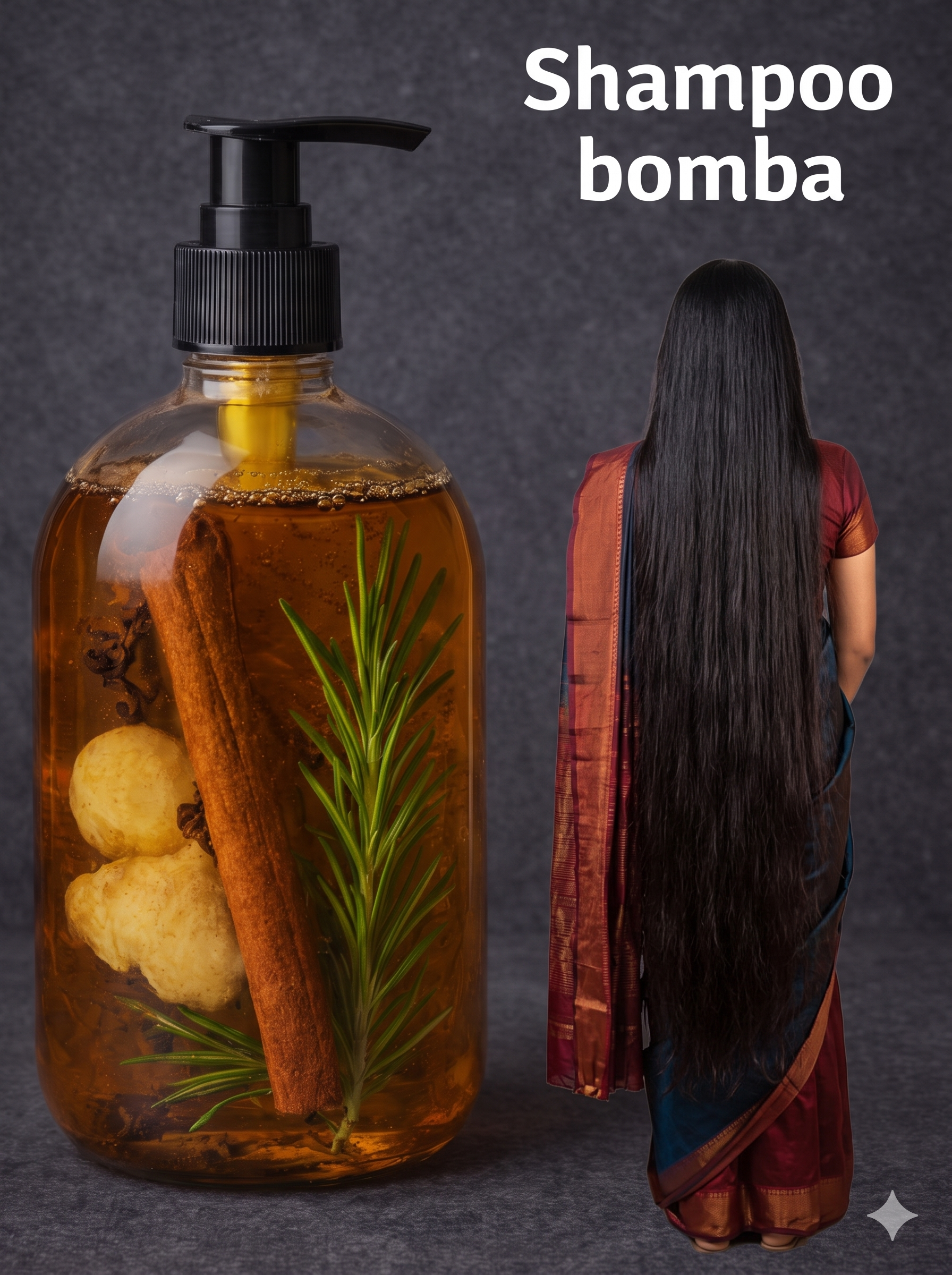
Ingredients for Homemade Clove, Ginger, Rosemary, and Cinnamon Shampoo
For this recipe, you will need:
- 250 ml of mild, fragrance-free shampoo
- 1 tablespoon of whole cloves
- 1 small piece of fresh ginger, grated or sliced
- 1 tablespoon of dried rosemary or 1 fresh rosemary sprig
- 1 cinnamon stick
- 100 ml of water
Choose a shampoo formulated for your hair and scalp type. A gentle, commercially formulated shampoo is generally more predictable than a homemade cleansing product.
Important preparation note: Adding a homemade herbal infusion to a commercial shampoo changes its original formula and may affect its preservative system. The resulting mixture may become contaminated, even if it looks and smells normal. For this reason, the safer approach is to prepare the herbal infusion separately and use it as a short-term rinse, rather than mixing it into an entire shampoo bottle.
How to Prepare the Herbal Infusion
Step 1: Heat the water
Bring 100 ml of water to a boil in a clean saucepan.
Step 2: Add the plant ingredients
Add the cloves, ginger, rosemary, and cinnamon stick to the hot water.
Step 3: Simmer gently
Let the ingredients simmer for approximately five minutes.
Step 4: Allow the mixture to steep
Turn off the heat, cover the saucepan, and allow the infusion to steep for another 10 minutes.
Step 5: Strain carefully
Strain the liquid through a clean, fine-mesh strainer to remove all solid plant material. Let it cool completely before use.
Step 6: Store safely
Because this infusion contains water and no validated preservative system, it can support microbial growth. Ideally, prepare only what you need for one use and discard any leftovers. Do not assume that leaving the mixture for 24–48 hours makes it safer or more effective.
Avoid storing the infusion in a shampoo bottle for repeated use.
How to Use the Ingredients in Your Hair Care Routine
If you choose to try the cooled infusion as a rinse, follow these precautions:
- Wash your hair with your usual gentle shampoo.
- Apply a small amount of the cooled infusion to a limited area of the scalp first.
- If there is no irritation, you may use a small amount on the scalp, avoiding the eyes and broken skin.
- Rinse thoroughly with clean water.
- Apply conditioner to the lengths and ends of your hair if needed.
Do not leave the mixture on your scalp for a prolonged period, and do not use it if you experience burning, itching, redness, or swelling. A patch test cannot guarantee that an allergic reaction will not occur.
There is no established evidence-based frequency for this particular homemade infusion. Start cautiously rather than automatically applying it two or three times per week.
What Do These Ingredients Offer for Hair Care?
1. Cloves: An Aromatic Spice with Plant Compounds
Cloves contain eugenol and other compounds that have been investigated for various biological properties.
However, laboratory findings do not establish that cloves applied to the scalp stimulate hair follicles or prevent hair loss. Concentrated clove preparations can also irritate the skin.
For hair care, cloves are best viewed as a traditional botanical ingredient rather than a proven hair growth treatment.
2. Ginger: A Traditional Ingredient in Homemade Beauty Recipes
Ginger contains gingerols and other naturally occurring compounds. It is commonly used in food and traditional preparations, but evidence supporting topical ginger as a treatment for hair loss is insufficient.
In fact, some laboratory research has raised questions about whether certain ginger compounds could inhibit rather than stimulate hair growth. The effects of a homemade ginger infusion on human hair growth remain uncertain.
Avoid applying concentrated ginger juice or irritating preparations directly to sensitive skin.
3. Rosemary: An Ingredient of Interest in Hair Research
Rosemary has attracted interest in hair care research. One small clinical study compared rosemary oil with 2% minoxidil in people with androgenetic alopecia over six months.
The study reported changes in hair counts in both groups, but its findings do not establish that rosemary works for everyone. The research involved rosemary oil, not a boiled rosemary infusion mixed into shampoo.
These products are not interchangeable, and evidence for one preparation cannot automatically be applied to another.
If you are considering rosemary essential oil, remember that it is concentrated and should not be applied undiluted to the scalp.
4. Cinnamon: A Warming Spice That Requires Caution
Cinnamon contains aromatic compounds, including cinnamaldehyde. Although it is popular in traditional beauty recipes, there is insufficient clinical evidence that cinnamon applied to the scalp improves hair growth.
Cinnamon can also cause irritation or allergic contact dermatitis in some people. Avoid using concentrated cinnamon oils or strong homemade preparations on the scalp.
Can This Homemade Shampoo Stop Hair Loss?
There is currently no reliable evidence that a shampoo made with cloves, ginger, rosemary, and cinnamon can reliably stop hair loss, strengthen every hair follicle, or make hair grow faster.
Hair shedding can have many causes, including:
- Genetic hair loss
- Hormonal changes
- Recent pregnancy or childbirth
- Iron deficiency or other nutritional problems
- Thyroid disorders
- Illness, stress, or significant weight changes
- Certain medications or scalp conditions
The most effective approach depends on the underlying cause. If hair loss is sudden, patchy, persistent, or accompanied by scalp pain, redness, scaling, or sores, consult a healthcare professional or dermatologist.
People experiencing hair loss after childbirth may have temporary postpartum shedding, which often improves over time. However, significant or prolonged shedding deserves evaluation rather than relying exclusively on homemade remedies.
Tips for Healthier-Looking Hair
A consistent hair care routine can help reduce breakage and support the appearance of healthy hair.
Choose gentle cleansing products
Use a shampoo suited to your scalp. If your scalp is sensitive, consider fragrance-free products and avoid harsh scrubbing.
Condition your hair regularly
Conditioner helps improve manageability, reduces friction, and may minimize breakage when combing.
Handle wet hair carefully
Wet hair can be more vulnerable to damage. Use a wide-tooth comb and avoid pulling or brushing aggressively.
Limit excessive heat and chemical treatments
Frequent high-temperature styling, bleaching, and other chemical treatments can damage the hair shaft and contribute to breakage.
Eat a balanced diet
Hair growth depends on adequate nutrition. Include sufficient protein and a variety of nutrient-rich foods. If you suspect an iron deficiency or another nutritional problem, seek professional advice before taking supplements.
Frequently Asked Questions
How often should I use homemade rosemary and clove shampoo?
There is no scientifically established schedule for this specific mixture. Because adding water-based herbal infusions to shampoo can compromise product preservation, avoid storing a homemade mixture in a bottle for repeated use.
Does rosemary help hair grow?
Some preliminary clinical evidence involving rosemary oil is encouraging, but the evidence remains limited. A rosemary infusion or homemade shampoo has not been established as an effective hair loss treatment.
Can ginger and cloves make hair thicker?
There is insufficient clinical evidence that topical ginger and cloves increase hair thickness or density. Their presence in a homemade recipe does not guarantee a hair growth effect.
Can I leave the mixture on overnight?
It is better not to leave an untested homemade herbal mixture on your scalp overnight. Prolonged contact can increase irritation, and the mixture may contain contaminants if stored improperly.
What should I do if my hair is falling out excessively?
Start by identifying the cause. A dermatologist or healthcare professional can assess your scalp, review possible triggers, and determine whether testing or evidence-based treatment is appropriate.
Final Thoughts
A homemade hair care recipe featuring cloves, ginger, rosemary, and cinnamon may appeal to people who enjoy traditional botanical ingredients. However, natural ingredients are not automatically gentle or effective, and this particular mixture has not been proven to accelerate hair growth or prevent hair loss.
For a safer routine, use a properly formulated shampoo, condition your hair as needed, minimize breakage, and seek professional advice if shedding persists.
Healthy-looking hair begins with gentle care, realistic expectations, and attention to the underlying causes of hair loss.
This article is for educational purposes only and is not a substitute for professional medical advice.


