
Feeling cold hands, heavy legs, or a lack of energy for walking can be frustrating for anyone, especially when you want a quick and easy solution. That’s why a “natural” remedy like beet juice sounds so appealing: it seems easy, accessible, and even miraculous. But when circulation is truly impaired, a drink isn’t always enough, and relying solely on that can delay the attention that would actually change the course of the problem. The good news is that beets do have real effects on the body, although they aren’t the ones promised by many viral videos; at the end of this article, I’ll show you how to distinguish what’s helpful from what’s misleading.
Beetroot juice does have effects, but it doesn’t work miracles.
Beets contain natural nitrates. When we consume them, some of these nitrates are transformed into nitric oxide, a substance that helps relax blood vessels and can influence blood pressure and blood flow.
And here’s the important point: that doesn’t mean it “cleans” your arteries, eliminates varicose veins, or restores your strength in just a few days. Scientific evidence shows modest effects in certain contexts, not magical results.
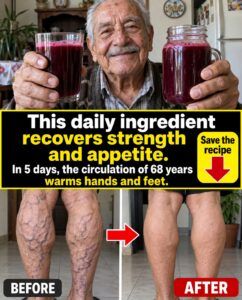
The truth is that food can help, but it does not replace a correct diagnosis or vascular treatment when needed.
What research says about beets
Several studies have explored beetroot juice in people with hypertension, peripheral artery disease, and older adults. Some reviews have found small improvements in systolic blood pressure and certain indicators of vascular function.
However, the results are not uniform. Some studies show benefits, others find no clear changes, and many include few patients or short follow-up periods. This makes the evidence interesting, but still preliminary in many cases.

For example, a recent systematic review on beetroot juice in peripheral artery disease analyzed few trials and a small number of participants. The authors concluded that the data were promising, but insufficient to claim that beetroot solves the problem.
In other words: it can influence vascular physiology, but not in the exaggerated way that is circulating on social media.
Varicose veins, arteries, and “poor circulation” are not the same thing.
Many people use the phrase “poor circulation” to describe various symptoms. But not all circulatory problems are the same, and that completely changes the treatment.

Varicose veins are enlarged and twisted veins, usually related to a malfunction of the venous valves. This can cause heaviness, pain, swelling, and cramping.
Peripheral artery disease, on the other hand, occurs when the arteries in the legs narrow, reducing blood flow to the tissues. It can cause pain when walking, cold feet, weakness, or slow-healing wounds.
That’s why one drink can’t “fix” everything. What helps some veins doesn’t necessarily help diseased arteries.

Quick comparison: viral promises vs. what beets can actually do
| Viral promise | What the evidence shows |
|---|---|
| “Restore circulation in 5 days” | It has not been proven |
| “It makes varicose veins disappear” | No |
| “Repairs blocked arteries” | No |
| “It modestly improves vascular function” | Possibly, in some cases |
| “The systolic pressure drops slightly” | Yes, in certain studies. |
| “It replaces medications or procedures” | No |
This difference matters a lot, because an exaggerated promise can cause someone to delay a necessary medical evaluation.
Beetroot does not make varicose veins disappear.
Varicose veins appear when blood pools in the superficial veins of the legs. This is not simply a lack of circulatory energy; it is a structural problem of the venous system.
Drinking beet juice doesn’t repair the valves in those veins. And while some natural remedies may relieve symptoms, they don’t eliminate established varicose veins on their own.
Among the measures that do tend to help are:
- Walk regularly to activate the calf muscle pump.
- Elevate your legs when appropriate.
- Avoid sitting or standing still for long periods of time.
- Wear compression stockings if recommended by a healthcare professional.
When varicose veins cause significant pain, persistent swelling, or complications, there are medical procedures to treat them. That’s very different from expecting a drink to do all the work.
When the problem is in the arteries, then action is necessary.
Peripheral artery disease should not be treated with diet alone. In addition to leg symptoms, this condition often indicates an increased overall cardiovascular risk.
The goal of the treatment is not simply to “warm up the feet.” It also aims to improve walking ability, prevent injuries, and reduce the risk of heart attack or stroke.
Medical guidelines typically include structured exercise, risk factor control, smoking cessation, and, in some cases, medications or procedures to open or bypass blocked arteries.
And here’s a key point: supervised exercise has solid evidence supporting it. In fact, studies and clinical recommendations show that consistent walking programs can improve the distance a person can walk without pain.
This teaches us something very clear: real improvements in vascular health usually require consistency, not a five-day fix.
And what about strength and appetite? We also need to look beyond beets.
If a 68-year-old notices decreased strength, reduced appetite, or weight loss, a more comprehensive evaluation is warranted. Beetroot juice may provide some energy and micronutrients, but it alone cannot explain persistent weakness.
In older adults, lack of appetite may be related to medications, problems chewing or swallowing, depression, difficulty obtaining food, chronic illnesses, or general changes in health status.
Furthermore, a glass of juice does not replace a complete meal. It has far less protein and fiber than a well-balanced meal, and those nutrients are essential for maintaining muscle mass and energy.
If your strength is dropping, it’s usually best to check the cause, not just add a red drink to your diet.
Warning signs that shouldn’t be ignored
Some symptoms warrant medical attention, especially if they persist or worsen over time. Not everything can be resolved with dietary changes.
- Pain or cramps in the calves when walking that improve with rest.
- One foot is clearly colder, paler, or bluer than the other.
- Wounds on feet or legs that are slow to heal.
- Sudden swelling of one leg.
- Marked weakness or intense pain at rest.
These signs may suggest a venous or arterial problem, or even another condition that needs professional evaluation.
5 practical steps you can take starting today
1. Note when the symptoms appear. If the pain starts when walking and improves when stopping, mention it during your appointment. This pattern may point to an arterial problem.
2. Compare both feet. If one is colder, paler, or changes color, don’t attribute it solely to age.
3. Move around frequently. Gentle walking, if your doctor allows it, helps venous return and can also benefit arterial circulation.
4. Don’t discontinue treatments to try something natural. Medications and vascular procedures have specific objectives that a drink cannot replace.
5. Use beets as food, not as a promise. They can be part of a healthy diet, but they shouldn’t be sold as a cure for varicose veins or clogged arteries.
How to use beets realistically
If you like beets, you can include them as part of a varied diet. It’s best to view them as a nutritional supplement, not as a sole remedy.
A practical way to use it is to combine it with habits that do have an impact: walking, hydration, eating enough protein, controlling blood pressure, and going for a check-up if symptoms persist.
That’s much less spectacular than a viral promise, but also much more useful.
Conclusion
Beetroot juice does have real effects on the body, primarily due to its nitrates and their relationship with nitric oxide. Some research has found small improvements in blood pressure, vascular function, and walking ability.
But there’s no solid evidence that it makes varicose veins disappear, repairs blocked arteries, or restores strength and appetite in just five days. When an older adult experiences cold feet, heavy legs, or weakness, the most important thing is to identify the underlying cause.
Beets can be part of a healthy diet. However, they cannot replace a medical evaluation or treatments that prevent serious complications.
Frequently Asked Questions
Does beetroot juice improve circulation?
It may modestly influence vascular function and blood pressure in some studies, but it’s not a cure for major circulatory problems.
Can it eliminate varicose veins?
No. Varicose veins are a structural problem of the veins and require specific measures depending on each case.
What does it mean to have one foot colder than the other?
It could be a sign of peripheral artery disease or another problem that warrants medical evaluation, especially if there is pain, discoloration, or sores.
Medical Disclaimer
This content is for informational purposes only and is not a substitute for professional medical advice. Seek prompt medical attention if a foot suddenly becomes cold, pale, or blue; if severe pain develops; if a wound does not heal; or if there is sudden swelling of a leg. If chest pain, shortness of breath, or stroke symptoms occur, go to the emergency room immediately.


