
If you’ve seen posts claiming that a kitchen glass “cleans” your uterus in 90 minutes , you’re not alone in feeling both intrigued and worried. These kinds of messages prey on the exhaustion, pain, and hope of many women seeking quick relief. The problem is that when something sounds too easy, it can also lead to confusion, unrealistic expectations, and delays in seeking proper medical care. And here’s the important part: there are real ways to take care of your gynecological health, but they don’t rely on miraculous shortcuts. Later, I’ll show you how to identify these false promises and which steps actually make sense.
Why are these types of posts so captivating?
Viral ads or posts about fibroids, cysts, or uterine “cleanses” often use highly emotional language. They talk about inflammation, bleeding, pain, and despair because they know exactly what to touch to make someone click.
But that doesn’t mean the content is reliable. In fact, it often mixes common ingredients, isolated testimonials, and exaggerated promises without explaining what medical sources actually say .
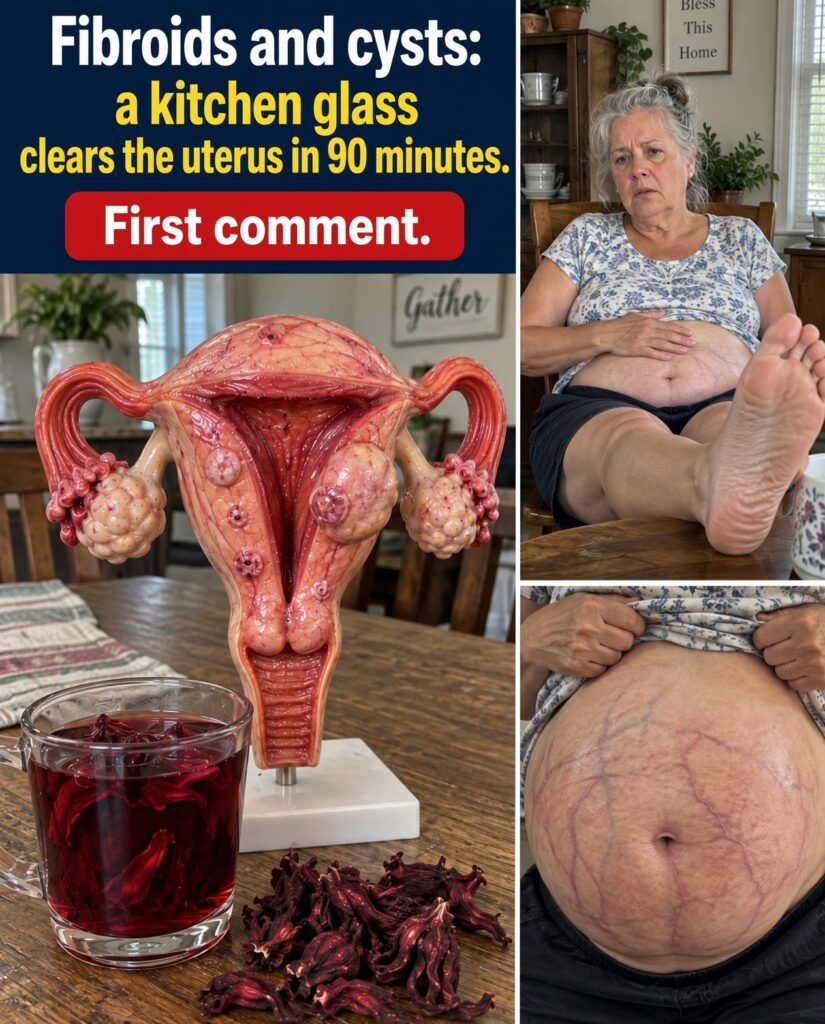
The most delicate part is this: when a publication promises a quick fix for something as complex as uterine health, it can cause people to postpone an important consultation.
Fibroids and cysts: the basics you should understand
Uterine fibroids are noncancerous growths that appear in the uterus. They can cause heavy bleeding, pelvic pressure, or pain, although some people experience no symptoms. Ovarian cysts , on the other hand, are fluid-filled sacs that can appear and disappear; many are benign and are monitored over time.
The key is not to lump everything together. Fibroids and cysts are not the same, they don’t behave the same way, and they aren’t treated with the same strategy. Therefore, any message promising to “sweep away” both with a single drink or a single remedy deserves serious caution.

Is there any evidence of a “kitchen cup” that cleanses the uterus?
According to general medical sources and available clinical evidence, there is no homemade drink that eliminates fibroids or cysts in 90 minutes . Nor is there a universal remedy, “forgotten” by gynecologists, that works that quickly.
Serious studies on fibroids and cysts discuss follow-up, changes in symptoms, medication in some cases, and medical procedures when needed. They do not advocate for an instant cleanse using a kitchen cup.
And here’s the uncomfortable truth: many viral posts use shocking images to sell an idea, not to explain an actual treatment.
Warning signs in these types of promises
Before believing any health publication, check if it has these signs:
- It promises quick or “miraculous” results.
- She says that doctors or gynecologists “don’t want you to know.”
- Use testimonials instead of clear evidence.
- Avoid mentioning side effects or limitations.
- It mixes terms like “detox,” “cleanse,” or “sweep” without explaining how.
If a post has several of these signs, it’s wise to stop before sharing or trying it.
What reliable sources do say
Medical organizations and scientific reviews generally agree on one important point: the management of fibroids or cysts depends on their size, symptoms, age, and medical history . In many cases, observation is sufficient. In others, medication, ultrasound monitoring, or specific procedures are indicated.
Furthermore, research has shown that factors such as body weight, hormonal changes, and age can influence some gynecological problems. This doesn’t mean that a single action will solve everything; rather, the approach should be personalized.
In other words, real medicine doesn’t sell shortcuts; it offers evidence-based assessment and options.
Quick comparison: viral promise vs. real medical approach
| Viral promise | Real medical approach |
|---|---|
| “Cleanse your uterus in 90 minutes” | Evaluate symptoms and specific cause |
| It works for all | It adapts to each case |
| No review required | It may require an ultrasound or consultation. |
| Guaranteed results | There are no universal guarantees |
What can you do today if you are worried about your uterine health?
If you experience heavy bleeding, pelvic pain, irregular periods, or abdominal pressure, you don’t need to wait for a viral post to give you an answer. You can start with simple and safe steps.
Practical steps
- Write down your symptoms: when they started, how intense they are, and if they change with your cycle.
- Watch for worsening signs, such as severe pain, dizziness, or very heavy bleeding.
- Schedule a consultation with a healthcare professional for a complete evaluation.
- Ask if you need an ultrasound or other examination depending on your case.
- Avoid starting “miracle” remedies without knowing what they contain or how they interact with your body.
This not only protects you; it also helps you arrive at the appointment with useful information, which facilitates clearer care.
How to read a health publication without falling into traps
This point is more important than it seems. Many people don’t share misinformation out of malice, but because the content is designed to be emotionally compelling.
Ask yourself these questions before you believe it:
- Does it cite real sources or just catchy phrases?
- Does it explain limitations, or does it promise a complete solution?
- Does he talk about specific symptoms or does he use vague words like “toxins”?
- Does it sound more like an advertisement than medical information?
If the answer leaves you with doubts, a medical consultation is probably worth more than a click.
What the evidence does support for taking care of your well-being
Without exaggerating or promising miracles, there are habits that do help maintain better control of your overall health: sleeping well, keeping track of symptoms, maintaining physical activity appropriate to your condition, and addressing unusual menstrual changes.
It’s also helpful to know your family history, because in some cases gynecological problems have hereditary components. This doesn’t mean you’re going to develop anything, but it does mean you should be more vigilant.
Science doesn’t offer a magic potion, but it does offer real tools that can make a big difference when used in time.
Conclusion
Posts promising to “sweep away” fibroids or cysts with a kitchen cup in 90 minutes sound appealing because they tap into our sense of urgency and fatigue. But medical evidence doesn’t support these claims. It’s safest to be wary of shortcuts, recognize the warning signs, and seek professional evaluation if you have symptoms.
In healthcare, what seems quick isn’t always right. And what seems simple isn’t always true.
If a promise gives you immediate relief but doesn’t explain how it works or what risks it involves, it’s probably not a reliable solution.
Frequently Asked Questions
Can a home remedy get rid of fibroids or cysts?
There is no solid evidence that a drink or home remedy will completely eliminate them. Some symptoms may change over time, but that doesn’t mean it’s cured.
When should I see a gynecologist?
If you have very heavy bleeding, persistent pelvic pain, very irregular cycles, or a feeling of abdominal pressure, it’s advisable to seek medical evaluation.
Are ovarian cysts always dangerous?
No. Many cysts are benign and disappear on their own, but some require monitoring or treatment depending on their size, type, and symptoms.
Important note: This article is for informational purposes only and does not replace the assessment, diagnosis, or treatment of a healthcare professional.


