
Varicose veins can be frustrating. Those twisted, enlarged veins—often appearing on the legs—may cause heaviness, aching, swelling, itching, or discomfort after standing for long periods.
For generations, families have shared simple home remedies using natural ingredients. One traditional combination that continues to attract attention is aloe vera, apple cider vinegar, and lemon.
But can these ingredients actually get rid of varicose veins?
The answer is more nuanced than many social media posts suggest. Aloe vera, apple cider vinegar, and lemon may be useful as part of a soothing skin-care routine, but there is no good evidence that applying this mixture can remove or reverse varicose veins.
Still, understanding how this traditional remedy is used—and what it can and cannot do—can help you make safer choices for your leg health.
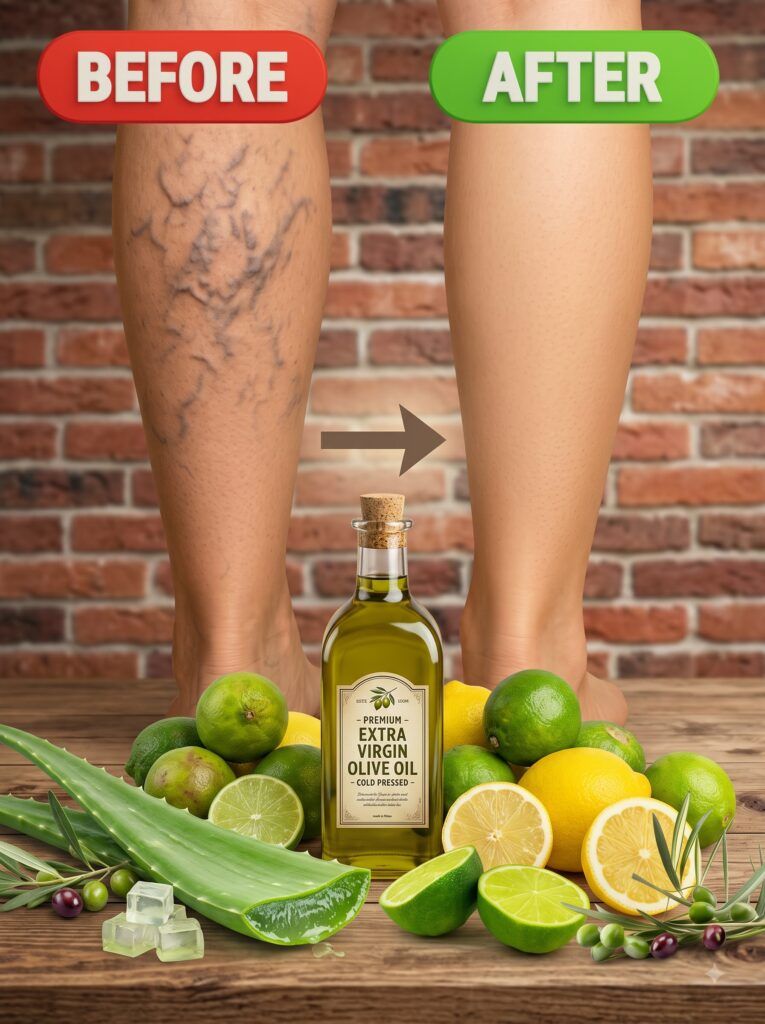
What Are Varicose Veins?
Varicose veins are enlarged, twisted veins that commonly develop in the legs.
Veins have tiny valves that help blood travel back toward the heart. When these valves become weak or do not work properly, blood can pool in the veins. Over time, increased pressure can cause the veins to become enlarged and visible beneath the skin.
Varicose veins may appear:
- Blue, purple, or dark green
- Enlarged or rope-like
- Twisted or bulging
- More noticeable after standing
- Accompanied by aching or heaviness
Some people have varicose veins without significant symptoms, while others experience discomfort, swelling, itching, or tired legs.
Why Do Varicose Veins Develop?
Several factors can increase the likelihood of developing varicose veins.
Age
As you get older, vein walls and valves can gradually become less efficient.
Family History
Varicose veins can run in families. Having close relatives with the condition may increase your risk.
Prolonged Standing
Standing for many hours can increase pressure in the veins of the legs.
Pregnancy
Pregnancy increases blood volume and puts additional pressure on the veins. Hormonal changes can also affect the vein walls.
Excess Weight
Carrying additional weight can increase pressure on the veins in the legs.
Inactivity
Regular movement helps the calf muscles assist the return of blood toward the heart.
The Traditional Aloe Vera, Apple Cider Vinegar, and Lemon Remedy
A popular homemade approach combines aloe vera gel, apple cider vinegar, and lemon juice.
The idea behind this traditional remedy is simple: aloe vera is commonly used to soothe the skin, while apple cider vinegar and lemon are often promoted in natural-health routines because of their acidic properties and antioxidant compounds.
However, it is important to distinguish traditional skin care from medical treatment.
This mixture should not be considered a cure for varicose veins or a replacement for medical treatment.
Ingredients
For a simple topical mixture, some traditional recipes use:
- 2 tablespoons of pure aloe vera gel
- 1 teaspoon of apple cider vinegar
- A few drops of fresh lemon juice
Mix the ingredients thoroughly in a clean bowl.
Important Safety Note
Lemon juice and apple cider vinegar are acidic and can irritate the skin, especially when used undiluted.
If you decide to try a topical mixture, perform a small patch test first. Do not apply it to broken, irritated, infected, or ulcerated skin.
If burning, redness, itching, or irritation develops, wash the area and discontinue use.
How to Use This Traditional Mixture
If your skin tolerates the ingredients, apply a small amount gently to intact skin around the affected area.
Avoid aggressive rubbing or deep massage directly over prominent veins.
Leave it on for a short period and rinse if your skin feels irritated.
This type of routine is best viewed as a comfort-focused skin-care practice, not as a treatment designed to eliminate enlarged veins.
If your goal is to reduce the appearance or symptoms of varicose veins, evidence-based options are more appropriate.
What Does Aloe Vera Do for the Skin?
Aloe vera is a plant traditionally used for skin care.
Its gel contains water and various plant compounds and is commonly used to provide a cooling or soothing sensation.
For people with dry or mildly irritated skin, aloe vera may feel refreshing.
However, there is an important distinction:
Soothing the skin is not the same as repairing damaged vein valves.
Varicose veins develop deeper beneath the skin, so a topical ingredient cannot simply make an enlarged vein disappear.
What About Apple Cider Vinegar?
Apple cider vinegar has become popular in many home-health routines.
It contains acetic acid and is sometimes promoted online for circulation, weight management, digestion, and skin care.
However, claims that topical apple cider vinegar can remove varicose veins are not supported by strong clinical evidence.
Because vinegar is acidic, applying it directly to the skin may cause irritation or even chemical burns, particularly if it is concentrated or left on for too long.
If you have sensitive skin, eczema, or another skin condition, extra caution is appropriate.
What Does Lemon Add?
Lemon contains vitamin C and other plant compounds.
Vitamin C is important for normal collagen production and overall skin health when consumed as part of a balanced diet.
However, rubbing lemon juice on varicose veins does not provide the same nutritional benefit as eating vitamin-C-containing foods.
Fresh lemon juice can also irritate the skin and may make skin more sensitive to sunlight.
For this reason, using lemon directly on the legs should be approached cautiously.
Can This Remedy Cure Varicose Veins?
No reliable evidence shows that aloe vera, apple cider vinegar, and lemon can cure or eliminate varicose veins.
This is one of the most important points to understand.
Varicose veins are related to changes in the veins and their valves. A topical mixture cannot repair faulty vein valves.
Natural ingredients may make the skin feel cooler or more comfortable, but that does not mean the underlying vein problem has been corrected.
Be particularly cautious of online claims promising that a homemade mixture will “melt,” “clean,” or permanently remove varicose veins.
What Can Actually Help With Varicose Vein Symptoms?
Several lifestyle measures can help some people manage symptoms.
1. Keep Your Legs Moving
Walking activates the calf muscles, which help push blood upward toward the heart.
If you sit or stand for long periods, take regular movement breaks when possible.
Even a few minutes of walking can be preferable to remaining in the same position for hours.
2. Elevate Your Legs
Raising your legs above heart level for short periods may help reduce swelling and improve comfort for some people.
You can lie down and place your legs on several pillows or rest them against a suitable elevated surface.
3. Avoid Sitting or Standing for Too Long
Long periods in one position can contribute to leg discomfort.
If your job requires prolonged standing or sitting, changing positions and walking periodically may help.
4. Consider Compression Stockings
Compression stockings provide graduated pressure to the legs and can help improve blood flow and reduce swelling and discomfort in some people with venous problems.
The appropriate compression level depends on the individual.
If you have circulation problems or certain medical conditions, ask a healthcare professional before using compression garments.
5. Maintain a Healthy Weight
If you are overweight, gradual weight management can reduce pressure on the veins and support overall cardiovascular health.
A balanced diet and regular physical activity are generally more useful long-term strategies than relying on a single homemade remedy.
When Should You See a Doctor?
Varicose veins are often not dangerous, but certain symptoms require medical evaluation.
Contact a healthcare professional if you experience:
- Persistent or worsening leg pain
- Significant swelling
- Skin discoloration around the ankle
- Skin sores or ulcers
- Bleeding from a varicose vein
- A hard, painful vein
- Sudden swelling in one leg
- Sudden leg pain accompanied by warmth or redness
Sudden swelling or pain in one leg can sometimes indicate a blood clot and should be evaluated promptly.
If you develop sudden shortness of breath, chest pain, coughing up blood, or severe difficulty breathing, seek emergency medical care.
A Safer Way to Think About Natural Remedies
Natural remedies can have a place in personal care, but “natural” does not automatically mean “safe” or “effective.”
Aloe vera may soothe the skin.
Apple cider vinegar may be useful in certain culinary applications.
Lemon provides vitamin C when consumed as part of a balanced diet.
But none of these facts prove that the ingredients can repair damaged veins.
The best approach is to separate comfort and skin care from medical treatment.
Frequently Asked Questions
Can I massage varicose veins with aloe vera?
Gentle application of a skin moisturizer or aloe vera gel may feel soothing, but vigorous massage directly over prominent varicose veins is not recommended. If you have painful or inflamed veins, ask a healthcare professional for advice.
How often can I use this mixture?
There is no medically established schedule for using aloe vera, apple cider vinegar, and lemon to treat varicose veins because the mixture has not been proven to treat the underlying condition.
If you use it as a cosmetic skin-care mixture, patch-test first and stop if irritation develops.
Can lemon juice remove spider veins?
There is no good evidence that applying lemon juice to the skin removes spider veins.
Spider veins and varicose veins can be treated with medical procedures when appropriate.
Can drinking apple cider vinegar cure varicose veins?
No. Drinking apple cider vinegar has not been established as a treatment for varicose veins.
It can also interact with certain health conditions and medications, so regular consumption should not be treated as risk-free.
Can varicose veins disappear naturally?
Some symptoms may improve with lifestyle changes, but established varicose veins do not necessarily disappear on their own.
A healthcare professional can assess the veins and discuss treatment options if symptoms or appearance are causing problems.
Final Thoughts
The traditional combination of aloe vera, apple cider vinegar, and lemon is an interesting example of how simple home remedies have been passed from one generation to another.
Aloe vera may provide a soothing sensation on intact skin, while lemon and apple cider vinegar are common household ingredients. However, there is currently no strong evidence that applying this combination can cure varicose veins or repair damaged vein valves.
For healthier legs, focus on regular movement, avoiding prolonged inactivity, maintaining a healthy weight, elevating the legs when appropriate, and discussing persistent symptoms with a healthcare professional.
Natural skin care can complement a healthy routine—but it should never replace proper medical evaluation when varicose veins become painful, swollen, or suddenly change.
Disclaimer: This article is for educational purposes only and does not provide medical diagnosis or treatment. Natural remedies may not be appropriate for everyone. If you have persistent, painful, swollen, or suddenly changing veins, consult a qualified healthcare professional.


