
Blurry vision, irritated eyes, and the feeling that “something’s wrong” can be very frightening, especially when they start interfering with reading, driving, or recognizing faces. And when someone promises a quick fix with guava leaves, it’s easy to cling to that idea out of desperation. The problem is that not every folk remedy has real backing, and relying too heavily on it can delay the care you actually need. The good news is that there are reliable ways to understand what this plant can and can’t do to help you take better care of your eyes. And at the end, I’m going to show you the detail that almost no one tells you about this topic…
First of all: don’t confuse relief with a cure
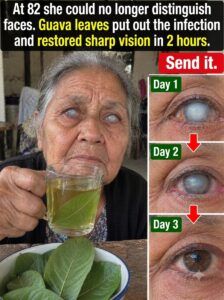
Guava leaves have traditionally been used in infusions and home remedies for their plant compounds, such as flavonoids and antioxidants. This has led many people to associate them with “reducing inflammation” or “cleansing” the body. But it’s one thing for a plant to contain interesting substances in laboratory tests, and quite another for it to erase cataracts, clear blurred vision, or resolve eye problems immediately.
The truth is this: eye health is delicate. If you notice blurred vision, redness, pain, discharge, or changes in your vision, it’s worth taking seriously. Some discomforts are minor, yes, but others require professional evaluation. And here’s the key point: not every eye symptom is treated the same .
What is known about guava leaves
In general studies on medicinal plants, guava has shown antioxidant activity and potential anti-inflammatory properties in certain contexts. This means that some of its compounds could help reduce oxidative damage or support the body’s inflammatory responses. However, this does not equate to a proven solution for cataracts or blurred vision .
Furthermore, many of these findings come from laboratory studies, not from robust clinical trials in people with eye diseases. In other words, just because something works in a lab dish doesn’t mean it will work the same way in the human eye. And this difference matters a great deal.
What you shouldn’t believe about swollen eyes and cataracts
When an advertisement claims that certain leaves “crush cataracts instantly,” it’s making an exaggerated promise. Cataracts are a change in the eye’s natural lens, and they don’t usually disappear with home remedies. So, if someone tries to sell you a miracle cure, it’s wise to raise an eyebrow before opening your wallet.

You also need to be careful with eye irritation. Applying juices, infusions, or non-sterile substances directly to the eye can worsen the problem. The eye is not the place to experiment with makeshift remedies. That can cause more harm than good .
Warning signs you shouldn’t ignore
Some symptoms require prompt medical attention, especially if they appear suddenly or worsen. Don’t downplay them by trying to “wait it out on its own.”
- Sudden or rapidly worsening blurred vision
- Moderate to severe eye pain
- Significant redness
- Strong sensitivity to light
- Thick or sticky secretion
- Flashes, shadows, or partial loss of vision
If you have one or more of these signs, it’s wise to seek professional evaluation. Early detection significantly improves the prognosis for various vision problems, and this is well-documented in general medical literature.

So, are guava leaves good for anything?
Yes, but with clear limits. They can be part of a wellness tradition, for example in infusions, as long as they are used in moderation and not as a substitute for medical care. Some people take them out of habit or for a feeling of digestive or general relief. But when it comes to the eyes, caution should always come first.
The key is not to demonize guava, but to put it in its proper place: as a traditional support, not as a proven eye treatment.
Quick comparison: what the myth promises vs. what is reasonable
| Viral promise | What is reasonable according to the evidence |
|---|---|
| Removes cataracts | There is no solid evidence to support that claim. |
| It reduces eye inflammation “on the spot” | There may be some interesting compounds, but it’s not a proven eye treatment. |
| It replaces a medical consultation. | You shouldn’t do it, especially if there is pain or vision changes. |
| It is a harmless remedy | Not always: using non-sterile substances in the eye can be risky |
What you can do today to take care of your eyesight
If you’re worried about blurred vision or a swollen eye, there are simple and helpful steps you can start taking today. They’re not magic, but they are sensible and safe.

- Stop using any home remedies inside the eye .
- Avoid rubbing , as this can worsen the irritation.
- Wash your hands before touching the eye area.
- Use sterile artificial tears only if you have tolerated them before and there is no severe pain.
- Monitor your symptoms : if they worsen or do not improve within 24 to 48 hours, seek medical attention.
- Protect your eyes from the sun with UV filter lenses.
- Schedule an appointment if you notice changes in your vision, even if they are slight but persistent.
This approach is far more useful than chasing a viral promise. And, frankly, it also provides more peace of mind.
If you’re looking for natural support, do it wisely.
Some people prefer natural options because they fear conventional treatments or have had negative experiences. That’s understandable. But “natural” doesn’t always mean “safe” or “effective.” Modern science and traditional medicine don’t have to be at odds; the important thing is to know what’s proven and what only sounds convincing.
For example, research on antioxidants and eye health has explored various foods and plant compounds. Even so, specialists generally emphasize that the foundation of eye care remains regular checkups, management of conditions like diabetes or high blood pressure, and early attention to new symptoms. That combination does make sense.
A fact that almost nobody tells you
Many viral posts mix real words with exaggerated promises to appear credible. They use terms like “inflammation,” “blurred vision,” or “cataracts” because they create a sense of urgency, but they omit something essential: they don’t show serious clinical evidence or warn of the risks . That’s the trick.
Therefore, before sharing or trying any remedy, ask yourself if it’s backed by studies in humans, if it’s safe for your eyes, and if it’s delaying a necessary consultation. That small pause can save you a lot of trouble.
Conclusion
Guava leaves may have some appeal as a traditional remedy, but there isn’t enough evidence to say they eliminate cataracts, clear blurred vision, or immediately cure an inflamed eye. If you have eye symptoms, the most responsible course of action is to avoid self-medicating with improvised remedies and seek professional guidance when necessary. The best decision isn’t always the most viral, but rather the safest.
Frequently Asked Questions
Do guava leaves cure cataracts?
There is no solid clinical evidence to show that they do. Cataracts require medical evaluation to determine the appropriate treatment.
Can I put guava leaf tea in my eye?
It’s not recommended. Any non-sterile liquid can irritate or contaminate the eye and worsen symptoms.
What should I do if I have a red eye and blurred vision?
Avoid rubbing it, stop using home remedies, and seek medical attention if the symptom is severe, sudden, or does not improve soon.
Safety note: This content is for informational purposes only and is not a substitute for professional medical advice; if you experience eye pain, vision loss, or persistent symptoms, consult a doctor or ophthalmologist.


