
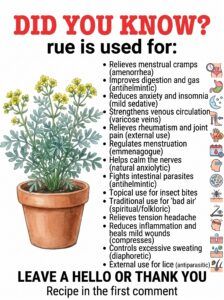
Main floor:
Ruda — Πήγανος (Píganos).
Scientific name: Ruta graveolens.
Rue is an aromatic plant traditionally used in various cultures. Its leaves contain essential oils and other plant compounds that have been studied for their biological properties.
🧴 An alternative: traditional external use of rue
Ingredients:
Some rue leaves — Πήγανος (Píganos).
250 ml of water.
🌱 Preparation
Wash the leaves carefully.
Heat the water until it boils.
Remove from heat.
Add a few rue leaves.
Let it sit for approximately 5 minutes.
Strain and let cool completely.
If used externally, apply a small amount to an intact area of skin and observe how it reacts.
🌿 What has it traditionally been used for?
Rue has had various traditional uses, including external applications for muscle and joint pain. However, clinical evidence supporting these uses is limited.
Therefore, it is not correct to claim that rue cures arthritis, eliminates back pain, or reduces inflammation in a disease.
⚠️ A very important precaution
I do not recommend drinking rue tea, infusions, or concentrated preparations. The plant contains compounds that can be toxic and cause adverse effects.
In addition, rue can increase the skin’s sensitivity to the sun and produce significant skin reactions after sun exposure.
It should not be used during pregnancy, as it may cause uterine contractions and has traditionally been associated with abortive effects.
If irritation, burning, blisters or redness appears, immediately discontinue use and wash the area.
And remember: just because a plant has a traditional use doesn’t mean it’s safe to ingest or that it can replace medical treatment.
This article is for educational purposes only and does not replace consultation with a healthcare professional.


