
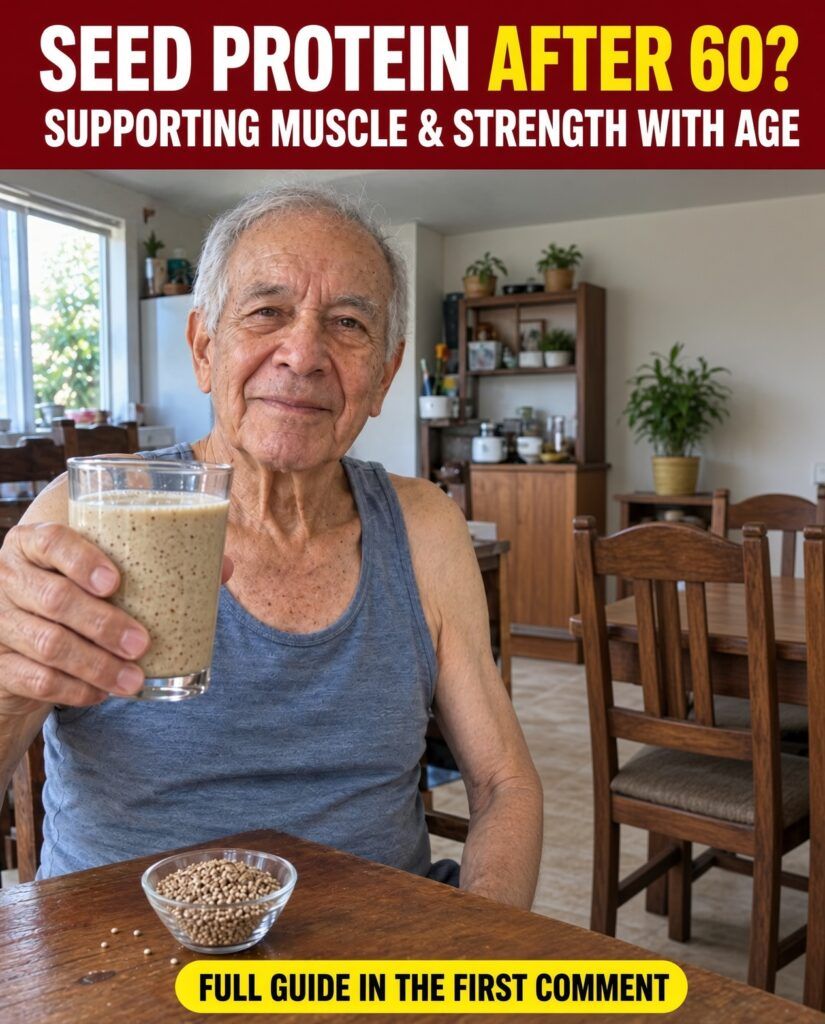
Seed Protein After 60: Supporting Muscle and Strength
Has it happened to you that, over the years, you notice your arms getting thinner, less strength carrying grocery bags, or tiredness getting up from a chair? It’s very common after 60, and it doesn’t mean “there’s nothing to be done.” On the contrary — with good eating and movement habits, the body can still respond surprisingly well. That’s why a well-prepared seed protein can become a useful support to complement your diet and help maintain muscle, energy, and better recovery.
What’s behind the “seed protein” idea?
First, let’s set things straight. No drink, on its own, “brings muscle back” in 50 minutes or transforms skinny arms overnight. That would be an exaggeration. But it is true that some seeds provide protein, healthy fats, minerals, and good-quality calories — and that can help a lot when an older person eats little or needs to reinforce their nutrition.
The key isn’t a miraculous promise, but consistency. A seed blend can support the daily diet, especially when combined with enough total protein, gentle strength exercise, and habits that favor nutrient absorption.
Why many older adults lose muscle mass
With age, the body tends to lose muscle naturally if it doesn’t get the right stimulus and nutrients. This is called sarcopenia — a decrease in muscle mass and strength. It’s not a sentence, but it is a signal to act in time.
And here’s what matters: when muscle drops, stability, energy, and independence for daily activities can drop too. That’s why watching daily protein and moving a little each day can make an enormous difference.
Common signs it’s worth reinforcing nutrition
- Difficulty opening jars or carrying things that used to be easy.
- Noticing arms or legs thinner than before.
- Getting tired quickly when walking or climbing stairs.
- Struggling to stand up without pushing with your hands.
- Losing weight without trying.
Note: these signs don’t automatically mean something serious, but they do indicate it’s worth reviewing your diet and, if needed, talking to a health professional.
What a good seed blend provides
Seeds aren’t magic, but they can be a very valuable tool. Depending on which you choose, you can get plant protein, fiber, magnesium, zinc, iron, and healthy fats. All these nutrients take part in important body functions, from energy to tissue repair.
Also, when prepared as a drink or cream, they can be easier to consume for people with small appetite, sensitive teeth, or difficulty chewing. In practice, that helps enormously.
Useful seeds in a homemade recipe
- Chia: provides fiber and helps with texture.
- Flaxseed: contains healthy fats and complements the blend.
- Sesame: provides minerals and good flavor.
- Pumpkin seeds (pepitas): have protein and zinc.
- Almonds or walnuts: raise energy value and satiety.
Important: no seed on its own “builds muscle” if the rest of the diet is insufficient. What works is the whole picture.
The truth about muscle after 60
Good news: muscle can keep responding in older adulthood. At any age, the body needs enough protein and physical stimulus to preserve and build strength. That means there is room for improvement, even if someone has felt weak for years.
The most powerful combination isn’t a miracle drink, but adequate protein, constant movement, and restorative sleep.
So if someone promises extreme changes in minutes, be skeptical. What’s realistic — and also most effective — is building results step by step.
How to use a seed protein practically
If you want to take advantage of this kind of preparation, the ideal is to include it as part of breakfast, a snack, or after a walk or light routine. That way it provides energy and nutrients when the body can use them well.
It can also help when appetite is low. Instead of forcing large portions, a nutritious drink can be a gentle way to add calories and protein.
Quick table: what a seed drink can and can’t do
| What it can do | What it shouldn’t promise |
|---|---|
| Help add protein and energy | “Bring back” muscle in 50 minutes |
| Make eating easier with small appetite | Replace all meals |
| Complement a diet for older adults | Cure sarcopenia on its own |
| Be a practical homemade option | Work without exercise or healthy habits |
Homemade recipe: seed drink to support daily protein
Here’s a simple, economical, easy option to make at home. It doesn’t pretend to be miraculous — but it is useful and nutritious.
Ingredients
- 1 tablespoon of chia
- 1 tablespoon of ground flaxseed
- 1 tablespoon of sesame
- 1 tablespoon of pumpkin seeds
- 1 cup of milk or unsweetened plant-based drink
- 1/2 ripe banana or 1 date for flavor
- Cinnamon to taste
Step-by-step preparation
- If using whole flaxseed, grind it first to better absorb its nutrients.
- Place all seeds in the blender.
- Add the milk or plant drink and the banana or date.
- Blend for 30 to 45 seconds until smooth.
- If you want a lighter texture, add a bit more liquid.
- Drink freshly made or refrigerate briefly.
To increase protein, you can add plain yogurt, high-protein milk, or a portion of cottage cheese, according to your tolerance and needs.
Practical tips so it really helps
The drink alone doesn’t do all the work. To truly support muscle mass, pair it with simple but consistent habits — that’s where many people see the difference.
Habits that boost results
- Include protein at every meal: eggs, chicken, fish, yogurt, beans, or fresh cheese.
- Walk or do gentle strength exercises, like standing up from a chair several times.
- Stay well hydrated during the day.
- Avoid going many hours without eating if appetite is already low.
- Try to sleep enough, because the body recovers better at night.
If an older person eats very little, loses weight unintentionally, or feels persistent weakness, a homemade recipe isn’t enough. In those cases, a medical and nutritional evaluation is the prudent step.
Who should be cautious
Although seeds are healthy for many people, not everyone tolerates them the same. If you have trouble swallowing, active diverticulitis, allergies, advanced kidney disease, or use specific medications, check first before making big diet changes.
Portions also matter: seeds are nutritious but calorie-dense. In excess, they can feel heavy or displace other important foods.
What you can expect from this strategy
With a well-made preparation and an adequate eating plan, many people notice better satiety, more energy, and an easier way to consume nutrients. That, added to regular movement, can favor strength and daily functionality.
In other words, it’s not an empty promise. It’s a real tool within a lifestyle that supports muscle and vitality.
Conclusion
The idea of a “seed protein” can be very useful, as long as it’s understood for what it is: nutritional support, not an instant miracle. For older adults, adding protein, minerals, and good-quality calories can help preserve strength, energy, and independence. Combined with gentle exercise and good habits, the benefit can be much greater.
The best recipe isn’t the one that promises the most, but the one you can sustain every day.
FAQ
Can seed protein recover muscle quickly?
It can help complement the diet, but muscle doesn’t recover in minutes. Real changes require consistency, enough total protein, and strength exercise.
Is it better to drink it fasting or at night?
Regularity matters most. Many people tolerate it well at breakfast or as a snack. If it feels heavy at night, better to avoid it then.
Can I use only seeds to gain muscle?
No. Seeds help, but muscle needs varied protein, enough calories, and physical activity. The combination is what delivers results.
Medical disclaimer: This article is for informational purposes and does not replace evaluation by a doctor, nutritionist, or health professional. If you have involuntary weight loss, marked weakness, difficulty swallowing, pain, or chronic conditions such as diabetes, kidney disease, or digestive problems, consult a professional before changing your diet. Everyone needs recommendations adapted to their age, medications, and health status.


