
Discover what science says about soursop and cancer. Learn about graviola, its plant compounds, potential antioxidant effects, and important safety considerations.
Soursop and Cancer: Can This Tropical Fruit Really Help Fight Cancer?
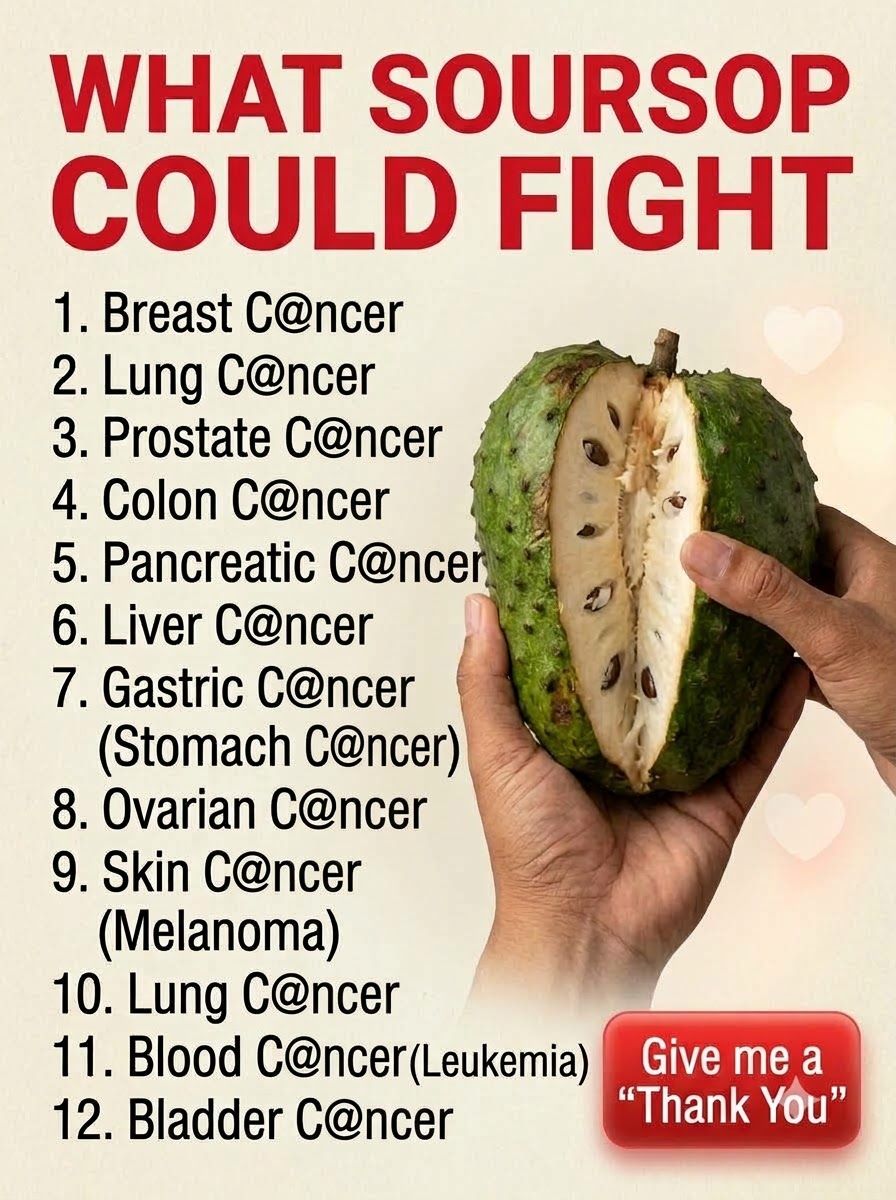
Soursop, also known as graviola or Annona muricata, is a tropical fruit that has attracted a great deal of attention because of its nutritional value and naturally occurring plant compounds.
You may have seen claims online suggesting that soursop can “combat” breast cancer, lung cancer, prostate cancer, colon cancer, pancreatic cancer, liver cancer, stomach cancer, ovarian cancer, skin cancer, leukemia, and bladder cancer.
But is there scientific evidence behind these claims? 🤔
The answer is more complicated than social-media posts often suggest.
Soursop contains several bioactive compounds that researchers have studied in laboratory experiments. Some of these compounds have demonstrated interesting effects on cancer cells in test tubes and other experimental models.
However, this does not mean that eating soursop or drinking soursop tea can treat or cure cancer in humans.
Let’s take a closer look.
What Is Soursop?
Soursop is the fruit of the tropical tree Annona muricata. It is also commonly called:
- Graviola
- Guanábana
- Brazilian paw paw
- Custard apple in some regions
The fruit has green, spiky skin and soft white flesh containing black seeds.
Soursop is naturally rich in nutrients and plant compounds, including vitamin C, carbohydrates, fiber, and various phytochemicals.
Traditionally, different parts of the plant have been used in herbal preparations in several cultures.
Why Is Soursop Being Studied for Cancer?
One reason soursop has attracted scientific interest is its content of compounds known as annonaceous acetogenins.
Researchers have investigated these compounds because laboratory studies suggest they may interfere with certain cellular processes involved in the survival and growth of abnormal cells.
Some laboratory research has reported activity against cancer cell lines associated with cancers such as:
- Breast cancer
- Prostate cancer
- Colon cancer
- Lung cancer
- Pancreatic cancer
- Liver cancer
- Ovarian cancer
- Skin cancer
- Leukemia
However, there is a very important distinction:
Laboratory activity is not the same as a cancer treatment.
A substance that affects cancer cells in a laboratory dish may behave very differently inside the human body.
The dose required, absorption, metabolism, toxicity, and interaction with other medications all need to be understood before a substance can be considered a safe and effective treatment.
1. Soursop and Breast Cancer
Breast cancer is one of the most common cancers worldwide.
Some laboratory studies have examined extracts or compounds from Annona muricata against breast cancer cell lines.
These studies have generated interesting findings, but they do not establish that eating soursop can treat breast cancer in people.
Anyone diagnosed with breast cancer should follow an evidence-based treatment plan recommended by their healthcare team.
2. Soursop and Lung Cancer
Research has also investigated compounds from soursop in laboratory models involving lung cancer cells.
The results have contributed to interest in the plant’s potential biological effects.
Still, there is currently no good evidence that drinking soursop juice or tea can replace established lung cancer treatments.
3. Soursop and Prostate Cancer
Prostate cancer has also appeared in laboratory research involving Annona muricata extracts.
Scientists are interested in whether certain compounds may influence cellular pathways involved in abnormal cell growth.
But laboratory findings should be viewed as early-stage research, not proof of a treatment.
4. Soursop and Colon Cancer
Studies have explored soursop extracts and their effects on colon cancer cell models.
The antioxidant and bioactive compounds found in plants can be interesting subjects for cancer research.
However, more research—especially well-designed human clinical trials—is needed before any conclusions can be made about the use of soursop for colon cancer.
5. Soursop and Other Types of Cancer
The image above lists several other cancers, including:
- Pancreatic cancer
- Liver cancer
- Stomach cancer
- Ovarian cancer
- Melanoma
- Leukemia
- Bladder cancer
These cancers have been investigated in various preclinical studies involving compounds derived from Annona muricata.
But it is important not to turn “studied in the laboratory” into “proven to cure.”
At this point, soursop should be considered an interesting subject of scientific research rather than a proven cancer medicine.
What Makes Soursop Interesting?
Beyond cancer research, soursop is a tropical fruit that can be part of a varied diet.
Its flesh provides nutrients and naturally occurring plant compounds.
A balanced diet containing plenty of fruits, vegetables, whole grains, legumes, and other nutrient-dense foods is generally more meaningful for long-term health than relying on a single “miracle” food.
Soursop can therefore be enjoyed as a food, but it should not be viewed as a substitute for medical treatment.
Can You Drink Soursop Tea or Soursop Juice?
Soursop fruit can be eaten fresh or used in drinks and other foods.
However, herbal preparations made from the leaves, seeds, bark, or concentrated extracts are different from simply eating the fruit.
Some research has raised safety concerns about certain compounds found in Annona muricata, particularly with prolonged or concentrated exposure.
For that reason, consuming large amounts of soursop leaf tea or concentrated supplements is not necessarily safer than eating the fruit.
Important Safety Considerations ⚠️
If you have cancer or are receiving cancer treatment, don’t use soursop as a replacement for chemotherapy, radiation therapy, surgery, immunotherapy, targeted therapy, or other treatments recommended by your medical team.
Herbal products can also potentially interact with medications.
People who are pregnant, breastfeeding, taking prescription medications, or managing a chronic condition should speak with a qualified healthcare professional before using concentrated soursop products.
The bottom line:
Soursop is an interesting tropical fruit with bioactive compounds that researchers continue to study. But there is currently not enough human evidence to say that soursop can prevent, treat, or cure cancer.
Soursop: Promising Research, But Not a Miracle Cure 🍈🌿
The viral claim that soursop can “combat 12 types of cancer” is much stronger than the available evidence supports.
What science currently tells us is more nuanced:
Soursop contains biologically active compounds that have shown interesting effects in laboratory research.
That’s worth investigating.
But there is still a major gap between laboratory research and proven treatment in humans.
So, enjoy soursop as a nutritious tropical fruit if you like it—but don’t rely on it as a cancer treatment.
If you or someone you love has been diagnosed with cancer, the safest approach is to discuss any herbal product or supplement with the treating healthcare professional before using it.


