
Stinging nettle, scientifically known as Urtica dioica, is a plant that has been used in traditional herbal practices for generations. Its leaves are famous for their tiny hairs that can cause a temporary stinging sensation when touched.
Despite its unpleasant reputation, nettle has attracted attention because it contains a variety of plant compounds and nutrients. Today, nettle leaves and extracts are commonly discussed in relation to inflammation, urinary health, seasonal allergies, joint discomfort, and general nutrition.
However, it is important to distinguish between traditional uses and treatments that have been scientifically established. Stinging nettle should not be considered a cure for medical conditions, and herbal products can interact with medications or cause side effects.
This guide explores the potential benefits of stinging nettle, common ways people use it, nutritional considerations, and important safety precautions.
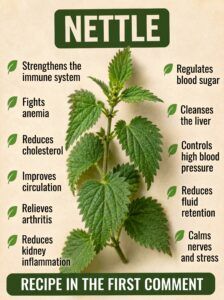
What Is Stinging Nettle?
Stinging nettle is a perennial plant found in many parts of the world. It belongs to the Urticaceae family and is particularly well known for the tiny structures on its leaves and stems that can irritate the skin.
The plant contains a range of naturally occurring compounds, including polyphenols, carotenoids, minerals, and other plant chemicals.
Once properly prepared, nettle leaves can be used as a food or herbal ingredient. They may be prepared as tea, cooked like leafy greens, or processed into extracts and other products.
The raw plant should not simply be handled or eaten because the fresh hairs can cause significant skin irritation.
1. Seasonal Allergy Support
Nettle is traditionally used for seasonal allergy symptoms, and some laboratory research has investigated its potential effects on inflammatory and histamine-related pathways.
However, evidence from human studies is not strong enough to consider nettle a replacement for established allergy treatments.
If you experience recurring sneezing, congestion, itchy eyes, or other allergy symptoms, a healthcare professional can help determine the most appropriate treatment.
2. Joint and Arthritis Discomfort
Nettle has traditionally been used for joint discomfort and inflammatory conditions.
Some of its plant compounds have demonstrated anti-inflammatory activity in laboratory research, which has led scientists to investigate whether nettle could have a role in supporting joint health.
That does not mean drinking nettle tea or applying nettle preparations will treat arthritis itself.
People with persistent joint pain should receive an appropriate diagnosis rather than relying solely on herbal remedies.
3. A Source of Plant Nutrients
When properly prepared, nettle leaves can provide several nutrients.
Depending on the preparation and growing conditions, nettle contains compounds such as:
- Iron
- Calcium
- Magnesium
- Potassium
- Vitamin C
- Vitamin K
- Plant polyphenols
- Carotenoids
The nutritional value of nettle should be viewed as part of an overall balanced diet rather than as a substitute for a varied food intake.
4. Digestive Health
Nettle tea has traditionally been consumed as a herbal beverage for general digestive comfort.
Some people use it after meals, particularly when they experience occasional digestive discomfort.
However, evidence supporting nettle as a treatment for constipation, diarrhea, indigestion, or other digestive diseases remains limited.
Persistent digestive symptoms should be evaluated, especially when they are accompanied by bleeding, unexplained weight loss, severe pain, fever, or changes in bowel habits.
5. Hair and Scalp Care
Nettle is also frequently included in traditional hair-care preparations.
Nettle-based shampoos, rinses, and extracts are sometimes promoted for supporting scalp health and maintaining stronger-looking hair.
There is not enough high-quality evidence to conclude that nettle alone can reliably stop hair loss or stimulate significant new hair growth.
Hair loss can have many causes, including genetics, hormonal changes, nutritional deficiencies, thyroid disorders, medications, stress, and certain medical conditions.
Finding the underlying cause is more useful than relying on a single herbal ingredient.
6. Muscle and Physical Comfort
Because nettle contains a variety of plant compounds, it has traditionally been used in herbal preparations for general physical discomfort.
Some people drink nettle tea as part of their wellness routine.
However, muscle pain can have many causes, including exercise, dehydration, injury, medication effects, nerve problems, or nutritional issues.
Persistent or unexplained muscle pain should therefore not automatically be attributed to inflammation or treated with nettle.
7. Urinary Tract and Fluid Balance
Nettle is traditionally regarded as having diuretic properties, meaning it may influence urine production.
This is one reason nettle preparations are commonly discussed in relation to urinary health.
However, increased urination is not the same thing as treating a urinary tract infection.
Symptoms such as burning during urination, fever, blood in the urine, back pain, or frequent urination may require medical evaluation and, in some cases, prescription treatment.
Nettle should not be used as a substitute for appropriate care.
8. Blood Pressure Considerations
Some early research suggests that certain nettle preparations may influence blood pressure or fluid balance.
However, the evidence is not strong enough to recommend nettle as a treatment for hypertension.
This point is particularly important because nettle may potentially interact with medications that affect blood pressure or fluid balance.
If you have high blood pressure, continue following your prescribed treatment plan and speak with your healthcare professional before adding herbal products.
9. Blood Sugar and Metabolic Health
Nettle has been studied for possible effects on glucose metabolism.
Laboratory and preliminary research has generated interest in whether compounds in nettle might influence blood sugar regulation.
But these findings should not be interpreted as proof that nettle can treat diabetes.
People taking insulin or other glucose-lowering medications should be particularly careful because combining supplements with medication can potentially affect blood glucose levels.
Diabetes management should continue to be based on a medically appropriate diet, physical activity, monitoring, and prescribed treatment.
10. Antioxidant Compounds
Nettle contains various plant compounds with antioxidant activity.
Antioxidants help protect cells from oxidative stress, which is a normal biological process that can increase under certain circumstances.
Eating a variety of fruits, vegetables, legumes, whole grains, nuts, seeds, and other plant foods is a more reliable way to obtain a broad range of beneficial plant compounds.
Nettle can be one possible addition, but it should not be viewed as a special detoxification treatment.
11. Respiratory Wellness
Traditional herbal practices have sometimes used nettle preparations for respiratory complaints.
However, there is insufficient evidence to establish nettle as an effective treatment for asthma, bronchitis, or other respiratory diseases.
Breathing difficulties should never be treated as a simple herbal problem.
Anyone experiencing significant shortness of breath, chest pain, wheezing, blue lips, or sudden breathing difficulty should seek urgent medical care.
12. Menstrual and Women’s Health
Nettle has a long history of traditional use in women’s herbal preparations.
Its nutritional content, particularly vitamin K and minerals, has contributed to its popularity in traditional wellness practices.
However, claims that nettle reliably relieves menstrual pain or regulates menstrual cycles require more research.
Unusually heavy, painful, irregular, or prolonged menstrual bleeding should be discussed with a healthcare professional.
13. Kidney and Urinary Health
Because nettle may have diuretic effects, it is sometimes promoted as a way to “cleanse” or “flush” the kidneys.
The kidneys already perform the body’s filtration and waste-removal functions, so claims about herbal “kidney detoxes” should be viewed critically.
Drinking enough fluids and maintaining healthy blood pressure and blood sugar are generally much more important for long-term kidney health.
People with kidney disease should consult a healthcare professional before using nettle or other herbal products.
14. Gout and Uric Acid
Nettle is sometimes traditionally recommended for gout and high uric acid.
Some preliminary research has investigated whether nettle compounds might influence pathways associated with inflammation and uric acid.
Nevertheless, nettle has not been established as a replacement for proven gout treatment.
Untreated gout can cause repeated painful attacks and long-term joint damage. Anyone experiencing recurrent gout symptoms should discuss appropriate treatment and uric acid management with a healthcare professional.
15. General Inflammatory Support
Inflammation is a normal part of the body’s immune response.
Nettle contains several compounds that have demonstrated anti-inflammatory activity in laboratory settings.
This has led to interest in its potential role in supporting normal inflammatory balance.
However, laboratory activity does not automatically translate into a clinically meaningful effect in humans.
For this reason, it is better to describe nettle as a plant with potential anti-inflammatory properties rather than as a natural cure for inflammation.
16. Everyday Energy and Nutrition
Nettle contains vitamins and minerals that contribute to normal nutritional intake.
For someone with a varied diet, however, nettle is unlikely to be a magic solution for fatigue.
Persistent tiredness can result from insufficient sleep, stress, anemia, thyroid problems, infections, nutritional deficiencies, medications, or other medical conditions.
If fatigue lasts for weeks or interferes with everyday life, identifying the underlying cause is more important than simply adding an herbal tea.
How to Prepare Nettle Tea
One of the simplest ways people consume dried nettle is as an herbal tea.
Ingredients
- 1 teaspoon to 1 tablespoon of dried nettle leaves
- 1 cup of hot water
Preparation
- Place the dried nettle leaves in a cup.
- Pour hot water over the leaves.
- Cover and allow the tea to steep for several minutes.
- Strain the liquid before drinking.
- Allow it to cool to a comfortable temperature.
Use commercially prepared, properly identified dried nettle products rather than collecting unknown plants from the wild.
Importantly, fresh raw nettle leaves should not be consumed without appropriate preparation, because the plant’s tiny hairs can cause skin and mouth irritation.
What About Nettle Juice?
Some traditional recipes use fresh nettle leaves in juices or smoothies.
This approach requires particular caution because improperly prepared fresh nettle can cause irritation.
For home use, a commercially prepared product with clear preparation instructions is generally a safer choice than experimenting with raw wild plants.
Nettle Safety: Who Should Be Careful?
Natural does not automatically mean risk-free.
Nettle may not be appropriate for everyone.
Extra caution is recommended for people who:
- Take blood-pressure medication
- Take diuretics
- Take diabetes medication
- Take blood-thinning medication
- Have kidney disease
- Have other chronic medical conditions
- Are pregnant or breastfeeding
- Are preparing for surgery
Because nettle may affect fluid balance, blood pressure, or blood sugar, it is important to discuss regular use with a healthcare professional when medications are involved.
Can Nettle Interact With Medications?
Potential interactions are one of the most important reasons not to treat herbal products as completely harmless.
For example, someone taking medication for high blood pressure or diabetes may need to consider whether adding an herbal product could alter the effects of their existing treatment.
People taking anticoagulants or other medications that affect blood clotting should also ask their healthcare professional before regularly consuming concentrated herbal preparations.
If you take prescription medication, bring the name of the herbal product and its ingredient list to your pharmacist or doctor.
Nettle Is Not a Replacement for Medical Treatment
Online articles sometimes describe nettle as a natural remedy for dozens of diseases.
It is important to separate traditional use from proven medical treatment.
Nettle may contain useful nutrients and biologically active compounds, but that does not mean it can replace medication for diabetes, hypertension, infections, arthritis, gout, kidney disease, or other chronic conditions.
A better approach is to view nettle as a potential complementary food or herbal ingredient when appropriate—not as a cure-all.
How to Add Nettle to a Healthy Lifestyle
If nettle is appropriate for you, it can be incorporated into a broader healthy routine.
Focus first on the fundamentals:
- Eat a varied, nutrient-rich diet.
- Drink enough water.
- Stay physically active.
- Get adequate sleep.
- Maintain a healthy weight.
- Avoid smoking.
- Limit excessive alcohol consumption.
- Keep regular medical appointments.
- Take prescribed medications as directed.
An herbal tea can complement these habits, but it cannot replace them.
Frequently Asked Questions
Is nettle good for joint pain?
Nettle has traditionally been used for joint discomfort and contains compounds with potential anti-inflammatory activity. However, evidence is not strong enough to consider it a treatment for arthritis or chronic joint disease.
Can nettle lower blood sugar?
Nettle has been studied for possible effects on glucose metabolism, but it should not be used as a replacement for diabetes treatment.
Does nettle help with high blood pressure?
Some preliminary research suggests possible effects on blood pressure and fluid balance, but more evidence is needed. People taking blood-pressure medication should consult a healthcare professional before using nettle regularly.
Can nettle help the kidneys?
Nettle may increase urine production, but that does not mean it “cleanses” or repairs the kidneys. Anyone with kidney disease should seek medical guidance before using nettle products.
Can you eat nettle leaves?
Properly prepared nettle can be used as a food. Raw leaves should not be handled or eaten casually because the tiny hairs can cause irritation.
Is nettle tea safe every day?
Safety depends on the individual, the product, the amount consumed, and medications or health conditions. Regular use is best discussed with a healthcare professional if you take medication or have a chronic condition.
The Bottom Line
Stinging nettle is an interesting traditional plant that contains a variety of nutrients and bioactive compounds.
Research has explored its potential relationship with inflammation, urinary function, blood sugar, blood pressure, joint health, and other areas. However, evidence varies considerably, and many popular health claims about nettle go beyond what current research can establish.
The most responsible way to think about nettle is as a potentially useful herbal food or complementary ingredient, not a cure for 20 different diseases.
If you enjoy nettle tea and it is appropriate for your health situation, it can be part of a balanced lifestyle. But persistent symptoms, chronic diseases, infections, severe pain, or unexplained changes in health should always receive proper medical evaluation.
Important: This article is for educational purposes only and does not replace professional medical advice, diagnosis, or treatment. Do not stop prescribed medication or use nettle as a substitute for medical care. If you take medication, are pregnant or breastfeeding, have kidney disease, diabetes, hypertension, or another chronic condition, consult a qualified healthcare professional before using concentrated nettle products.


