
Discover the nutritional potential of lamb’s quarters, a humble wild green packed with vitamins, minerals, antioxidants, and plant-based nutrients.
There are plants growing quietly around us that rarely get the attention they deserve.
One of them is lamb’s quarters, a leafy green that many people consider nothing more than an ordinary weed. But behind its unassuming appearance is a plant that has been enjoyed as food for generations.
Known scientifically as Chenopodium album, lamb’s quarters is a nutritious wild green that can be used much like spinach. Its leaves contain a variety of vitamins, minerals, fiber, and naturally occurring plant compounds that can contribute to a balanced diet.
So, what makes this humble plant so interesting?
Let’s take a closer look at the hidden nutritional power of lamb’s quarters and the simple ways you can enjoy it.
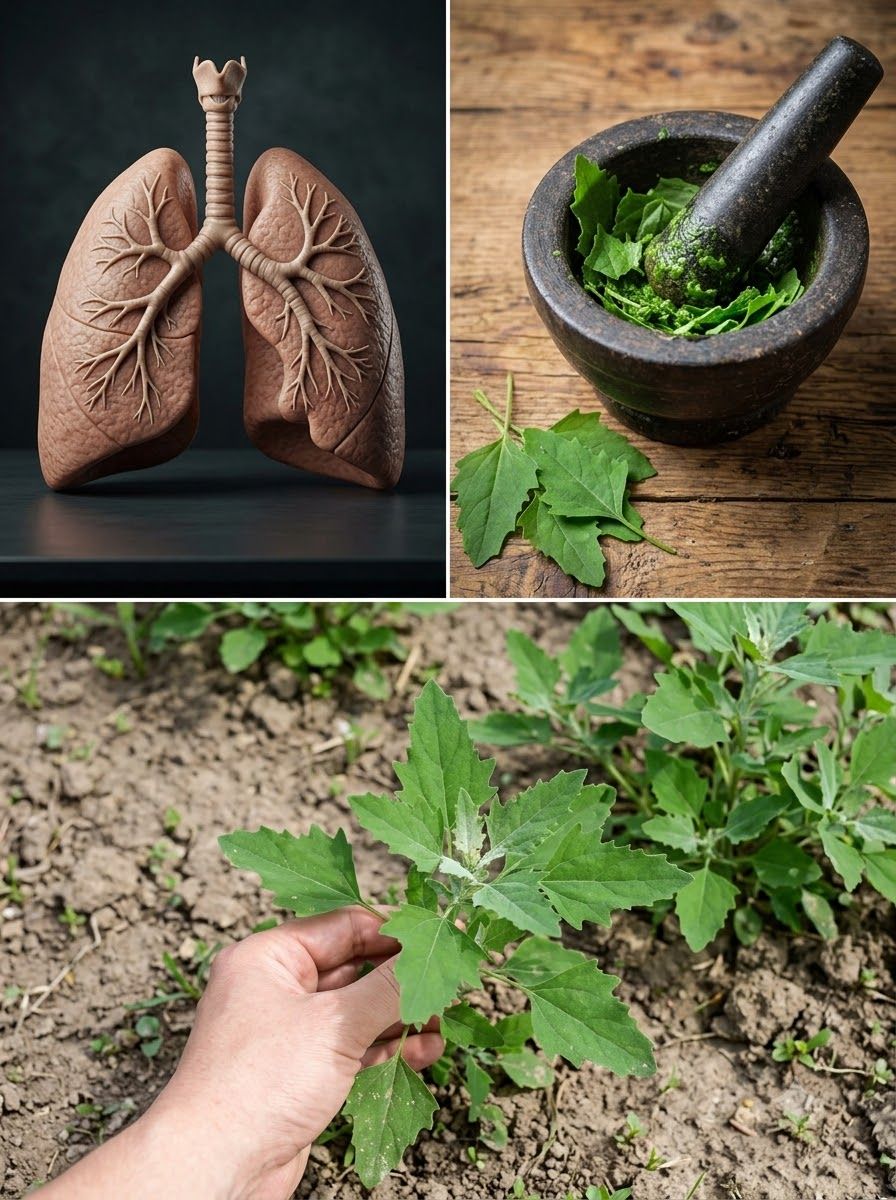
What Are Lamb’s Quarters?
Lamb’s quarters is a fast-growing leafy plant found in many parts of the world. It can grow in gardens, fields, roadsides, and disturbed soil.
The plant is sometimes called:
- Lamb’s quarters
- Wild spinach
- White goosefoot
- Fat hen
- Chenopodium album
Its leaves are usually green with a slightly dusty or silvery appearance, particularly on the younger leaves.
Although it is often classified as a weed, lamb’s quarters has traditionally been used as a wild edible green.
The young leaves and shoots can be cooked and eaten similarly to spinach, while the seeds have also been used as a food source in some traditional cultures.
Why Is Lamb’s Quarters Considered Nutritious?
The leaves of lamb’s quarters provide several nutrients that are valuable as part of a varied diet.
They can contain:
- Vitamin A and carotenoid compounds
- Vitamin C
- Vitamin K
- Calcium
- Iron
- Magnesium
- Potassium
- Fiber
- Plant-based antioxidants
The exact nutritional composition can vary depending on the plant’s growing conditions, maturity, and preparation.
This combination makes lamb’s quarters an interesting addition to meals for people who want to include more nutrient-dense leafy greens in their diet.
1. A Natural Source of Plant-Based Nutrients
One of the biggest attractions of lamb’s quarters is its variety of naturally occurring nutrients.
Leafy greens are generally valued because they can provide vitamins, minerals, fiber, and protective plant compounds without adding large amounts of calories to a meal.
Adding different greens to your diet is a simple way to increase dietary variety.
Lamb’s quarters can be another option alongside familiar vegetables such as spinach, kale, collard greens, and Swiss chard.
2. Contains Antioxidant Compounds
Lamb’s quarters contains naturally occurring plant compounds with antioxidant activity.
Antioxidants are important because the body naturally produces oxidative compounds during normal metabolism and in response to environmental factors.
A diet rich in colorful fruits, vegetables, herbs, and leafy greens can help provide a broad range of antioxidant compounds.
Rather than relying on a single “superfood,” nutrition experts generally emphasize eating a variety of plant foods.
Lamb’s quarters can be one small part of that bigger picture.
3. Supports a Fiber-Rich Diet
Fiber is an important part of a healthy eating pattern.
Leafy vegetables can contribute fiber to the diet, which is especially useful when combined with other fiber-rich foods such as beans, whole grains, fruits, vegetables, nuts, and seeds.
Eating enough fiber can support normal digestive function and contribute to feelings of fullness.
For this reason, adding cooked lamb’s quarters to a balanced meal can be an easy way to increase your intake of nutrient-rich plant foods.
4. Provides Minerals Such as Calcium and Magnesium
Lamb’s quarters contains minerals including calcium and magnesium.
Calcium is well known for its role in maintaining normal bones and teeth, while magnesium contributes to normal muscle and nerve function.
Of course, a single plant should not be considered a replacement for a varied diet.
Instead, lamb’s quarters can complement other mineral-rich foods as part of an overall balanced eating pattern.
5. Contains Vitamin C and Carotenoid Compounds
Fresh leafy greens can provide vitamin C and carotenoid compounds.
Vitamin C contributes to normal immune function and also plays a role in collagen formation and antioxidant protection.
Carotenoids are natural pigments found in many green, yellow, orange, and red plants. Some carotenoids can be converted by the body into vitamin A.
This is another reason why eating a variety of vegetables can be beneficial for overall nutrition.
6. A Simple Way to Eat More Wild Greens
One of the most interesting things about lamb’s quarters is that it doesn’t require an elaborate recipe.
Young leaves can be:
- Added to soups
- Stir-fried with garlic
- Cooked like spinach
- Added to omelets
- Mixed into vegetable dishes
- Added to savory stews
- Combined with other leafy greens
Cooking can also reduce the volume of the leaves, making it easier to eat a larger serving.
How to Prepare Lamb’s Quarters
If you have access to properly identified, edible lamb’s quarters, preparation is relatively simple.
Step 1: Select Young Leaves
Younger leaves and tender shoots are generally preferred for eating because they tend to have a more delicate texture.
Step 2: Wash Thoroughly
Rinse the leaves carefully under clean running water to remove dirt and debris.
Step 3: Cook Before Eating
Lamb’s quarters can be lightly cooked in boiling water, steamed, or sautéed.
A simple preparation is to sauté the leaves with a small amount of olive oil and garlic.
Step 4: Add to Your Meal
Serve the cooked greens alongside eggs, fish, beans, rice, potatoes, or another balanced meal.
What About Lamb’s Quarters Tea?
Some traditional practices involve using lamb’s quarters in teas or herbal preparations.
However, eating the plant as a properly prepared food is different from consuming concentrated herbal preparations.
There is not enough high-quality clinical evidence to support using lamb’s quarters tea as a treatment for specific diseases.
For general wellness, it is better to think of lamb’s quarters as a nutritious leafy green rather than a medicinal cure.
Can Lamb’s Quarters Support Overall Wellness?
It can contribute useful nutrients to a balanced eating pattern, particularly when consumed as part of a varied diet.
Its combination of leafy-green nutrients, minerals, fiber, and plant compounds makes it an interesting food for people who enjoy exploring traditional or wild edible plants.
But no single plant can provide everything the body needs.
The real benefit comes from combining different vegetables, fruits, whole grains, legumes, nuts, seeds, and quality protein sources.
Important Safety Considerations
This part is especially important if you are interested in wild plants.
Never eat a wild plant unless you are completely certain of its identification.
Lamb’s quarters can resemble other plants, and plants growing near roads, industrial areas, heavily treated lawns, or contaminated soil may be exposed to unwanted substances.
There is also an important nutritional consideration: lamb’s quarters naturally contains oxalates and other compounds that can be relevant to people with certain dietary restrictions or health conditions.
Cooking may reduce some naturally occurring compounds, but it does not make every wild plant automatically safe for everyone.
If you have kidney problems, a history of certain types of kidney stones, take medications, are pregnant or breastfeeding, or have been advised to follow a specific diet, talk with a qualified healthcare professional before regularly consuming wild edible plants.
Lamb’s Quarters vs. Spinach
Lamb’s quarters is sometimes compared with spinach because both can be cooked and used as leafy greens.
The biggest difference is that spinach is a widely cultivated vegetable with standardized food production, while lamb’s quarters is often collected as a wild or naturally growing plant.
Both can contribute nutrients to the diet.
The best approach is not necessarily choosing one over the other. Instead, variety is key.
Rotating different leafy greens can make meals more interesting while broadening the range of nutrients and plant compounds you consume.
How to Add Lamb’s Quarters to Your Diet
You don’t need to make lamb’s quarters the center of your diet.
Try using it occasionally in simple recipes:
Garlic Lamb’s Quarters
Sauté washed young leaves with olive oil and minced garlic until tender. Add a little lemon juice before serving.
Lamb’s Quarters Omelet
Chop cooked leaves and add them to eggs with onions, tomatoes, and herbs.
Wild Green Soup
Combine lamb’s quarters with potatoes, carrots, onions, beans, and other vegetables for a hearty soup.
Mixed Greens
Combine cooked lamb’s quarters with spinach, kale, or other familiar leafy vegetables.
The Bottom Line
Lamb’s quarters may look like an ordinary weed, but its nutritional profile makes it worth a second look.
This humble wild green can provide vitamins, minerals, fiber, carotenoid compounds, and other naturally occurring plant nutrients.
It isn’t a miracle cure, and it shouldn’t replace medical treatment or a balanced diet.
But when correctly identified, safely sourced, and properly prepared, lamb’s quarters can be an interesting addition to a varied diet.
Sometimes, the most overlooked plants have the most interesting stories to tell.
Nature doesn’t always make its nutritional treasures look impressive. Sometimes, they simply grow quietly under our feet. 🌿


