
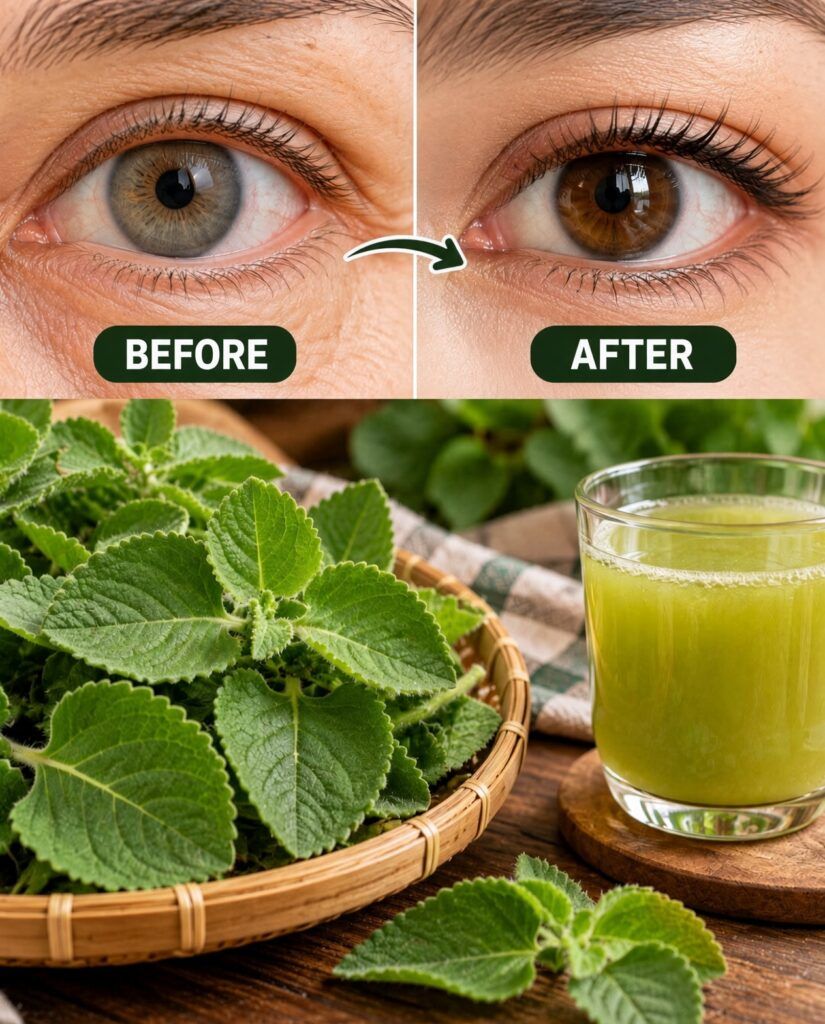
Meta description: Cuban oregano (Plectranthus amboinicus) is trending as a “secret” for vision and cataracts. See what science says, how to prepare the tea, and the precautions you should take.
Keywords: Cuban oregano, Plectranthus amboinicus, oregano tea for eyes, cataract natural remedy, eye health.
On social media, some plants are presented as true “secrets” for giving up glasses, recovering vision or even eliminating cataracts. One that gained prominence is Cuban oregano (Plectranthus amboinicus), also known in some regions as broadleaf thyme or Mexican mint. But can a simple infusion of this leaf really do all that? The answer requires balance. Cuban oregano is an interesting aromatic plant with a long history of traditional use. However, there is not enough clinical evidence to claim that its tea eliminates cataracts, regenerates the retina or makes a person stop needing glasses.
Why can vision change over the years?
After 40, 50 or 60, it is common to notice small letters becoming harder to see. Possible causes: presbyopia, dry eye, changes in glasses prescription, cataract, glaucoma, retinal changes, diabetes, natural aging of the eye structures. Glasses correct specific optical problems and do not create dependence nor weaken the eyes.
What is Plectranthus amboinicus?
It has thick, soft, very aromatic leaves, traditionally used in food and folk preparations. Researchers note its plant compounds, including substances with antioxidant activity observed mainly in laboratory studies. Still, there is an important difference between saying a plant has antioxidant compounds and claiming it can treat cataracts or recover vision.
What really helps provide important nutrients to the eyes?
A varied diet: vitamin A (carrots, pumpkin, sweet potatoes, eggs, dark greens); lutein and zeaxanthin (spinach, kale, broccoli, corn, egg yolk); omega-3 (sardines, salmon, mackerel); vitamins and antioxidant compounds from fruits, vegetables, legumes, seeds and oilseeds. No single food treats cataracts, glaucoma or retinal diseases, but nutrition is part of general health care.
Can you prepare Cuban oregano tea?
For those who already use the plant as food and want to enjoy it as a traditional infusion: 1 to 2 well-washed leaves + 250 ml of hot water; wash the leaves, heat water to near boiling, place leaves in a cup, add the water, cover and rest 5 to 10 minutes, strain before consuming. The tea should be seen as an herbal drink, not as medicine to correct eye prescription or treat cataracts. People on regular medications, pregnant or breastfeeding, with chronic diseases or plant allergies should talk to a health professional first.
Very important caution: don’t drip homemade recipes into your eyes.
Some versions suggest mixing the infusion with lemon, sugar, alum or other ingredients and applying it directly into the eyes. This is not recommended — homemade solutions are not sterile, and acidity, particles or microorganisms can cause irritation. Do not drip plant tea into your eyes; do not put lemon in your eyes; do not use alum as homemade eye drops; do not replace prescribed eye drops with natural recipes.
Is it possible to give up glasses naturally?
It depends on the cause. Myopia, hyperopia, astigmatism and presbyopia relate to how the eye focuses light — no drink or plant has demonstrated the ability to replace glasses. If your vision changes, redo your vision evaluation.
And cataracts?
Cataract is the progressive clouding of the crystalline lens. Signs: blurred vision, light sensitivity, halos, night-driving difficulty, less vivid colors, frequent prescription changes. There is no reliable evidence that Cuban oregano tea dissolves or reverses a formed cataract.
7 simple habits to protect eye health:
- periodic eye exams (especially after 40–50);
- control blood pressure and blood sugar;
- adequate UV sun protection;
- screen breaks;
- avoid smoking;
- varied diet;
- never put homemade substances directly into your eyes.
When to seek care quickly:
sudden vision loss, sudden light flashes, many new floaters, curtain/shadow in the visual field, intense eye pain, very red eye with vision change, eye trauma, rapid worsening of sight.
Conclusion:
Cuban oregano is an interesting aromatic plant with scientific interest in its compounds, but that does not mean it can eliminate cataracts, regenerate the retina or replace glasses. If you enjoy herbal infusions and have no contraindications, it can be part of your routine as a traditional drink — but never as homemade eye drops, and never abandoning prescribed treatments. Educational content. It does not replace diagnosis, consultation or treatment by a health professional.


