
If you’ve been feeling sluggish, lacking energy, and like your body is moving slower than usual lately, it’s easy to fall for enticing promises. A message claiming that “four leaves” will stimulate your thyroid and relieve your body overnight sounds tempting, especially when you’re already tired of feeling this way. The problem is that this type of content mixes wishful thinking with overly optimistic claims, which can lead you to make decisions without clear information. The good news is that there are indeed helpful habits and signs to take care of your well-being, but it’s important to separate fact from fiction… and I’ll show you how to do that without falling into traps.
First: what does the thyroid actually do?
The thyroid is a small gland located in the front of the neck, but its job is enormous. It helps regulate metabolism, energy, body temperature, and various other bodily functions. When it’s not working properly, some people may experience fatigue, weight changes, dry skin, or a feeling of sluggishness.
However, these symptoms don’t automatically mean you have a thyroid problem. They can also be caused by stress, poor sleep, an irregular diet, anemia, or lack of physical activity. Therefore, it’s not a good idea to assume a diagnosis based solely on how you feel .
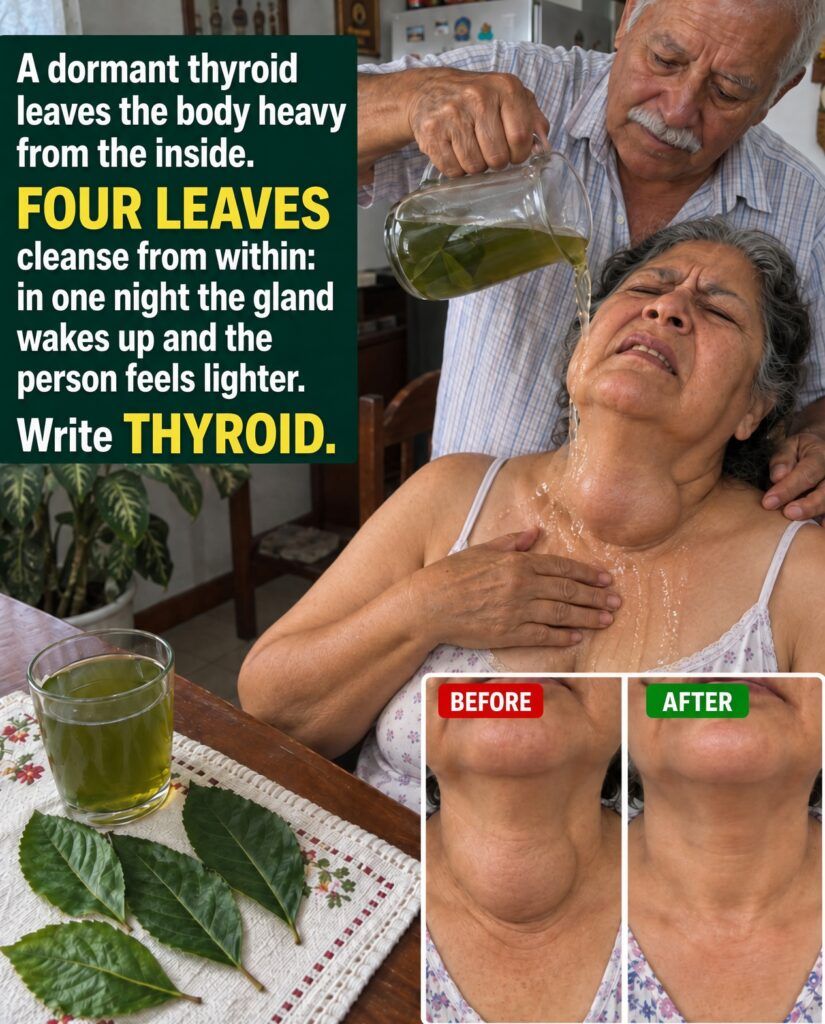
What’s behind the “four leaves” message?
These types of publications often use natural ingredients to give the impression of a quick fix. They sometimes mention plant leaves, teas, or homemade blends with phrases like “cleanses from within” or “awakens the gland.” But here’s the important part: there is no solid evidence that four specific leaves will activate the thyroid overnight .
Some plant-based ingredients can be part of a healthy diet, but that doesn’t make them thyroid treatments. In fact, excessive use of certain herbs or supplements can interfere with medications or may not be suitable for everyone. Science is generally more cautious: natural isn’t always harmless, and quick fixes aren’t always effective .
What reliable sources do say
Health organizations and medical studies agree on one thing: thyroid problems are evaluated through symptoms, physical examination, and laboratory tests, not viral promises. Research published in medical journals and clinical guidelines shows that treatment depends on the type of thyroid disorder and its underlying cause.

This means that if someone has an underactive or overactive thyroid, it’s not enough to simply “take something” and expect miracles. In many cases, professional monitoring, dietary adjustments, medication reviews, or a specific medical plan are necessary. The key is not to blindly try to speed up the gland, but to understand what’s really going on .
Signs that deserve attention, not improvisation
There are symptoms worth observing calmly. Not to alarm you, but to act intelligently. Among the most common are:
- Persistent tiredness even after sleeping.
- A feeling of cold or heat that is out of the ordinary.
- Unexplained weight changes.
- Hair loss or drier skin.
- Palpitations, nervousness, or trembling.
- Constipation or slower digestion.
However, experiencing one or more of these symptoms doesn’t confirm anything on its own. But it is a sign to stop guessing and seek professional guidance. And that changes things considerably.

Why do these messages go so viral?
Because they tap into a real need: people want to feel better fast. When someone has been suffering from fatigue, inflammation, or general malaise for weeks or months, any promise of immediate relief is powerful. Furthermore, the visual language of these ads is often very compelling: before-and-after photos, bold phrases, strong colors, and an easy solution.
The tricky part is that the brain loves simple answers. But the body doesn’t always work that way. True health is rarely solved with a single magic bullet .
What you can do starting today, step by step
If you’re worried about your energy or suspect something is wrong, here’s a practical and safe route:

- Observe your symptoms : note when they started, what makes them worse, and what relieves them.
- Do not self-medicate : avoid mixing herbs, teas, or supplements without knowing how they will affect you.
- Schedule an assessment : a professional may request tests if deemed necessary.
- Check your sleep : poor sleep can mimic many symptoms of hormonal imbalance.
- Take care of your diet : prioritize complete meals, sufficient protein, fruits, vegetables, and water.
- Move around a little each day : walking for 20 to 30 minutes can help your overall energy.
This approach doesn’t promise miracles, but it does give you control. And that’s worth far more than a viral solution without any support.
A useful comparison: quick promise vs. serious approach
To make it clearer, here’s a simple comparison:
| Viral promise | Reliable approach |
|---|---|
| “Awaken your thyroid overnight” | Medical evaluation and follow-up |
| “Four leaves cleanse the inside” | Healthy habits and scientific evidence |
| Universal solution for everyone | Plan based on symptoms and cause |
| Without context or precautions | Safety, dosage and supervision |
The difference is enormous. One sells urgency; the other seeks responsible results.
If you want to take care of your thyroid, focus on what really helps.
There are everyday actions that contribute to your overall well-being and, incidentally, promote a better balance in your body. They aren’t “cures,” but they are habits that make a difference when maintained over time.
- Eat at more regular times.
- Include protein in your meals.
- Avoid skipping breakfast if it leaves you feeling drained.
- Reduce your intake of ultra-processed foods and sugary drinks.
- Prioritize quality sleep.
- Get checked out if the symptoms persist.
It’s also important to remember that some people on thyroid treatments need to be careful about when they take their medication and avoid certain interactions. Therefore, any significant changes should be reviewed by a healthcare professional.
The most important part that almost no one says
When a publication promises immediate relief, it’s often not thinking about your health, but rather about grabbing attention. That’s why it’s wise to pause before believing phrases like “in one night” or “write this word and receive the secret.”
The truth is, your body deserves better than a pretty promise . It deserves clarity, a thorough review, and steps that actually make sense. And yes, sometimes the solution isn’t as glamorous as an advertisement, but it’s often much more effective.
Conclusion
The “four-leaf” pills and promises of overnight thyroid activation lack sufficient evidence to be considered a real solution. If you feel tired, sluggish, or off-balance, the wisest course of action is to pay attention to your symptoms, avoid makeshift remedies, and seek a proper evaluation. Sustainable changes, while perhaps less noticeable, are what truly benefit your long-term health.
Remember this: you don’t need to chase the most viral trick; you need to understand your body and act on reliable information.
Frequently Asked Questions
Can medicinal leaves improve the thyroid?
Some plants can be part of a healthy diet, but there is no solid evidence that they alone “wake up” the thyroid or solve a hormonal problem.
How do I know if my symptoms are thyroid-related?
The only reliable way to know for sure is through a medical evaluation and, if necessary, laboratory tests. Symptoms such as fatigue or weight changes can also have other causes.
Is it safe to drink teas or natural blends without supervision?
Not always. Some herbs can interact with medications or not be suitable for certain people. If you have persistent symptoms, it’s best to consult a doctor before trying something new.
Disclaimer: This article is for informational purposes only and is not a substitute for evaluation, diagnosis, or treatment by a healthcare professional.


