
Your feet work hard for you, day in and day out. They help you stay active, independent, and connected to the people and places you love. Yet for many adults between 45 and 65, the feet are easy to overlook until something hurts. Health experts caution that two common conditions—peripheral neuropathy and peripheral artery disease, often called PAD—can creep in quietly. Because their first signals are subtle, they are sometimes called silent foot killers. Learning to spot the early clues puts you in charge and can prevent bigger problems down the road.
Why your feet deserve daily attention
Your feet sit at the far end of your circulation, and the nerves that serve them are long and sensitive. That makes the feet one of the first places where nerve changes and blood flow issues show up. Small shifts in feeling, color, temperature, or healing can be early alarms. Catching these changes early often means simpler solutions, less pain, and a better chance of staying active without interruption.
Think of your feet as a dashboard light for your overall health. If you notice new tingling, slow-healing spots, or cold toes, your body may be asking for a tune-up. A bit of attention now can save you from weeks or months of more complicated care later.
Meet the two quiet threats to foot health
Peripheral neuropathy, explained in plain language
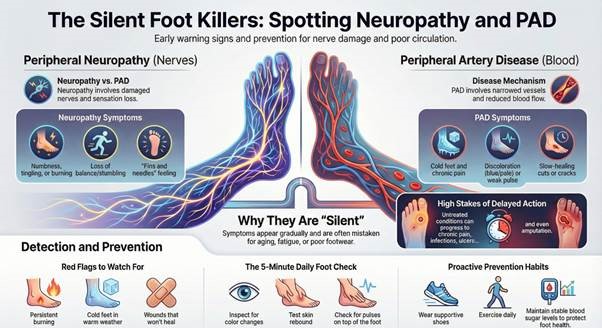
Peripheral neuropathy happens when the nerves that carry messages to and from your feet become damaged or irritated. When nerves misfire, signals can feel mixed up. You might notice tingling, buzzing, or pins-and-needles. Some people describe burning, stabbing, or electric-like jolts. Others say it feels as though a sock is bunched up even when it is smooth, or as if they are walking on cotton or tiny pebbles.
These symptoms often begin softly and come and go. They can be stronger at night when you are off your feet. Because they arrive slowly, it is easy to chalk them up to normal aging or a long day. Over time, though, neuropathy can dull your sense of pain and temperature. That makes it easier to miss a blister, a cut, or a hot surface, which can lead to bigger problems.
Diabetes is the most common cause of neuropathy, especially after years of higher blood sugar. Other causes include low vitamin B12, certain medications such as some chemotherapy drugs, thyroid or kidney disease, long-term alcohol use, and back problems that pinch nerves. Whatever the cause, careful foot care and medical guidance can ease symptoms and help prevent injuries.
Peripheral artery disease, or PAD, and what it means
Peripheral artery disease occurs when the arteries that carry blood to your legs and feet narrow because of plaque buildup. When the pathway is tight, less blood gets through. Tissues in the feet then struggle to receive the oxygen and nutrients they need. You may feel cramping in your calves when you walk, notice that your feet are cold even in a warm room, or see that the skin on your legs looks pale, bluish, or unusually shiny. Small cuts can take far too long to heal.
Risk for PAD rises with age. It is higher if you smoke or used to smoke, and if you have diabetes, high blood pressure, high cholesterol, kidney disease, or a family history of circulation problems. Left alone, PAD can lead to infections, ulcers, and in severe cases, tissue loss. The encouraging news is that early attention and steady lifestyle changes can improve circulation and lower your risk of complications.
Early warning signs that deserve your attention
Both neuropathy and PAD tend to start quietly. The first signs can be mistaken for tight shoes, a busy day on your feet, or simply getting older. Paying attention to repeating patterns is key, especially if you notice more than one of the following changes.
Tingling or numbness in the toes or soles—especially if it comes and goes or is more noticeable at night—can point to nerve changes. If this sensation shows up often, even if it is mild, it is worth a mention at your next appointment.
Burning, sharp, or electric-like pain can also signal nerve irritation. Some people find that even the light touch of a bed sheet feels uncomfortable on their toes. If burning or shooting pain is a frequent visitor, do not ignore it.
Cold feet that stay chilly despite warm socks, or one foot that is clearly colder than the other, can suggest reduced blood flow. For many adults in midlife and beyond, PAD is a common reason for this symptom.
Color changes matter. Pale, bluish, or reddish tones, or skin that takes on a smooth, shiny look, deserve a closer look. If your feet change color when you raise or lower them, or appear blotchy, consider scheduling a checkup.
Slow-healing scratches, blisters, or cracks may be the most practical sign that something is off. Poor circulation can delay healing, and neuropathy can make an injury easy to miss. If a small sore lasts more than a couple of weeks, it is time to ask for guidance.
Feeling unsteady, catching your toes more often, or sensing that you need to look down at your feet to know where they are can be a clue that nerve messages are not getting through clearly. Uneven ground may feel riskier than it used to.
Calf cramping or tightness that begins after a predictable walking distance and fades with a short rest is a classic sign of PAD. Many people call it a charley horse, but the pattern—pain with activity that settles when you stop—is an important detail to share with a clinician.
Slower-growing, thick, or brittle toenails, hair loss on the lower legs, or pulses at the feet and ankles that seem weak or hard to find can also suggest circulation issues. A simple office test called the ankle-brachial index compares blood pressure at your arm and ankle to screen for PAD.
Why these problems hide in plain sight
Neuropathy and PAD usually develop little by little. When discomfort is mild or occasional, it is natural to assume a shoe rubbed the wrong way or that you overdid it that afternoon. Many people also adapt without realizing it, taking shorter walks, avoiding hills or stairs, and slowing down to keep symptoms at bay. This quiet shifting can hide the underlying issue until it is more advanced. Listening to small signals now helps you stay ahead of bigger challenges later.
Simple at-home checks that take just a few minutes
A short daily check can make a big difference. In the evening, take a moment to look over both feet from heel to toe. Good lighting helps, and a hand mirror can make it easier to see the bottoms. Watch for redness, cracks, blisters, calluses, swelling, color changes, or spots that look irritated.
Use the back of your hand to feel the temperature of each foot. Notice if one area is much cooler or warmer than the rest. New warmth with redness and tenderness can hint at infection or inflammation. Persistent coldness can point toward circulation issues.
Gently test your sense of touch. Lightly sweep a tissue or cotton ball along the top and bottom of each foot. Compare right to left. You can also touch a toe and then a finger to see if sensation feels similar. If one foot seems dull or different, bring it up at your next visit.
Check your balance safely. Stand near a sturdy counter and lightly rest your fingers on it. See whether you can stand on one foot for a few seconds without wobbling, then try the other side. If this feels hard or unsafe, do not practice it alone, but do mention the change to your healthcare professional.
Take a look at your toenails and the skin on your lower legs. Nails that slow down or thicken and skin that appears smooth and shiny can be telltale signs of reduced blood flow. If you already know you have diabetes or circulation concerns, these checks are even more important.
Pay attention to how your feet feel in your everyday shoes and socks. Notice any new rubbing points, pressure marks, or damp areas. Socks that leave deep grooves around your calves can feel tight if swelling is present. Shoes should be supportive, secure at the heel, and roomy at the toes.
When it is time to contact a healthcare professional
Call sooner rather than later if you notice new or worsening numbness, burning, or sharp pains in your feet that show up most days. Early care can settle symptoms and help you avoid injuries you might not feel.
Do not delay if a sore, cut, blister, or crack is not clearly improving within a week or two. Foot wounds need prompt attention, especially if you live with diabetes or known circulation problems.
Seek timely care if one foot becomes much colder, paler, or bluish compared with the other, or if toes suddenly change color. These changes can point to reduced blood flow that needs evaluation.
Report calf pain that starts with walking and eases when you stop. This is not just normal aging; it is a key clue for PAD and is very treatable when addressed early.
Get urgent help if you see spreading redness, warmth, swelling, fever, or drainage from any foot wound. Infections can move quickly in the feet, and fast treatment protects skin, bone, and your mobility.
If you have diabetes, high blood pressure, high cholesterol, or kidney disease, ask about regular foot exams and simple circulation checks. A short conversation today can save a lot of trouble later.
How to protect your foot health starting today
Small daily habits add up. Keeping blood sugar, blood pressure, and cholesterol within the targets your clinician recommends is the foundation. These three numbers protect nerves and blood vessels, and controlling them is one of the most powerful ways to slow or prevent both neuropathy and PAD.
If you smoke or vape nicotine, consider a quit plan. Stopping tobacco use is one of the fastest ways to improve circulation to your legs and feet. Your healthcare team can offer support, tools, and medications that make quitting more comfortable and more successful.
Move your body most days in ways that feel good and safe. Gentle walking, cycling, or water exercise can boost blood flow and strengthen the muscles that support your feet and ankles. Even short walks spread through the day help. Build up slowly and rest as needed. If you have PAD, a walking program designed by your clinician can be especially helpful.
Choose shoes that fit the feet you have now. Foot shape changes over time. Look for a stable base, good cushioning, a snug heel, and a roomy toe box so toes can spread. Try shoes at the end of the day when your feet are slightly larger, and wear the socks you normally use. If you have bunions, hammertoes, or neuropathy, a professional fitting can increase comfort and reduce rubbing.
Care for your skin and nails with patience. Wash and dry your feet daily, especially between the toes. Apply moisturizer to the tops and bottoms to prevent cracking, but keep the spaces between the toes dry. Trim nails straight across and file the edges smooth. If reaching your feet is difficult or nails are thick, a podiatry visit can make care safer and easier.
Protect your feet from extreme heat and cold, especially if sensation is reduced. Hot baths, heating pads, or hot pavement can cause burns before you realize it. Test bath water with your elbow and wear protective footwear indoors and outdoors.
Address athlete’s foot or nail fungus early. Itching, peeling skin, or discolored nails can weaken the skin barrier and welcome infection. Over-the-counter treatments can help, and your clinician can recommend stronger options when needed.
Make routine checkups part of your calendar. An annual foot exam is a smart choice for most adults, and it is especially important if you have diabetes, PAD, kidney disease, or a history of foot sores. Ask whether an ankle-brachial index or other simple circulation tests make sense for you.
Consider supports if your clinician suggests them. Insoles or custom inserts can spread pressure more evenly and ease soreness. If you notice ankle swelling, ask before using compression socks. Some people benefit from them, but they are not right for everyone, especially if PAD is suspected.
What to expect at a medical visit for foot concerns
Your visit will likely start with a conversation about your symptoms, health history, and daily routine. Many clinicians will examine your feet, check skin and nails, and look for pressure points, ulcers, or calluses. They may test sensation with a small nylon filament or a gentle vibration tool to see how well nerves are signaling. For circulation, they might check pulses at the ankles and feet and measure an ankle-brachial index by comparing blood pressure at your arm and ankle. In some cases, an ultrasound or toe-brachial index gives more detail. These tests are quick, noninvasive, and can guide a clear plan.
Depending on what they find, your clinician may suggest medication changes, supervised exercise, foot care strategies, or a referral to a podiatrist or vascular specialist. The goal is the same in every case: keep you comfortable, active, and on your feet.
Frequently asked questions
What are the two silent foot killers I should know about?
The two most common are peripheral neuropathy and peripheral artery disease, or PAD. Neuropathy involves damage to the nerves that carry signals to and from the feet. PAD is a circulation problem caused by narrowed arteries that limit blood flow to the legs and feet. Both conditions can develop quietly and become serious if not recognized early.
What early symptoms point to peripheral neuropathy?
Look for tingling, numbness, burning, or the odd feeling that your socks are bunched up when they are not. Some people notice sharp, shooting pains or extra sensitivity to light touch, such as bedsheets rubbing the toes. Feeling a little unsteady on uneven ground can be another clue. Symptoms often start mildly and progress over time.
How can I spot early signs of PAD in my feet and legs?
Cold feet, pale or bluish skin, slow-healing cuts, and calf pain that starts with walking and eases with rest are key signs. Nails that grow slowly and smooth, shiny skin on the lower legs can also be hints. If one foot looks or feels different from the other, that is worth attention.
What causes these conditions to develop?
Neuropathy most often comes from years of elevated blood sugar in diabetes, but it can also be tied to low vitamin B12, thyroid problems, kidney disease, certain medications, alcohol use, and nerve compression in the back. PAD develops when cholesterol-rich plaque narrows or blocks arteries. Aging, smoking, diabetes, high blood pressure, high cholesterol, kidney disease, and a family history of artery disease raise the risk.
How can I stop neuropathy and PAD from getting worse?
Focus on the basics that protect nerves and blood vessels. Keep blood sugar, blood pressure, and cholesterol within your target ranges. Avoid tobacco. Stay active with safe, regular movement. Choose supportive shoes that fit well, and check your feet daily. Seek early medical advice if anything looks or feels off. Routine checkups help you address small issues before they grow.
A friendly takeaway to keep you moving
Your feet are the base of your independence. They quietly signal what is happening with your nerves and circulation, often before any other part of the body. When you pay attention to early signs—tingling, burning, color changes, coldness, slow-healing spots—you give yourself the best chance to prevent complications. If any of these cha


